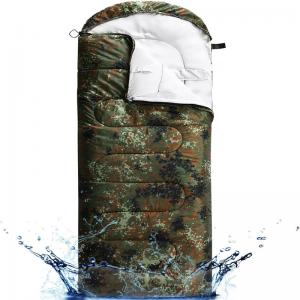
Scope Note: This article covers procurement processes for civilian emergency response scenarios, including government emergency and disaster prevention departments, NGOs and international aid organizations, and distributors and system integrators. Emergency relief sleeping bags fall under Category B (pure disaster relief / NGO use). This article does not cover military or police procurement. If such needs apply, please refer to the corresponding specialized guide.
I. Four Types of Procurement Stakeholders: Who Buys Emergency Relief Sleeping Bags, and What Drives Their Decisions?
Different stakeholders looking at the same batch of emergency relief sleeping bags are rarely thinking about the same thing.
Government Emergency and Disaster Prevention Departments: The longest decision chain, with procedural compliance as the core constraint. They must comply with national tendering and bidding laws, emergency procurement regulations, and face scrutiny from auditors, media, and the public. For national or regional emergency reserve sleeping bag projects, procurement officers are particularly focused on the compliance of the disaster relief procurement process, the completeness of quality inspection reports, and the ease of managing bulk reserves and scheduled rotations. A single documentation gap can trigger accountability risks in post-event reviews.
NGOs / International Aid Organizations: Efficiency and cost are equally important, but the accountability target is the donor, not a national audit office. International aid sleeping bag procurement typically must comply with procurement frameworks set by the World Bank, UN agencies, or the International Red Cross and Red Crescent Movement. Cross-border transportation, customs clearance convenience, and adaptability to the recipient country's conditions are the most frequently raised operational questions during these organizations' evaluation phases.
Large Terminal Institutions (hospitals, schools, large enterprise campuses): Procurement volumes are typically smaller than government reserve projects. Requirements focus on practicality and quick-access convenience for emergency reserve sleeping bags, with relatively high price sensitivity and generally more flexible internal procurement processes than government agencies.
Distributors and System Integrators: They serve as the hub between upstream factories and downstream projects. Their core concerns go beyond price — they also want to know: Does this emergency sleeping bag bulk procurement offer a sustainable profit margin? Will the supplier actively cooperate on technical documentation and bidding materials? Can they jointly develop solutions to participate in government or NGO project tenders?
In practice, the above roles often appear simultaneously within a single large project — the government is the funding and policy authority, the NGO is the implementing party, the distributor is the local coordination arm, and the Chinese factory is the supplier. Understanding each party's decision logic and constraints helps reduce communication friction and improve execution efficiency across the entire chain.
The shared challenges facing all four stakeholders include: balancing time pressure with procedural compliance; achieving quality and delivery speed within a limited budget; identifying reliable and sustainable suppliers within a complex supply chain; and demonstrating the reasonableness and traceability of decisions under post-event audits and donor scrutiny.
II. How Do Government and NGO Projects Complete Standardized Emergency Relief Sleeping Bag Procurement?
The following five stages represent the universal foundational pathway for most government procurement of disaster relief sleeping bags and NGO aid project sleeping bags. They are not based on any specific national law, making them suitable for reference by international procurement teams and distributors of all types.
Step 1: Needs Identification and Definition
Starting from the scenario, headcount, usage period, target climate conditions, and special population groups (children, the elderly, tall rescue personnel, or injured persons), determine what type of post-disaster settlement sleeping bag configuration is needed. Before formally launching procurement, it is recommended to produce a concise project needs statement. Avoid descriptions like "purchase a certain number of sleeping bags" — suppliers cannot provide accurate quotes, and internal approval processes are difficult to complete with such vague information.
Step 2: Budget and Approval
Confirm the funding source (annual government budget, donations, special appropriations), establish the budget ceiling, complete the internal approval process, and lock in the applicable cost categories and payment schedule.
Step 3: Market Research and Preliminary Solution Design
Drawing on the supplier rankings and selection guides in this site's Series One and Series Two, understand the current market's available specifications, applicable standard ranges, and primary sourcing strategies (local / regional / China, etc.). Develop a preliminary plan covering "technical specifications + scenario configuration + sourcing selection."
Step 4: Tendering / Request for Quotation / Competitive Negotiation
Based on project value, sensitivity level, and internal policy, select from open tendering, invited bidding, framework agreements, competitive negotiation, or small-value RFQ. For medium-to-large emergency sleeping bag bulk procurement projects, open tendering or framework agreements are generally recommended to obtain more competitive pricing and long-term supply assurance.
Step 5: Contract Signing, Execution, and Acceptance
Confirm delivery milestones, acceptance standards, and warranty terms. Establish a complete procurement archive to provide the basis for post-event audits and project reviews.
A note for suppliers and distributors: if you can proactively provide clear technical specification descriptions, test reports, and scenario configuration recommendations during Stage 3, you can significantly lower the procurement team's solution design costs and be seen as a "business-knowledgeable partner" rather than merely a price source.
III. How to Launch Fast, Compliant Procurement in Emergency Situations?
The post-disaster time window is extremely short, but "fast" does not mean "arbitrary." Experience from multiple countries shows that disputes over emergency procurement rarely arise from "using simplified procedures" but rather from "insufficient records and justification being left behind."
Common compliant simplification approaches include: shortening tender announcement and bidding periods; allowing competition among a smaller number of suppliers (e.g., restricted tendering, priority use of framework agreement suppliers); and reducing certain time-consuming steps while still satisfying basic procedural requirements.
Even in emergency procurement, at least three types of records should be maintained:
Needs Statement (scenario description, number of affected or protected persons, time window, material priority); Supplier Selection Rationale (quality, delivery time, availability, prior cooperation experience — even if only an oral comparison was conducted, it should be documented in writing); Price Reasonableness Basis (a brief market comparison note is sufficient).
A practical recommendation for managing the disaster relief procurement process: the earlier you communicate with candidate suppliers and reserve production capacity, the more time you can compress in response once a disaster actually occurs. Establishing framework agreements and annual pre-qualified supplier lists in advance is a common tool used by emergency management agencies across many countries to balance compliance with responsiveness — and worth planning for proactively during ordinary reserve phases.
IV. What You Write in the Tender Document Directly Determines Delivery Quality — How to Build Clear Technical Requirements?
Vague technical specifications are the root cause of a large proportion of disputes in disaster emergency supplies procurement following goods delivery.
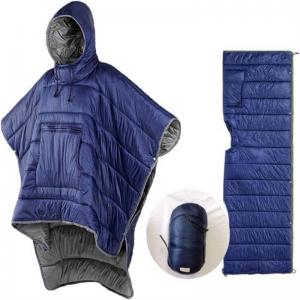
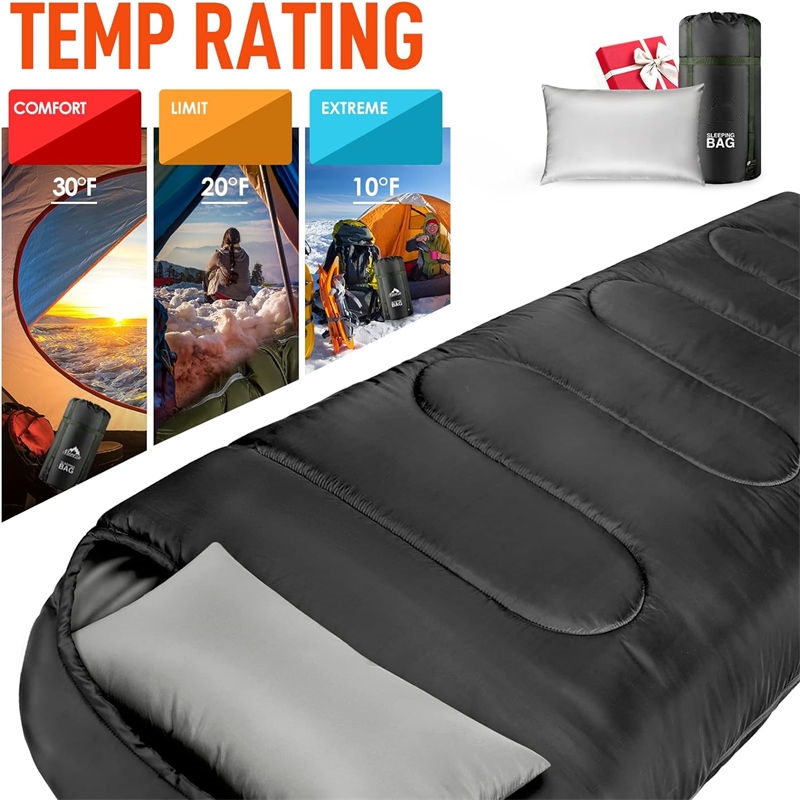
Hard specifications should clearly state in the technical specification document: outer shell fabric type and basic performance requirements; filling material type (e.g., polyester fiber, down, etc.); applicable temperature range (referencing product test data, such as "suitable for temperature differentials between -10°C and 10°C"); dimensional specifications and permissible tolerances; weight range; waterproofing or moisture-resistance treatment requirements; flame retardancy requirements (if the settlement scenario requires this); and compressed volume and storage method.
Service requirements should specify: delivery batches and schedule; packaging and labeling language, batch numbers, and warning information requirements; required documentation list (technical manuals, compliance declarations, third-party test reports); and whether on-site training support or remote guidance is needed.
Special population adaptation: if the project covers children, the elderly, or injured persons, it is recommended to separately specify sizing requirements and safety standards for these groups in the specification document — such as no harmful substances and no sharp edges — which are typically mandatory requirements under NGO beneficiary protection policies.
Compiling the above into a "Technical Specification Document + Service Requirements Checklist" serves both as the core annex of the tender document and as the basis for subsequent acceptance and dispute resolution. Relying solely on text descriptions is not recommended; where necessary, supplement with simple diagrams or reference sample descriptions to help suppliers accurately understand the requirements.
Tool Support: If you are drafting technical annexes for emergency relief sleeping bag tenders but lack an existing field template, you can leave a message via the contact form on this site with a brief description of your project background and target scenario. We will provide an anonymized general-purpose specification framework for internal reference only, to be used for discussion and benchmarking purposes. Final terms are subject to the formal contract signed by both parties.
→ Further Reading: For a systematic understanding of the selection logic and key indicators for emergency relief sleeping bags, refer to this site's How to How to Choose High-Quality Emergency Relief Sleeping Bags | 2026 Professional Buying Guide first, then use it in combination with this article's framework to design tender terms — the two articles work best together.
V. Supplier Screening and Evaluation: Which Hard Information Is Most Worth Verifying?
When evaluating factories, start from the hard information that "proves themselves" — not just the sales team's self-description.
Credentials and Compliance: Legal registration status, relevant production licenses, and quality management systems are baseline thresholds. For suppliers seeking to export overseas, export qualifications and related test reports should also be verified. It should be noted that some suppliers may not currently hold specific international certifications but can assist in coordinating with third-party agencies to complete certification — this is a common arrangement in actual projects. Procurement teams should confirm certification status requirements clearly in the technical specification document, rather than discovering documentation gaps only at the acceptance stage.
Technical and Production Capability: Does the disaster relief sleeping bag technical specifications coverage match the project requirements? Does the production scale support medium-to-large batch scheduling and a certain degree of urgent order responsiveness? Is the internal quality control process clearly documented and auditable?
Emergency Response and Delivery Capability: Does the supplier have a track record of delivering large or cross-border projects? Both of these points are particularly critical for government emergency reserve sleeping bags projects — the earlier they are confirmed in the preliminary evaluation stage, the better, rather than conducting ad hoc assessments after a disaster has already occurred.
Transparency and Willingness to Cooperate: In cross-border procurement scenarios, suppliers who proactively provide factory information, multiple rounds of samples, and improvement suggestions are the highest priority candidates. Willingness to cooperate with third-party factory audits is also an important reliability signal.
Adaptability to Multi-Standard and Multi-Country Projects: For projects that must simultaneously satisfy requirements from multiple countries or cross-institutional joint procurement, prioritize suppliers capable of handling different language labeling, different certification combinations, and with multi-country project experience. This is especially important for international aid sleeping bag procurement.
Why Do More Projects Tend to Choose Chinese Suppliers for Emergency Relief Sleeping Bags?
Looking at the global supply landscape, China has, in this category of warm cold-resistant emergency sleeping bags, a complete industrial chain from raw materials to finished products, stable capacity for medium-to-large batch orders and urgent order fulfillment, as well as a mature foreign trade and customs clearance service ecosystem. For government reserve and NGO international aid projects, these combined capabilities typically mean a good balance across cost, delivery time, and one-stop supply. The maturity of Chinese emergency sleeping bag suppliers' foreign trade services is also an important standard that distinguishes leading integrated factories from ordinary commodity suppliers.
→ Further Reading: For a complete analysis of the industrial chain advantages, production capacity scale, and foreign trade service capabilities for sourcing from China, refer to this site's Why Prioritize Chinese Suppliers for Bulk Procurement of Emergency Relief Sleeping Bags | 2026 Procurement Decision Guide to understand how to rationally incorporate Chinese supply sources into an overall global supply strategy.
VI. Tendering Modes and Negotiation: How to Choose the Right Path for Different Projects?
Open tendering is suited for high-value, high-sensitivity projects requiring strong competitive transparency. The quality of technical annexes directly determines the comparability of bids and the risk of post-event disputes.
Invited / restricted tendering narrows competition among a pre-approved supplier pool, reducing evaluation time while maintaining a degree of competition.
Framework agreements / pre-qualified supplier lists are preferred by many emergency management agencies. Once on the list, direct calls for supply during disaster response phases are faster and more compliant, significantly compressing procurement response time — an effective tool for "efficiency and compliance in parallel."
Competitive negotiation and small-value RFQ are suitable for medium-scale projects with clear technical requirements and a limited number of available suppliers. The process is flexible and is commonly used by NGOs for replenishment procurement during execution phases.
For government procurement of disaster relief sleeping bags covering long-term reserves and routine projects, open tendering or framework agreements are generally the preferred approach. During urgent response phases, under compliance prerequisites, priority should be given to drawing from pre-qualified or previously engaged suppliers.
Key negotiation focus points go beyond unit price, and should thoroughly confirm: technical compliance and scenario adaptability; delivery schedule and batch delivery plan; quality control and sampling inspection ratio and non-conforming product handling mechanism; after-sales service and emergency replenishment support; risk allocation, breach of contract liability, and the specific definitions of force majeure events.
Opportunity points for distributors and system integrators: participating in framework agreement pre-qualification is often more valuable in the long run than competing for individual projects. Once pre-qualified, subsequent procurement responses are faster and the compliance pathway is more straightforward — making it an effective approach for building a stable project pipeline. Suppliers who proactively help procurement teams clarify requirements, optimize configuration solutions, and explain potential risk points are more likely to transition from pure price providers to "long-term strategic partners."
VII. Contract Terms and Acceptance Arrangements: Which Details Must Be Explicitly Written Into the Contract?
Key contract clauses should cover the following six areas:
(1)Scope and Quantity: clearly specify the exact quantity of each specification and the permissible fluctuation range.
(2)Technical Standards and Acceptance Basis: state the standard number or test items, sampling inspection ratio (recommended to be jointly determined based on procurement volume during negotiation and then fixed in the contract), and the handling method for non-conforming items.
(3)Delivery Arrangements: delivery location, batch delivery milestones, transportation liability allocation, and insurance arrangements.
(4)Pricing and Payment: link payment milestones to acceptance results — avoid full advance payment, which removes leverage over subsequent quality risk management.
(5)Warranty Period: defect resolution timeline and the responsibility allocation for repair and replacement.
(6)Breach of Contract and Force Majeure: clearly define breach of contract liability for delayed delivery and quality non-compliance, and establish mutually agreed standards for recognizing force majeure events.
Batch Delivery and Trial Runs: for large-scale emergency sleeping bag bulk procurement projects, a two-phase delivery approach is recommended — Phase 1: small-batch trial delivery for use in real or simulated post-disaster settlement sleeping bag configuration scenarios to gather user feedback; Phase 2: decide whether to make minor configuration adjustments before completing main delivery based on that feedback. This approach can significantly reduce the risk of large-scale replacement and associated costs.
Acceptance Archiving: establish uniform procurement numbers and material numbers, and comprehensively archive contracts, communication records, acceptance reports, and payment records — providing the basis for audits and project reviews, and serving as the foundational documents for government procurement audits and NGO donor checks.
IX. These Five Procurement Mistakes Appear Most Frequently in Emergency Relief Sleeping Bag Projects
Mistake One: Judging by price alone, without verifying technical specifications
Using price as the only standard results in emergency relief sleeping bagsthat do not match project requirements upon delivery — insufficient fill, undersized dimensions, no flame retardancy treatment — triggering widespread complaints or forced returns. Prevention: lock in key technical indicators and scenario adaptability requirements in tender and RFQ documents. Confirm samples before placing bulk orders. Do not use the lowest bid as the sole award criterion.
Mistake Two: Emergency procurement with no records kept
Completely bypassing the documentation process during a rushed emergency launch leaves decision-makers facing unverifiable accountability scrutiny in post-event audits or donor reviews. Prevention: even with simplified procedures, retain at minimum a written needs statement, selection rationale, and price reasonableness basis — even a brief internal memo is far better than a blank record.
Mistake Three: Failing to verify production capacity and actual delivery lead times
Discovering after contract signing that the supplier cannot produce sufficient volume within the agreed timeframe directly leads to shortages of disaster settlement materials. Prevention: understand the supplier's actual production capacity range upfront. Build batch delivery milestones and breach of contract clauses into the contract, and specifically confirm urgent order responsiveness during the RFQ stage.
Mistake Four: Vague contract terms
Unclear definitions of key parameters, inspection standards, non-conforming product handling, and liability for breach of contract make it nearly impossible to determine responsibility when disputes arise — and the cost of seeking redress is extremely high. Prevention: specify each item clearly in the contract, and use the sample confirmation stage to fix technical benchmarks. Archive reference samples together with the signed contract.
Mistake Five: Over-design / over-specification
Pursuing "the best" by selecting configurations far beyond actual needs drives costs well over budget, while many "advanced features" are completely unused in actual settlement environments. Prevention: apply a "base configuration + upgrade on demand" two-tier selection approach. First define the minimum viable configuration covering most scenarios, then selectively elevate standards for extreme climate or high-risk roles — directing limited budget to where it matters most.
X. What Comprehensive Capabilities Should a Qualified Emergency Relief Sleeping Bag Supplier Possess?
The following checklist can help procurement teams and distributors quickly evaluate the comprehensive capabilities of candidate suppliers during the project assessment stage, and is designed to be used together with the content in Series One through Four on this site.
(1)Technical and Product Capability
Can satisfy the standards and technical requirements of the target country or institution; can provide complete parameter specifications and sample cooperation based on the specification document framework in Section IV; can provide test reports and compliance declarations covering disaster relief sleeping bag technical specifications; and for projects without specific certifications, can the supplier assist in coordinating with third-party certification agencies.
(2)Production Capacity and Delivery Capability
Possesses the capacity to accept medium-to-large orders and a certain degree of urgent order scheduling; has a clear production plan and batch delivery solution; and can accommodate trial-run small-batch arrangements rather than insisting on full one-time delivery.
(3)Quality Control and Compliance Cooperation
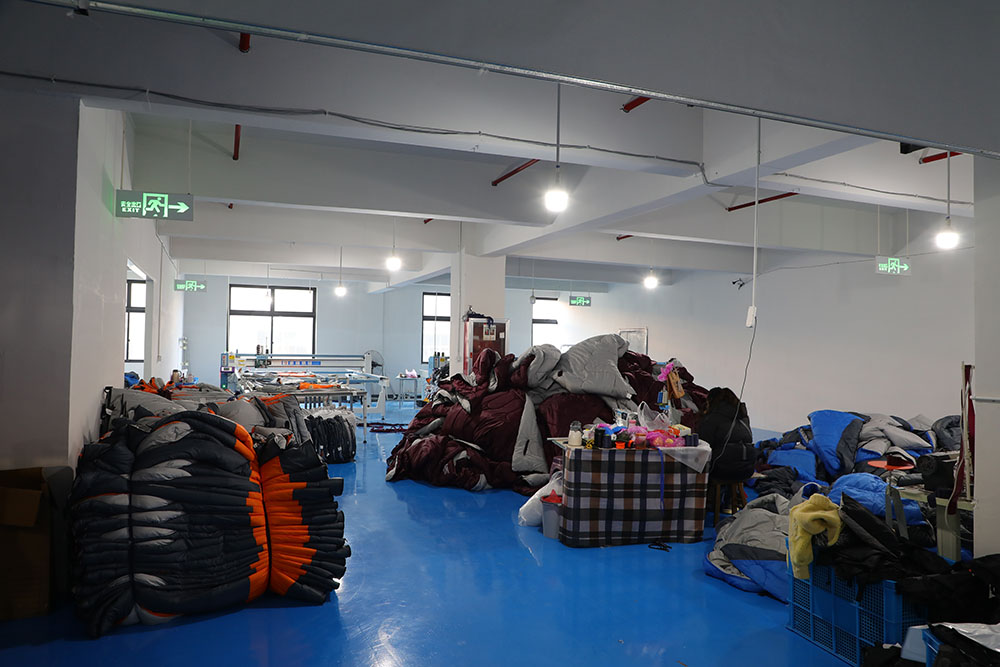
Has a complete internal quality management process; accepts cooperation with third-party testing, factory audits, and project audits; and can provide batch traceability information to support the procurement team's acceptance archiving needs.
(4)Foreign Trade and Cross-Border Service Capability
Holds export qualification; is familiar with cross-border customs clearance and the documentation requirements of common destination countries; can provide multi-language technical documentation and compliance statements; and has stable cross-time-zone communication and project coordination capability. The maturity of Chinese emergency sleeping bag suppliers' foreign trade services is an important standard for distinguishing leading integrated factories from ordinary commodity suppliers.
(5)One-Stop Supply and Solution Design Capability
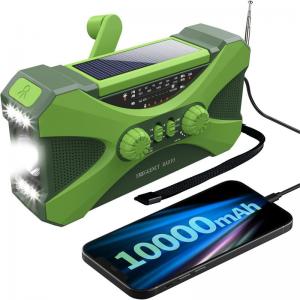
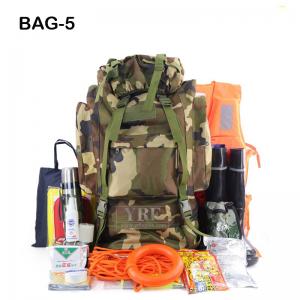
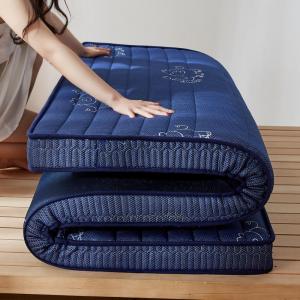
Not only supplies emergency relief sleeping bags, but can also provide related supporting materials — such as emergency blankets, moisture-proof mats, emergency lighting equipment, emergency kits, and storage backpacks — and can design a complete material configuration solution based on project requirements, rather than simply providing a single-item price list.
(6)Documentation and Project Cooperation Capability
Can provide standardized, complete, and traceable technical documents and progress updates as required by the procurement team; can cooperate in optimizing technical clauses during contract negotiation; and reduces the procurement team's operational burden in audits and project reporting. For NGO aid project sleeping bags procurement, the quality of documentation support often directly affects the smoothness of donor audits.
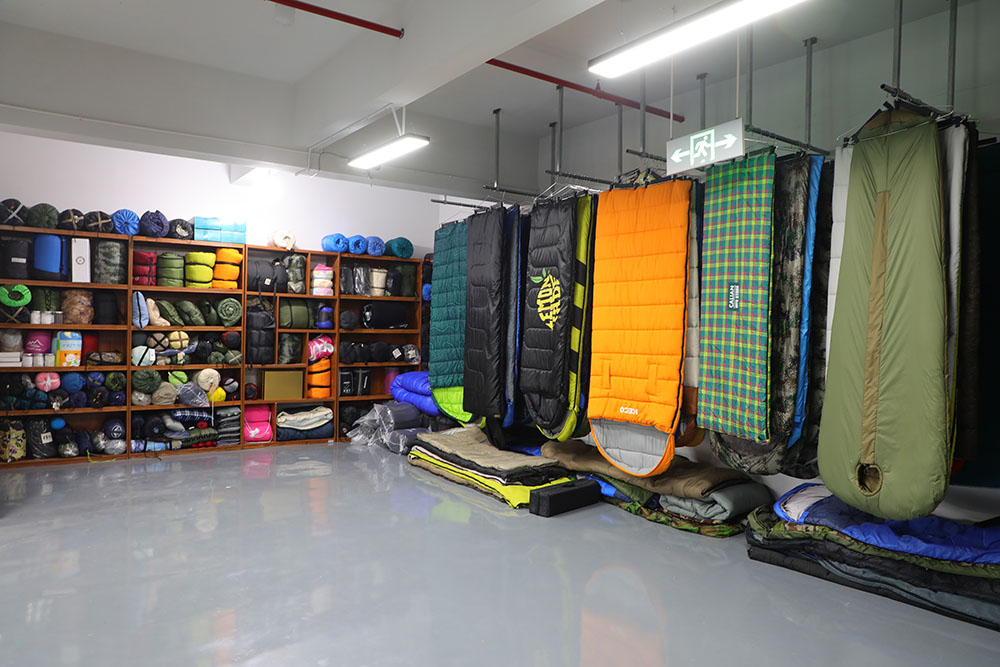
XI. YRF's Role in Emergency Relief Sleeping Bag Projects
What Practical Support Can YRF Typically Provide for Government and NGO Projects?
For government and NGO procurement teams: as a one-stop Chinese supplier focused on emergency relief supplies, YRF can help compile specific configuration solutions based on tender technical specifications, and provide standardized documentation, samples, and third-party testing coordination support. In multi-category bundled procurement projects for emergency sleeping bag bulk procurement (e.g., sleeping bags combined with emergency blankets, moisture-proof mats, storage backpacks, etc.), YRF can reduce the number of factories procurement teams need to interface with and the associated coordination costs, improve the consistency of standards across the full material set, and reduce logistics complexity.
For distributors and system integrators: YRF is not only a backend supply source, but can also play a technical collaboration role during bidding and project execution — helping to compile disaster relief sleeping bag technical specifications parameter checklists, prepare configuration descriptions, and produce multi-language technical annexes. This helps distributors communicate more professionally with government and NGO procurement teams, improving bid success rates and project execution completion rates. For distributors planning to incorporate emergency relief sleeping bags into their long-term project supply system, discussions on the product mix for the target market and regional cooperation strategies can begin in advance — without needing to wait for a single project to initiate a relationship.
In terms of practical project cooperation, support typically includes: selection recommendations and configuration solution drafts during the project initiation phase; sample verification, third-party testing coordination, and loading and customs clearance document preparation; batch delivery arrangements and urgent add-on order coordination; and post-project review configuration standardization, serving as a starting reference point for subsequent similar engagements.
All information is presented based on facts and demonstrated capabilities. No absolute commitments are made. Specific cooperation details are subject to the formal contract signed by both parties.
XII. Two-Way Action Recommendations: What Are the Next Steps for Procurement Teams and Suppliers?
Regardless of which side you're on, keeping three things in mind will already help avoid half of the common problems in the disaster relief procurement process:
Articulate the scenario clearly — before initiating any communication or tender, prepare a concise project background statement covering headcount, usage period, target climate, special population composition, and budget ceiling. This one-page document is the foundation for efficiency in every subsequent step.
Write the requirements clearly — take the technical specification framework from Section IV and turn it into a concrete document, specifying filling material type, applicable temperature range, dimensional specifications, packaging and labeling requirements, and the required documentation list. Vague specification descriptions are the single biggest source of post-delivery disputes.
Keep the process documented clearly — establish a procurement archive and completely file the needs statement, supplier selection rationale, contracts, acceptance reports, and payment records. Whether for a government audit or NGO donor review, complete process records are the most effective risk shield.
Procurement Teams: Five Actions You Can Execute Immediately
(1)Prepare a project needs statement (scenario type, headcount to be protected, climate zone, usage period, budget ceiling)
(2)Draft a technical specification document, referencing the key fields in Section IV of this article and the Series Two procurement guide — first define the base configuration, then establish upgrade options for special scenarios
(3)Request samples from 2–3 candidate suppliers, run a small-scale test against the delivery acceptance checklist, and confirm key performance and project adaptability
(4)Confirm the destination country's customs clearance document list with candidate suppliers and their foreign trade service coverage, identifying potential customs risks in advance
(5)Lock in key parameters, sampling inspection ratios, and non-conforming product handling procedures in the contract — do not leave these items for negotiation at the acceptance stage
Suppliers and Distributors: Three Actions You Can Execute Immediately
(1)Compile a standardized technical documentation package, covering product specification sheets, test reports, compliance certificates, and sample descriptions — capable of responding to a procurement team's technical inquiry within 48 hours
(2)Use the qualified supplier capability checklist in Section X of this article to conduct a self-assessment, identifying current capability gaps and developing an improvement plan
(3)Proactively provide configuration solution drafts to target clients rather than just price lists, increasing technical-level cooperation stickiness and transitioning from price provider to solution partner
Derechos de autor © Custom Disaster - Relief Bedding: Tents, Sleeping Bags, Blankets Reservados todos los derechos
el equipo profesional al servicio !