Categorías
Last updated: October 22, 2026 — Mosquito Nets Bulk & Disease Prevention Supplies
Malaria and cholera cases rise sharply in the weeks after flooding, and prevention supplies must move faster than the disease. This guide covers the mosquito nets, bedding and blankets that health programmes order for post-flood response, including the specifications to confirm, the quantities to plan and the packing to expect in bulk delivery and clinic-level storage.

A bright mosquito net over a family sleeping area.
A mosquito net over the sleeping area is the most visible prevention item in a post-flood response, and the blanket beside it serves the same family on cold nights. Both items are ordered against the same disease-prevention protocol: specification confirmed before shipment, quantity matched to the beneficiary list, and distribution recorded at the site.
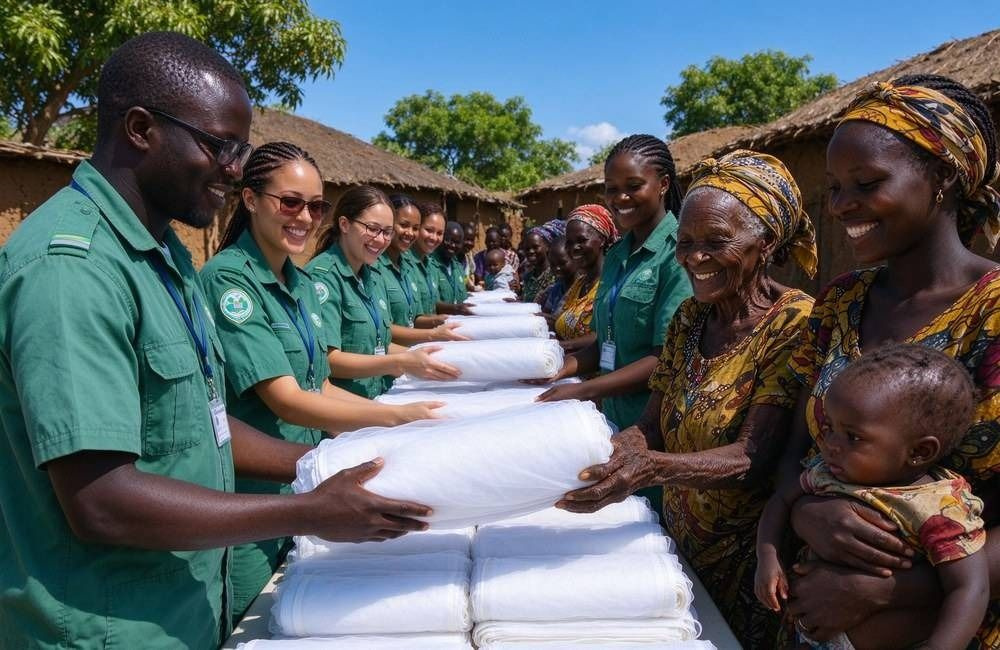
Distributing treated nets to families after the flood.
This guide walks through the supplies that matter after flooding: insecticide-treated nets, bedding that survives chlorine washing, and kits that combine both with basic hygiene items. Each section lists the specification points that health agencies check, so a bulk order arrives ready to distribute—not ready to argue about.
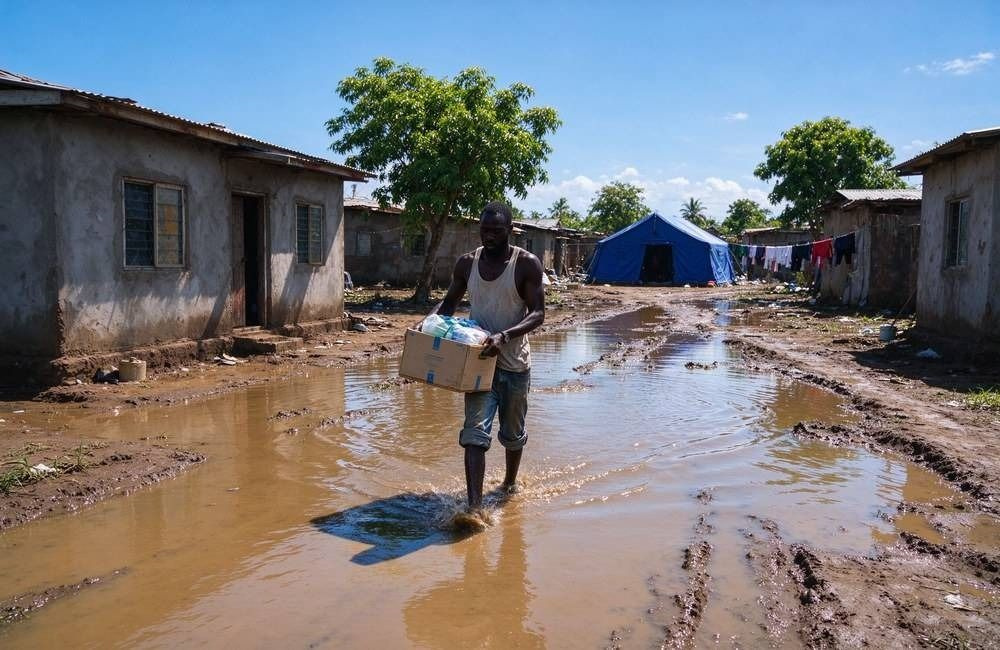
A flooded village with standing water around homes.
The guides in this series cover the same decision for other emergencies: bedding and shelter after displacement, and cold-season gear after cyclones. Together they form a sourcing reference for relief teams that restock across seasons rather than order once and hope, which is how relief teams keep a full prevention line ready.
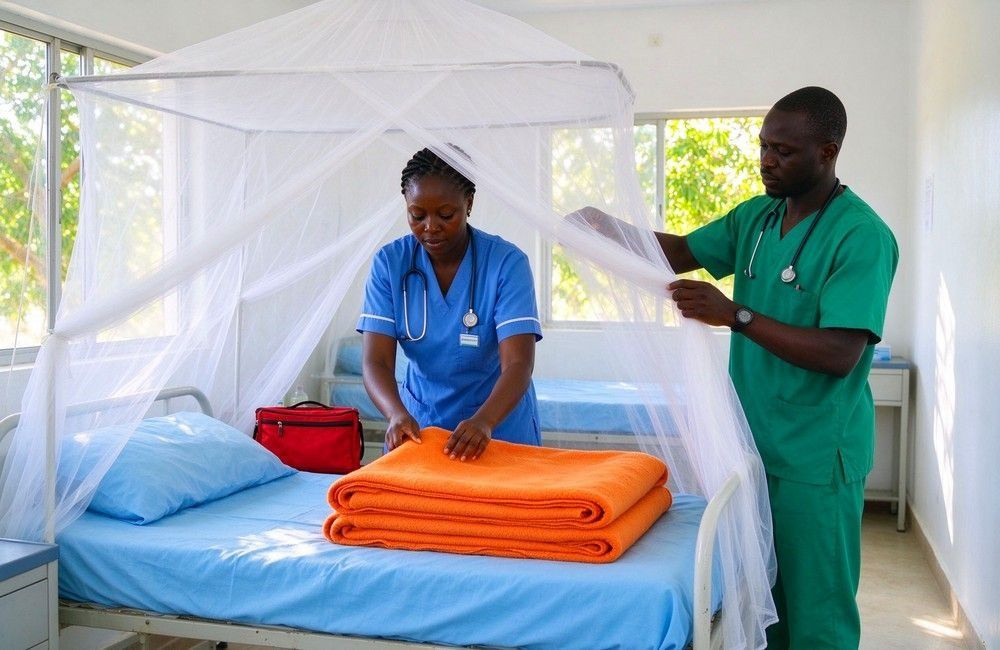
Mosquito nets over clinic treatment beds.
Malaria and cholera respond to different windows but the same logistics: nets, disinfectable bedding and hygiene items move together on one shipment. Suppliers who quote the combined line help agencies close the tender in one round, and the single shipment saves a second round of freight negotiation on the same booking.
For malaria and disease prevention guidance, see the World Health Organization and IFRC.
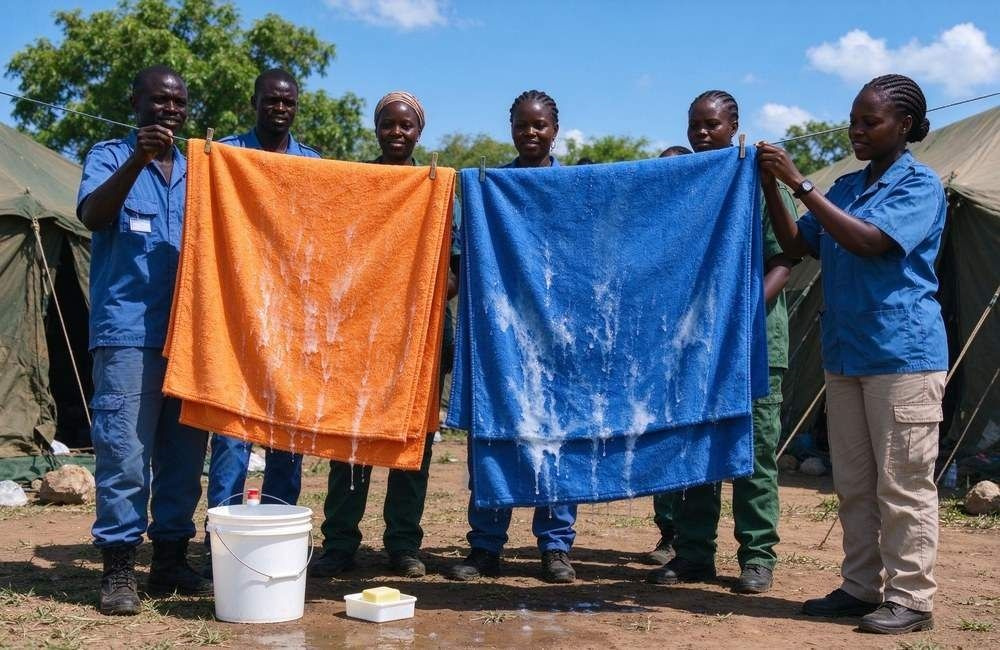
Chlorine-dipped bedding drying in bright sunlight.
Floodwater does not need to stay long to create a health emergency. Even shallow pools that last a week give mosquitoes time to breed, and wells and storage tanks contaminated by floodwater spread cholera until they are cleaned. The link between flooding and disease is well documented across Africa.
Somalia's 2024 floods contaminated water sources across the southern river basins, and health agencies reported spikes in waterborne illness in the weeks after. The pattern repeats in every flood season: the disease peak comes after the water recedes, not during the flood itself.
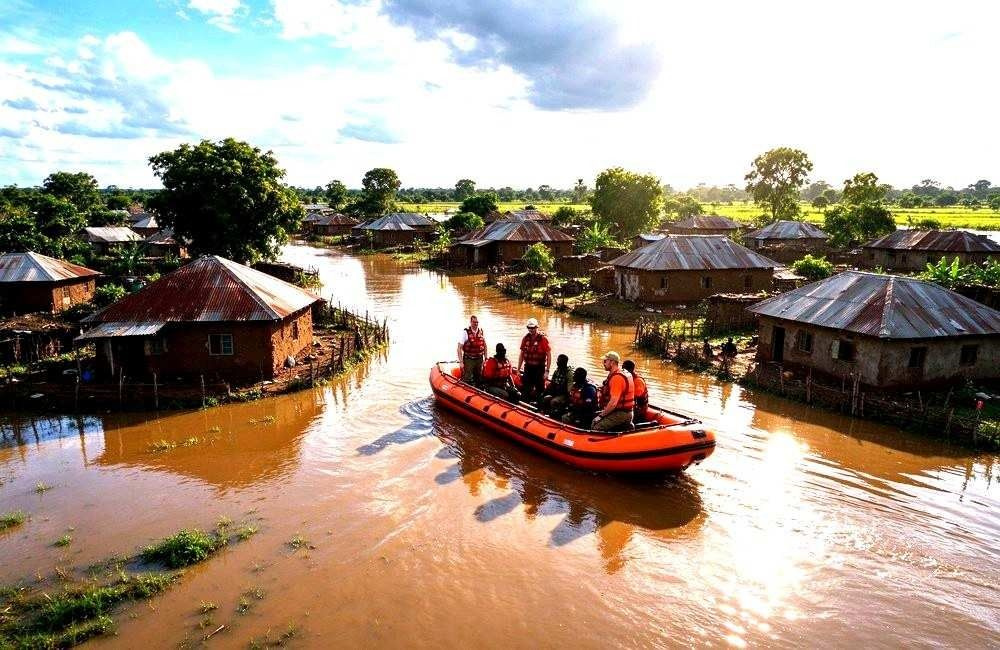
A flooded African village seen from above.
That timing matters for procurement. Supplies ordered during the flood arrive after the disease peak; supplies pre-positioned before the season arrive in time. Health programs that keep treated nets and disinfectable bedding in regional warehouses shorten the gap between flood and protection.
The window is roughly six to ten weeks after flooding, depending on temperature and standing water. Programs that distribute prevention supplies inside that window prevent cases; programs that wait for confirmed outbreaks are already treating. Programs that pre-position before the rainy season can start distribution the day the water recedes, which is why agencies order against the calendar rather than the news.
Procurement officers planning for flood season should treat disease prevention supplies as part of the flood response, not as a separate health order. Combining shelter, bedding and nets in one shipment cuts freight cost and delivery time. Freight and clearance are quoted once instead of twice, and the combined order arrives at the same port on the same vessel.
What belongs in that combined order is the subject of the rest of this guide: the net standard, the bedding specification and the kit list that health agencies recognise. The same three lines repeat across tenders in different flood zones, which makes the specification in this guide a working template for suppliers.
Standing water is treated in two ways: drained, or treated with larvicide where it cannot be drained, while families get nets and water purification tablets in parallel. Procurement supports both tracks, which is why health programs order nets, bedding and hygiene items as one package.
Agencies also track disease data through the season and adjust the order as cases appear. Suppliers who keep regional warehouse stock can respond to those adjustments, which is why flexible re-order terms are part of the agreement and of the standing supply plan.
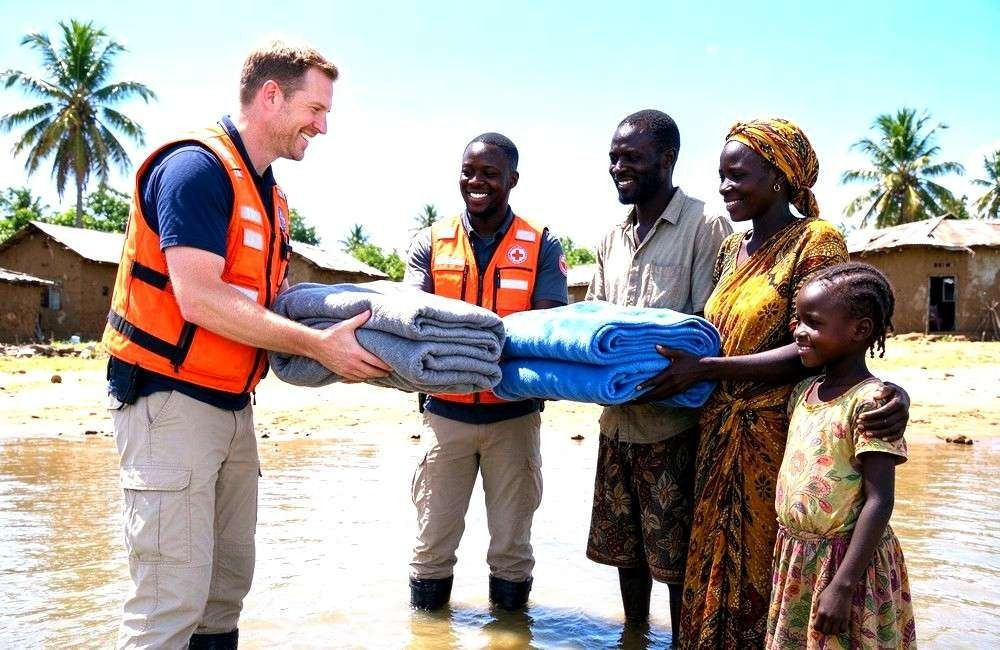
Rescue volunteers handing blankets to families.
The standard tool for malaria prevention is the insecticide-treated net (ITN), a mosquito net coated with insecticide that kills or repels mosquitoes landing on it. Long-lasting insecticidal nets (LLINs) hold the treatment through repeated washing, which is why WHO recommends LLINs for malaria prevention programs.
WHO guidance shapes most bulk orders. Nets are checked for physical strength, mesh density, insecticide content and wash resistance, and the treated surface must stay effective for at least three years of regular use. Buyers should confirm the standard with the agency before sampling, because a cheaper non-standard net can fail the wash test and the program.
The mesh density determines whether the net blocks the malaria mosquito while letting air through. A typical LLIN uses a fine mesh of about 156 holes per square inch, balanced against ventilation in hot climates. A coarser mesh blocks less; a finer mesh restricts airflow in hot climates. The 156-hole density is the balance that health programs specify most often.
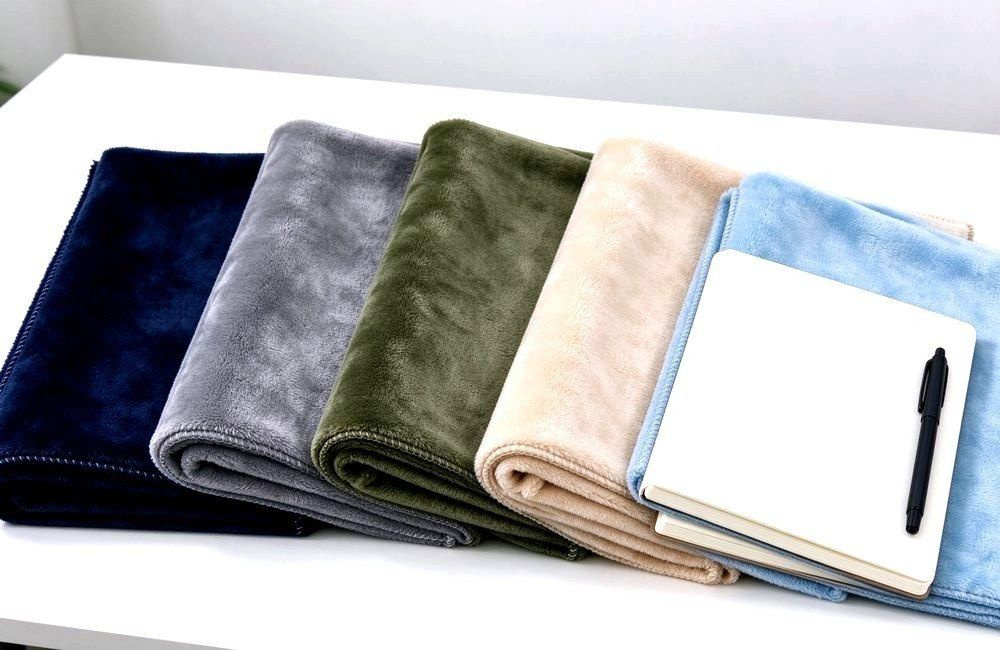
Mosquito net samples and colour cards.
Treatment wash resistance is tested in the laboratory by repeated washing, and the insecticide level is measured after each wash cycle. Buyers should ask for the wash-resistance test report with the sample, not accept a claim. The report should state the method used and the acceptance level, so the buyer can compare suppliers on the same test rather than on different claims.
For post-flood programs, nets are ordered in bulk with a specification sheet. The spec names the mesh, the insecticide type and dosage, the wash-resistance target and the packaging, so every carton meets the same standard. Because every carton carries the same spec, a program can order from multiple suppliers and still distribute a uniform product to households.
Nets alone do not stop malaria—bedding that can be washed and households that use the nets correctly matter too—but the net is the anchor item that every health program orders first. That is why a tender that names only the net type and skips the bedding line usually comes back for a second round before approval.
ITNs and LLINs are often confused in tenders. An ITN is treated once and may lose effectiveness with washing; an LLIN has the insecticide bound into the fibre so it survives the wash cycles families actually use. Tenders should name the LLIN standard to avoid a cheaper net that fails the program.
The WHO specification also covers net colour, size and hanging instructions. Family-size nets are supplied in the standard dimensions, and the pack includes the hanging loops and a pictorial instruction leaflet for households. The leaflet is part of the pack spec for agencies, because correct hanging is what turns a treated net into a protected family.
For buyers, the sample stage is where the whole order is decided: mesh, treatment, wash report and packing are all approved on one sample. The specification sheet that travels with the sample becomes the contract reference for the bulk order.
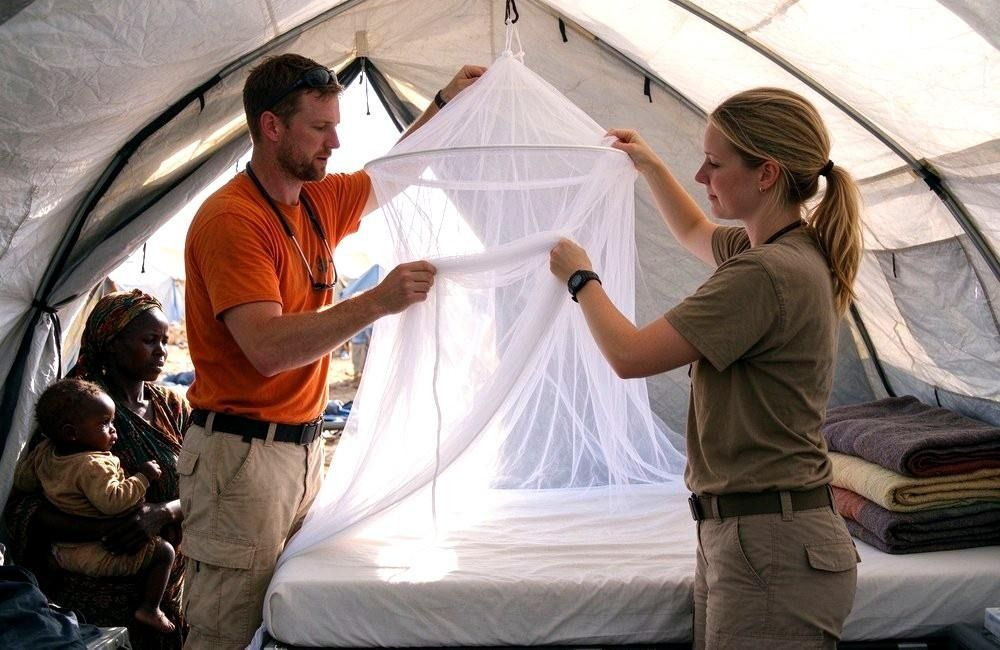
Hanging treated nets over camp beds.
Cholera spreads through contaminated water and food, and flood conditions are ideal for it: latrines overflow, wells flood, and hygiene supplies run out. The response is water treatment, hygiene supplies abeddinging that can be disinfected. The same standing water drives both diseases, so flood response procurement commonly combines the malaria net line and the cholera hygiene line in one order.
WHO cholera response guidance lists the supplies that belong in an outbreak kit: oral rehydration salts, water purification tablets, soap, buckets and disinfectant, alongside bedding that withstands chlorine washing. The list varies by agency protocol, but the textile items on it are consistently the ones that must survive chlorine washing.
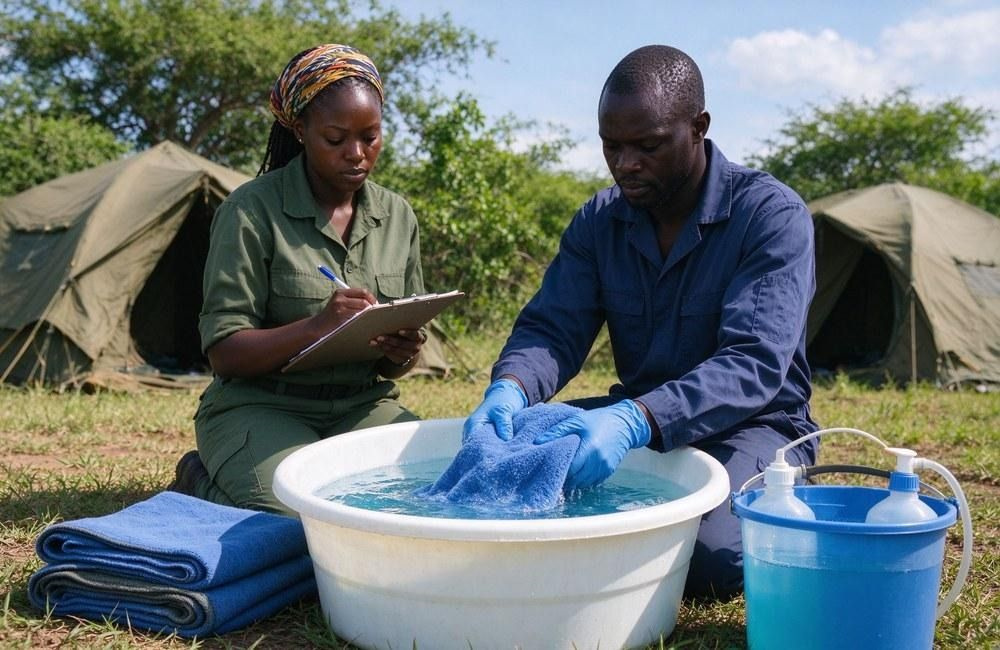
Dipping bedding into a chlorine solution.
For textile suppliers, the cholera response order is mostly about the bedding line: blankets and mosquito nets that survive chlorine dips without losing colour or strength. Cotton and polyester blends behave differently under chlorine, which is why the specification matters.
A common request is nets and blankets that can be dipped in chlorine solution and air-dried quickly. Program managers need bedding that returns to service the same day, so quick-drying fabrics are part of the spec. The dipping test at sample stage confirms the fabric behaviour, so the bulk order does not discover a fading problem in the field.
Hygiene items travel with the bedding. Soap, water purification tablets and simple buckets are often sourced locally, while the bedding is imported. Buyers save freight by combining both in one container. A single container with bedding plus the locally sourced hygiene items lets the agency clear one shipment and manage one budget line.
The key point for procurement is that cholera orders move fast. Programs order during an active outbreak, so suppliers who hold treated nets and disinfectable bedding in stock, or who can ship from an African warehouse, get the order. Stock in a regional warehouse cuts the lead time to days, which is why pre-positioning before the flood season is a standard procurement strategy.
Disinfectant concentration is part of the spec, not a field decision. Programs state the chlorine level and the contact time, and bedding is chosen to survive exactly that regime. Suppliers should confirm the concentration with the agency before sampling. The concentration level and the number of dips should be written into the quotation, so both sides test the same regime and accept the same result.
Cholera response also depends on clean water and sanitation, which is outside the textile order, but bedding and nets still carry the disease-prevention load in camps. Agencies combine both lines and hold suppliers to the same chlorine tolerance across both product lines.
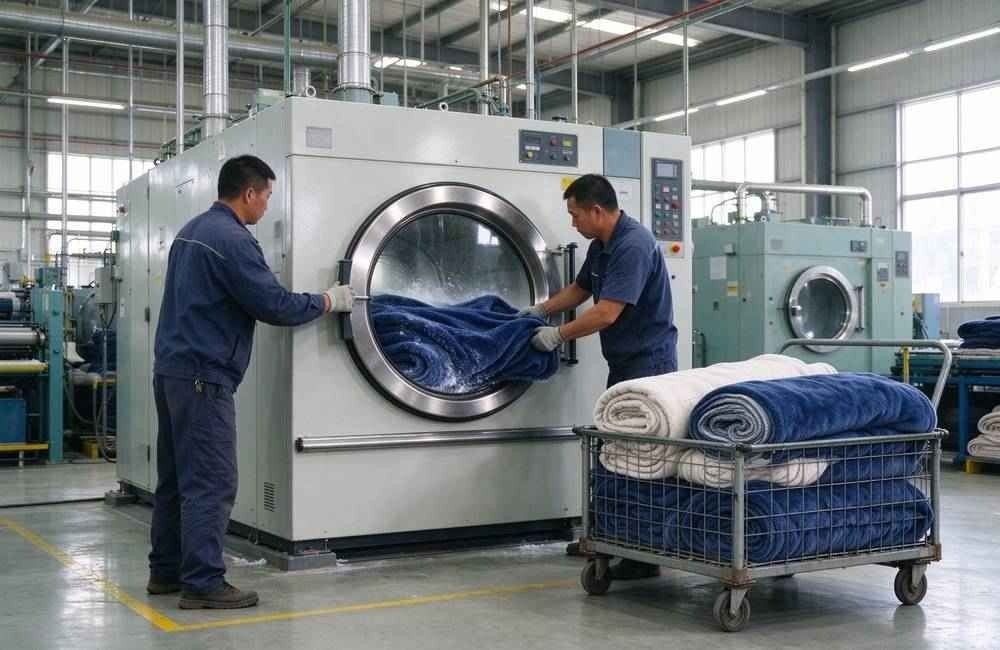
Industrial laundry machines for disinfection.
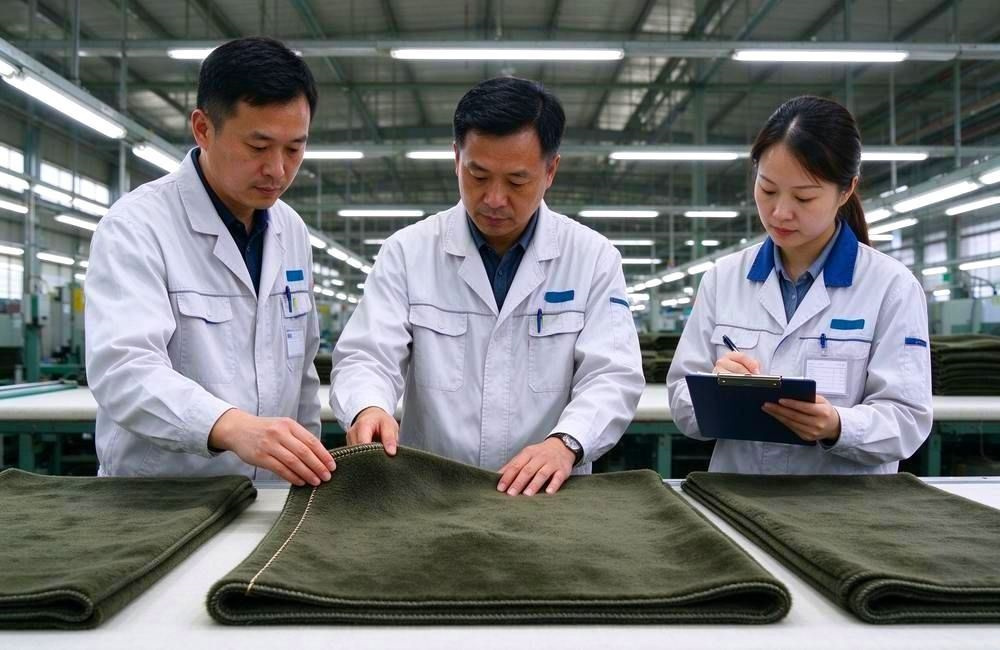
Not every blanket survives a health program. Camp bedding is washed with chlorine, dried in strong sun and reused across families, and fabric that fades, shrinks or frays after the first disinfection cycle fails the program. The failure usually shows up in the second or third wash, which is why the chlorine test is run before production rather than after delivery.
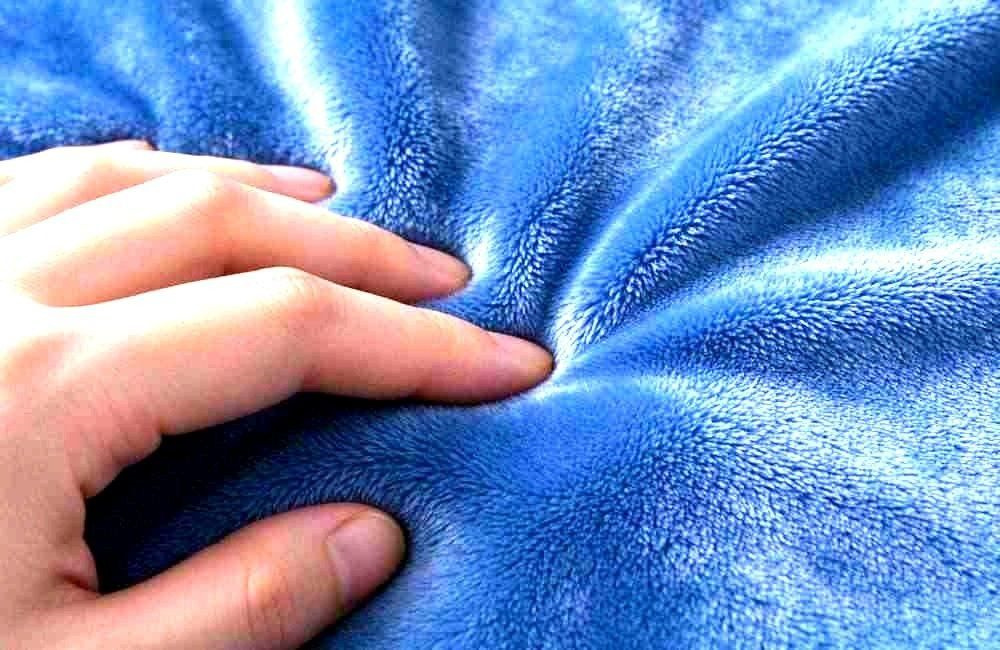
Polyester bedding fabric close-up.
The specification starts with fibre and construction: polyester or polyester-cotton blends hold colour under chlorine better than pure cotton, and tightly woven constructions resist shrinkage. The wash test should be run with chlorine, not plain water. Fibre choice also affects drying time and weight, both of which matter for programs that wash and reuse bedding in the field.
Colour fastness is measured against chlorine exposure, and buyers should ask for the test result on the washed sample. A blanket that passes twenty chlorine wash cycles at program strength is a different product from one that passes five. The washed sample, not the production sample, is the reference both sides sign off, because it reflects the fabric under real program conditions.
The table below sets out the specification points that health programs check on bedding that must survive disinfection. Confirming each point at sample stage prevents a batch that fails in the field. Each row below maps directly to a line on the agency quotation, so filling the table is also filling the tender document.
Mould resistance matters in humid flood zones. Treated finishes and quick-drying constructions keep blankets usable through rainy seasons; bedding that stays damp develops odour and breaks down faster. Quick-drying constructions also reduce the turnaround time between wash cycles, letting a small bedding stock serve more families.
Suppliers should state the disinfection tolerance on the product sheet: the chlorine concentration, the number of wash cycles, and the expected shrinkage. Agencies work from that sheet when they plan rotations and replacement. Programs plan replacement quantities from that sheet, and the stated tolerance becomes the acceptance level in the quality report.
Test reports should come from a recognised textile laboratory, not from the mill's own line. Agencies accept third-party results for chlorine wash cycles and shrinkage, and the report is attached to the quotation and the shipment. Agencies also accept test reports from their own appointed labs, so the supplier should confirm the lab list before commissioning tests.
The disinfection tolerance is verified twice: on the pre-production sample and on the random production batch. Both results are compared against the same acceptance level, and the shipment is released only when both pass, in line with the agency protocol.
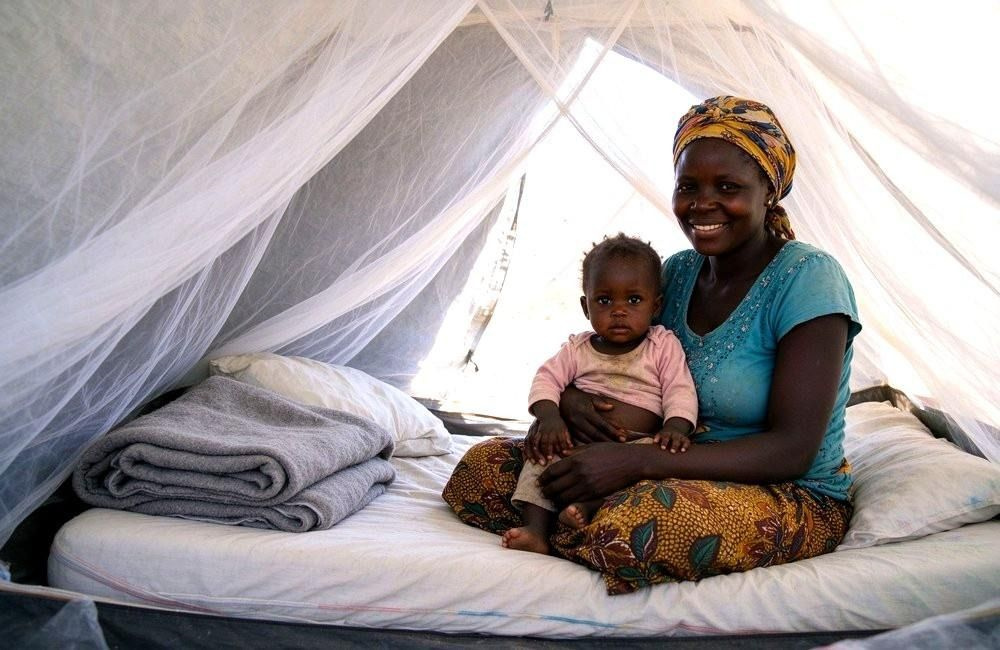
Household nets are usually rectangular, sized for a single bed or family sleeping area, and supplied with hanging loops and a carry bag. The standard family size covers two adults and a child. Hanging loops are specified in pairs, and the carry bag doubles as the storage bag between seasons, which programs note in the pack spec.
Clinic nets cover treatment beds and can be larger, with stronger mesh and treated coating because clinic beds see constant use. Some programs order ward-size nets for patient areas. Clinic nets also carry the same insecticide treatment, and the stronger mesh protects patients who cannot move away from mosquitoes.
Distribution logistics decide the pack size. Household nets are often packed one per bag with a hanger kit, while clinic orders use flat packs of ten. The pack plan should be agreed at sample stage. Flat packs of ten load faster on distribution trucks and keep the carton count predictable for the port agent.
Nets for households and clinics are ordered by the thousands in post-flood programs, and the same net standard covers both lines. What differs is size, packing and the hanger kit. Buyers order both lines from one supplier to keep one spec sheet, one quality report and one packing list for the whole shipment.
Net replacement is planned into the program, not discovered at the end of the season. Agencies order a percentage of spare nets with the bulk order, and suppliers quote spares at the same unit price to keep the budget stable.
Agencies also specify the hanging kit separately for replacement orders, because loops wear faster than mesh in camp use. Buying the hanger kit as a spare line extends the life of the nets already in the field and in the next season's budget.
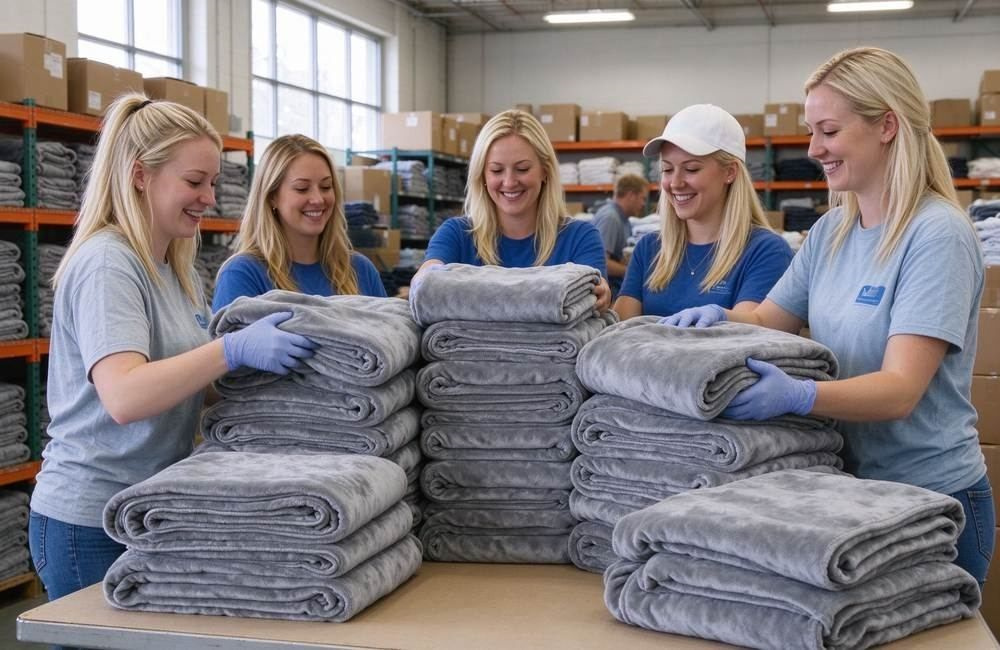
Post-flood disease prevention kits bundle the items a family needs in one pack: a treated net, a blanket that survives disinfection, soap and water purification tablets. Kits distribute faster than loose items and keep every family to the same standard.
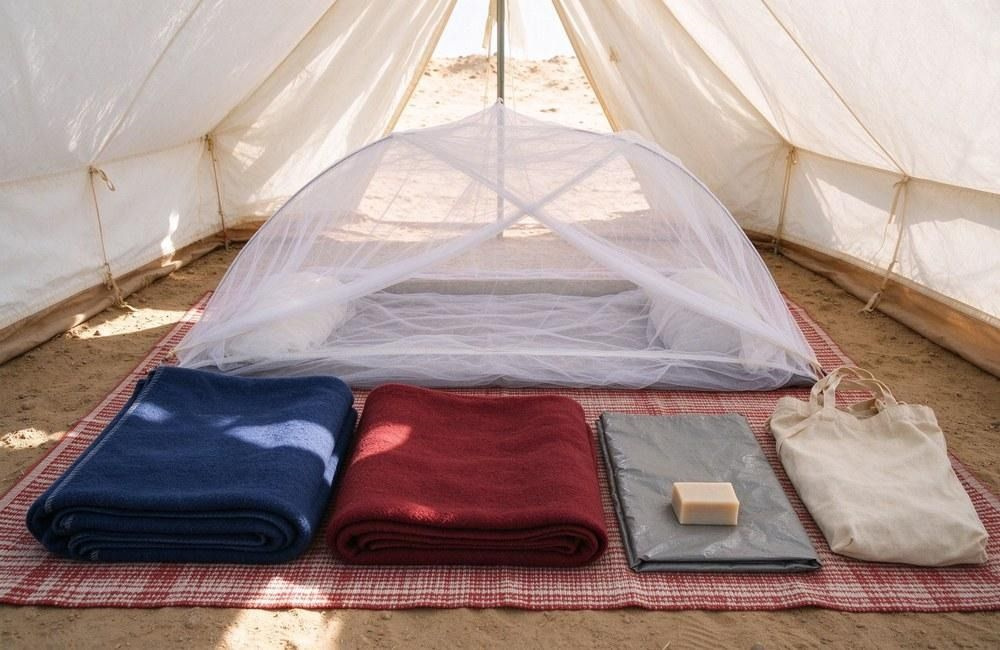
The table below shows a typical post-flood disease prevention kit. Quantities are planning references, not fixed rules; the final kit list follows the agency's protocol and the local disease profile. The same table format repeats across agency tenders, so a supplier who keeps the kit breakdown stable can quote faster each season.
Kit variants follow the context. Cholera-response kits add rehydration salts and buckets; malaria-season kits emphasise nets; family kits for young children add a smaller blanket. The common base keeps production simple while the optional lines let agencies match the local disease profile without redesigning the pack.
Kits are labelled for the distribution team, with pictograms where literacy varies. Language and label choices are part of the kit spec, and should be confirmed at sample stage. Pictogram labels are printed on the bag rather than as a separate insert, so the label survives handling and reaches the family intact.
Kit pricing is quoted per kit, not per item, and the breakdown should be shown in the quotation so agencies can compare like for like. The breakdown also shows which items are imported and which are sourced locally, which is the line agencies check first in a quotation.
Kit tenders are priced per kit with a line-by-line breakdown, and agencies compare the breakdown, not just the total. Suppliers who keep the breakdown stable across tenders make repeat orders faster to approve. A stable breakdown also makes the sample stage faster, because the same kit can be re-sampled without re-testing every item.
Kit distribution data feeds the next season's planning: the number of families reached, the items used and the wastage rate all come back in the agency report. Suppliers who keep kit records aligned with those reports build trust for repeat tenders.

The table below lists the quality checks that health programs expect on treated net orders. Each check is run on a random sample from production, and the results travel with the shipment. Random sampling follows the program's inspection level, and a failed sample stops the batch until the cause is corrected and re-tested.
The insecticide content check is the one most often argued about. The coated surface is measured in milligrams per square metre, and the lab report should state the level after the required number of washes. The acceptance range is part of the tender, and the report compares the measured level against that range for every carton batch.
Physical checks cover mesh evenness and seam strength. A net that splits at the seam after a month of use fails the program even if the treatment is perfect. Seam tests use a defined pull force, and the acceptance level is stated in the specification so the result is not open to negotiation.
Buyers should ask for the quality report with the shipment, including the batch number on every carton. That traceability is what lets a program pull one bad batch without recalling everything. Batch numbers are printed on each carton and listed in the report, which is what makes a targeted recall possible in the field.
Third-party testing adds time and cost to the order, so the test scope is agreed at sample stage. Programs accept one consolidated report covering mesh, seams, insecticide content and wash resistance rather than four separate certificates. One consolidated report is also easier for the program to file and audit, which is why agencies prefer it in the tender documents.
The batch record also includes the production date and the treatment line used, so a quality issue can be traced to the exact shift. This level of traceability is now expected in health program tenders and in donor audits alike.
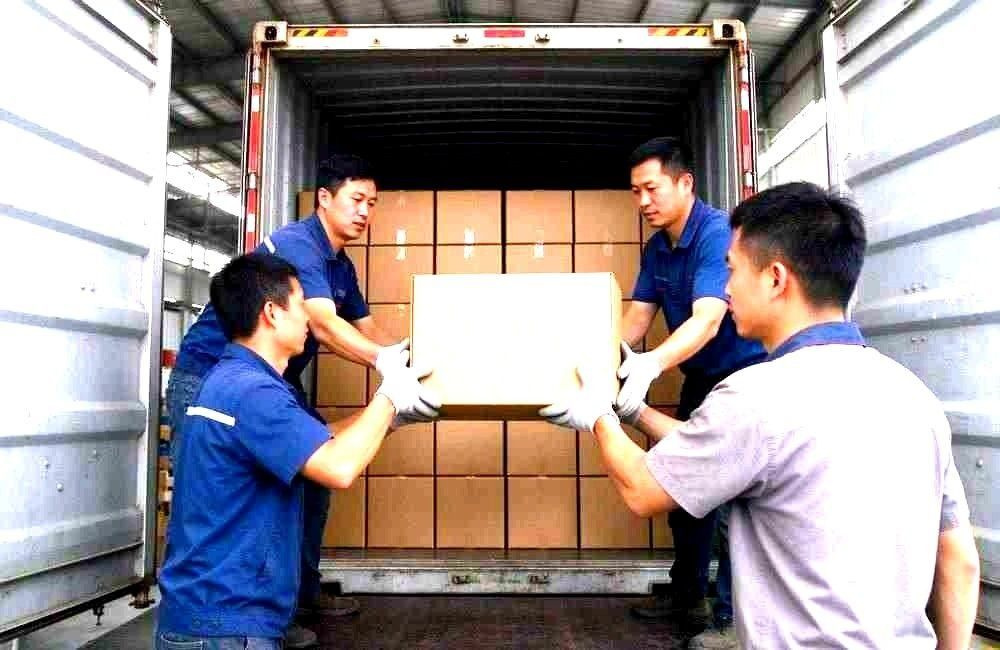
How disease prevention supplies are packed decides how fast they reach families. Cartons that match the distribution plan—one net per bag, kits pre-packed, labels facing out—move faster than loose cartons sorted at the site. The pack plan is agreed at sample stage, and the carton dimensions are checked against the truck and container plan before production.
Nets are compressed for freight but must spring back to full shape, so packing uses controlled compression with a relaxation period before distribution. The pack spec states the compressed size and the recovery time. The relaxation period is stated in days, and programs factor it into the distribution schedule so nets are fully shaped when handed out.
Kits ship pre-packed in individual bags, with the contents list printed on the bag. Carton marks carry the program name, batch number and destination zone, matching the packing list exactly. The contents list matches the kit breakdown in the quotation, so the receiving team can verify the shipment without opening every bag.
Documentation is the final packing item: the packing list, quality report and certificate of origin travel with the shipment, with copies emailed to the program office. The documents are also uploaded to the program portal where they exist, which shortens the clearance process at the destination port.
Labels on kits and nets should use the language of the distribution team, with pictograms where needed. The label spec is confirmed at sample stage and printed before bulk production, because changing labels after production means reprinting every carton. The label spec is part of the sample approval, so the agency sees the actual label before bulk production rather than after it.
Carton marks follow the destination language where possible, and the marks are confirmed on the sample carton before bulk production starts. The receiving team reads the marks, not the packing list, when sorting at the site, where speed matters most.
Health agencies buy disease prevention supplies through defined processes. WHO specifications shape the product, while procurement follows each agency's tender or framework agreement. Suppliers who know both sides of that process quote accurately and ship on time. The two sides of the process are usually handled by different teams inside the agency, which is why the supplier's documentation matters as much as the product.

The product side is the WHO net specification and the disinfection tolerance on bedding. The process side is registration, samples and framework agreements that agencies use to restock quickly. Both sides are confirmed at the first sample stage, so the agency can approve the product and the process in one round.
Agencies expect three things: a specification sheet on every product, a wash-tested sample before the bulk order, and a quality report with the shipment. Missing any of the three delays approval. The three documents form the approval package that agencies keep on file, and the same package is re-used for follow-up orders.
Lead times are quoted in the tender and enforced in the contract. Programs plan distribution around the arrival date, so suppliers who confirm realistic lead times and update on delays build repeat business. A supplier who reports a delay before the deadline keeps the agency's distribution plan intact, which is worth more than a perfect product.
The relationship is practical rather than personal: deliver the spec, keep the sample, ship with the report, and the next tender comes back to you. Repeated clean deliveries also shorten the evaluation time on the next tender, because the agency already has the file on record.
Framework agreements are the fastest route for post-flood restocking. An agency that already approved the net sample and specification can place follow-up orders without a new tender, which is why suppliers treat the first approval as the real sale.
New suppliers should expect a slower first cycle: registration, samples and one pilot order before framework status. The pilot order is usually small but proves the pack, the document set and the delivery terms that the framework will repeat without re-negotiation.

Tchecklist belowlow gathers the specification points that health agencies include in a disease response RFQ. Completing every line before quoting saves two rounds of clarification and keeps the sample stage short. The same checklist is used by suppliers on the quoting side, so both parties measure the RFQ against the same set of lines.
The RFQ should name the WHO standard or agency protocol that applies, so the supplier quotes against the right specification rather than a generic product. Naming the standard also protects the supplier, because the quotation is then evaluated against a fixed specification instead of a vague one.
Delivery terms matter as much as the product. Post-flood programs restock against an outbreak curve, so the RFQ states the arrival date, the port or warehouse, and the acceptable partial-shipment terms. The RFQ should also state whether partial shipments are allowed, because that changes the packing plan and the freight quote.
A complete RFQ turns a bulk order into a repeatable process for both sides. When every check point, quantity and delivery term is written down, the same specification can be tendered again next season without starting from zero. That repeatability is the reason agencies standardise their RFQ format, and suppliers who follow it become easier to tender with.
Payment terms and insurance belong in the RFQ as well. Agencies commonly pay by letter of credit or against documents, and the RFQ states the incoterm and the insurance cover expected on the shipment. The incoterm decides which party covers freight and insurance, so both should be stated in the RFQ to avoid a dispute at the port.
The most common RFQ mistake is leaving the net specification open. A line that says standard net invites ten different quotations; naming the WHO standard and the mesh closes the comparison. The mesh density, the insecticide type and the WHO standard together close the comparison, which is what a clean tender is about.
Agencies score RFQ responses against a fixed evaluation grid, with points for specification completeness, delivery terms and past performance on similar deliveries. Suppliers who fill every line of the grid consistently score higher without lowering the price or the specification.
Here are the questions agencies ask most often before ordering post-flood diseaprevention suppliesies, with practical answers from field programs and the specification points that matter at tender stage.
Long-lasting insecticidal nets (LLINs) with WHO-recommended insecticide treatment are the standard choice. The treated surface stays effective through repeated washing for at least three years, which is why malaria programs specify LLINs for household distribution. The WHO net specification and the wash-resistance report travel with every bulk order.
Yes. Treated nets are manufactured in bulk and exported by the container for health programs across Africa. Wholesale orders include the specification sheet, wash-resistance test report and batch-labelled cartons required by agencies. Lead time, packing and batch traceability are stated in the quotation.
Floods leave standing water where mosquitoes breed, so malaria risk rises in the weeks after floodwater recedes. Distributing treated nets to households and clinics inside that window prevents cases instead of treating them later. Nets are the first prevention line because they protect sleeping hours, when most bites happen.
Polyester or polyester-cotton blends with tightly woven construction hold colour and shape under chlorine washing. The wash test should be run with chlorine at program strength, and the tolerated wash cycles stated on the product sheet. The same specification applies to nets and blankets in the kit.

Yes. Household nets are sized for family sleeping areas with hanging loops and carry bags, while clinic nets are larger with stronger mesh for treatment beds. Both lines follow the same WHO net standard. Clinic nets are quoted separately because size and mesh differ.
A typical kit combines a long-lasting insecticidal net, disinfectable blankets, soap and water purification tablets in a labelled carry bag. Cholera-response kits add rehydration salts and buckets to the same base. Kit quantities follow the agency protocol for the local disease profile.
Checks cover mesh density, seam strength, insecticide content and wash resistance on random production samples. The lab report travels with the shipment, and batch numbers on cartons keep every order traceable. A failed batch is pulled by number without stopping the rest of the shipment.
Nets are compressed for freight with a stated recovery time, kits ship pre-packed in labelled bags, and carton marks carry the program name and destination zone. The pack plan is agreed at sample stage. Compression and recovery time are stated on the pack sheet.
Yes. Programs often print the program name, donor logo and distribution instructions on the net bag or label. Branding is confirmed at sample stage and added to the pack specification. The label language follows the distribution team's working language.
Bulk orders are quoted per unit with a minimum quantity per container line, and the MOQ depends on the net specification and packing. The exact minimum is confirmed in the quotation before sample approval. Agencies compare the MOQ across suppliers when they plan the budget line.
Standard production and sea freight run eight to twelve weeks; air freight and regional warehouse stock can move faster during an active outbreak. The RFQ arrival date decides the shipping route. Regional warehouse stock is the fastest option during an outbreak.
Yes. Nets are manufactured against WHO-recommended insecticide treatment and tested for mesh density, wash resistance and insecticide content. The applicable standard is named in each quotation. The sample is tested against the same standard before approval.
Programs typically plan one treated net per sleeping area, which means one or two nets per family depending on household size. The family kit list in the RFQ confirms the exact quantity. The spare-net percentage is ordered with the main line to cover damage.
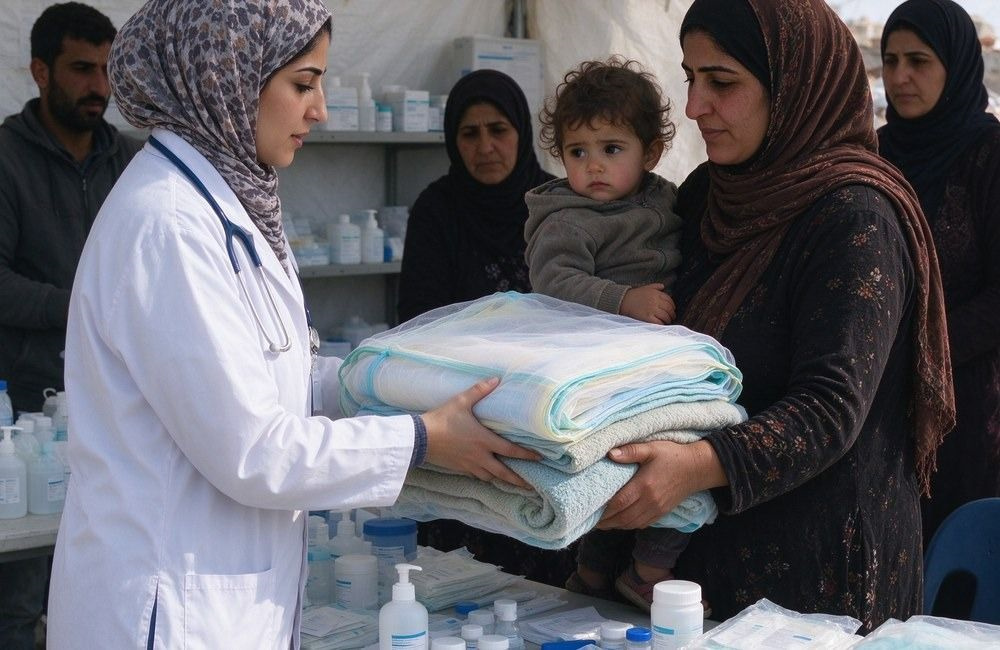
Malaria and cholera cases rise sharply in the weeks after flooding, and prevention supplies must move faster than the disease. The mosquito net and blanket in this handover are ordered together, with specifications confirmed before the shipment so clinic-level storage can accept them immediately.
 |

|
Anterior :
IDP Camp Supplies: Blankets and Bedding for Displaced Families, Sizing, GSM, Hygiene-Friendly Fabrics and Bulk Procurement for Camp Managers and Humanitarian Buyers and Restockingpróximo :
Africa Emergency Responder Gear: Workwear, PPE, Medical Blankets | Custom Sizing, GSM, Colour Coding & Bulk OrdersEnlaces amistosos :
Derechos de autor © Custom Disaster - Relief Bedding: Tents, Sleeping Bags, Blankets Reservados todos los derechos
el equipo profesional al servicio !