Categorías
A civil affairs relief frame tent is a temporary shelter built on a rigid steel pole tent structure, covered in canvas or Oxford fabric, and specified for government-led disaster response. As a steel frame emergency tent manufacturer supplying relief camps, hospitals, and school procurement programs since 2010, we see one mistake repeatedly: buyers treat every frame shelter as if it were the same product. The tube diameter, wall thickness, fabric weight, and waterproof rating decide whether the tent actually holds up through a flood season or a winter deployment.
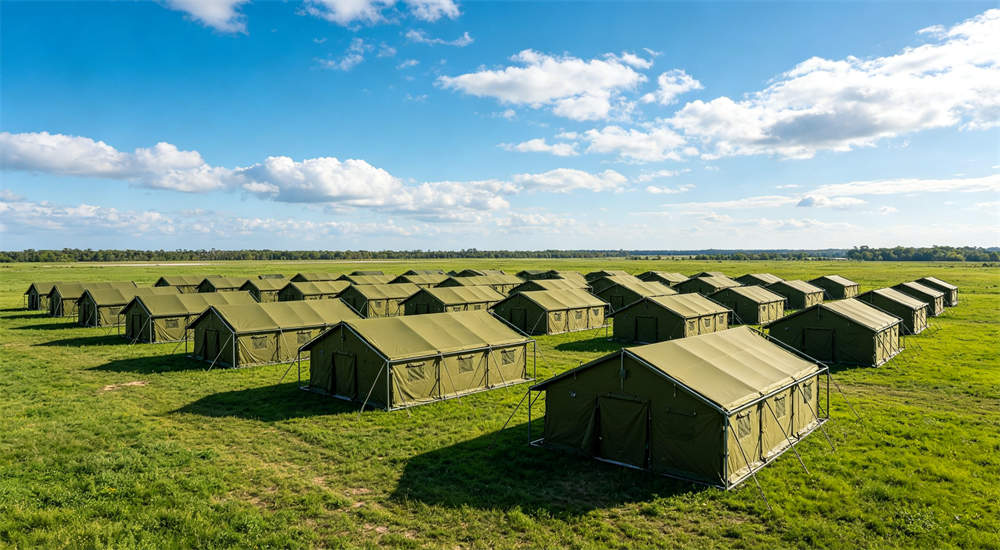
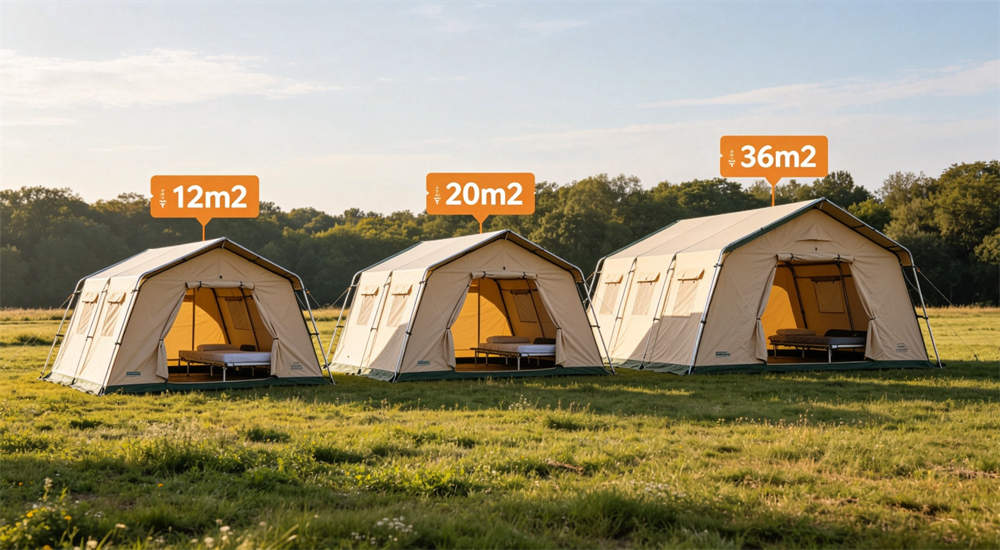
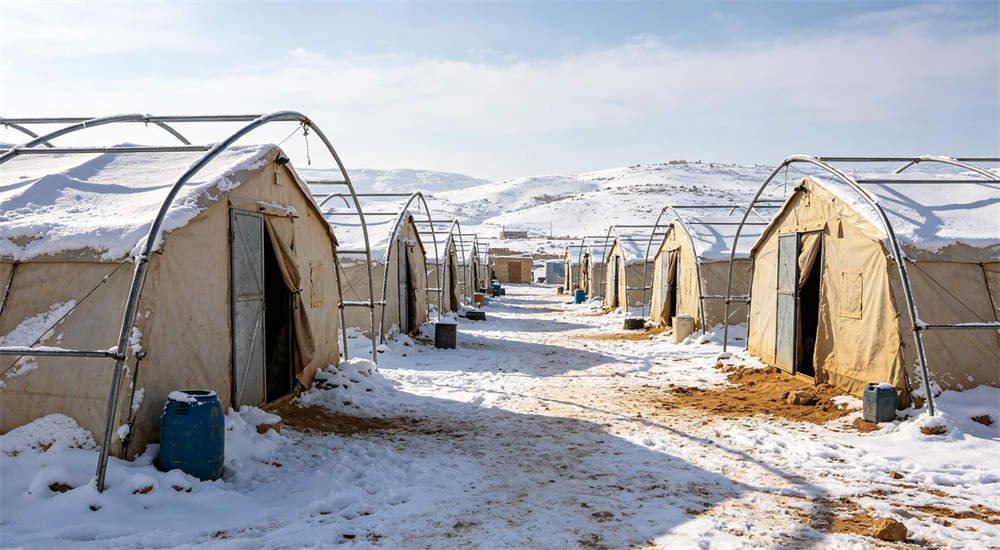
The most common 12 square meter relief tent measures 3.2×3.7 m and houses 6-10 displaced people. Larger relief camp tent units run 20-36 m2 for dining, command, or family blocks. Built to civil relief procurement norms, these are not camping tents — they are engineered for repeated field use, stake-down wind loading, and multi-year storage.
Short answer: Start with the duty. If the camp stays put for weeks or months, has no mains power, and may see sub-zero nights, a disaster relief frame tent on galvanized steel beats an inflatable shelter every time. If your priority is 15-minute deployment and frequent moves, look at inflatable units instead. Typical 12m2 frame tent pricing runs $600-$1,200 FOB for a basic set.
| 1. What is a civil affairs relief frame tent? |
7. Wind, rain and anchoring |
|
2. Why steel frame structure matters |
8. What a complete set includes |
|
3. Where it fits (use cases) |
9. Why two projects differ |
|
4. Not the same as camping tents |
10. What to tell suppliers |
|
5. Frame vs inflatable tents (table) |
11. What a professional reply includes |
|
6. How to select the right emergency shelter tent size for your population |
|
The disaster relief tent is engineered for long-term use in refugee camps and emergency response operations.
This emergency shelter tent provides durable protection against rain, wind and extreme temperatures for displaced families.
Humanitarian aid tent procurement requires strict compliance with UNHCR and IFRC technical specifications.
Refugee camp tent designs prioritize ventilation, privacy and durability for multi-year occupancy.
The heavy duty tent construction uses 600D polyester canvas and galvanized steel poles for 5+ year lifespan.
Military tent specifications are often adopted by relief agencies for their ruggedness and quick assembly.
We offer wholesale frame tent pricing for bulk orders of 50+ units with customized branding options.
As a professional frame tent manufacturer, we control every step from fabric weaving to final quality inspection.
Bulk relief tent orders benefit from volume discounts and consolidated shipping to disaster zones.
Institutional tent procurement follows government tender processes with strict documentation requirements.
For long-term displacement scenarios, the permanent shelter tent design includes reinforced floors and insulation.
Our galvanized steel tent frames resist corrosion and maintain structural integrity in humid coastal environments.
The waterproof canvas tent material is treated with mildew-resistant and flame-retardant coatings.
Family relief tent configurations include separate sleeping areas and a central living space.
Choosing the right tent supplier is critical for ensuring on-time delivery and after-sales support.
We provide OEM frame tent manufacturing for brands and distributors worldwide.
Custom relief tent modifications include logo printing, color changes and layout adjustments.
Emergency housing tent solutions serve as transitional shelter while permanent reconstruction progresses.
|
Since 2010 |
60+ |
20,000+ |
ISO 9001 |
|
Shelter Manufacturing |
Countries Served |
Relief Units Shipped |
Certified Factory |
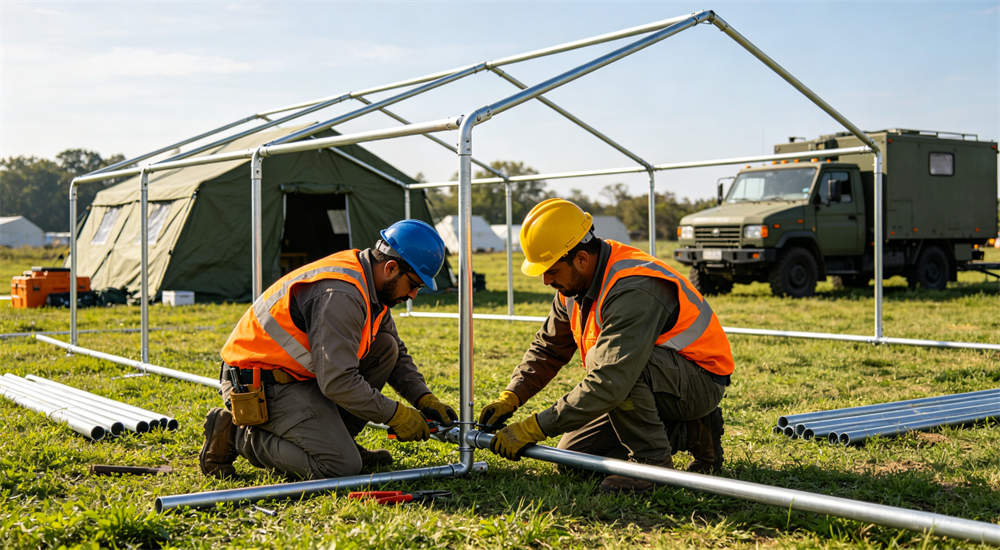
A 12m2 unit takes 30-45 minutes with 3-4 people: raise the corner poles, connect horizontal ribs, slide the canvas cover on, then stake and guy. This type of canvas relief tent is also known as a steel pole shelter, designed for repeated assembly and disassembly in emergency conditions. The galvanized steel frame provides rust resistance for outdoor deployment in humid or coastal regions. The 12m2 relief tent remains the most widely ordered size for family accommodation in refugee camps. A complete canvas relief tent package includes the outer cover, inner liner, frame tubes and all anchoring hardware.
A 36m2 camp block needs 4-6 people and 60-90 minutes. Times exclude interior furnishings and heating.
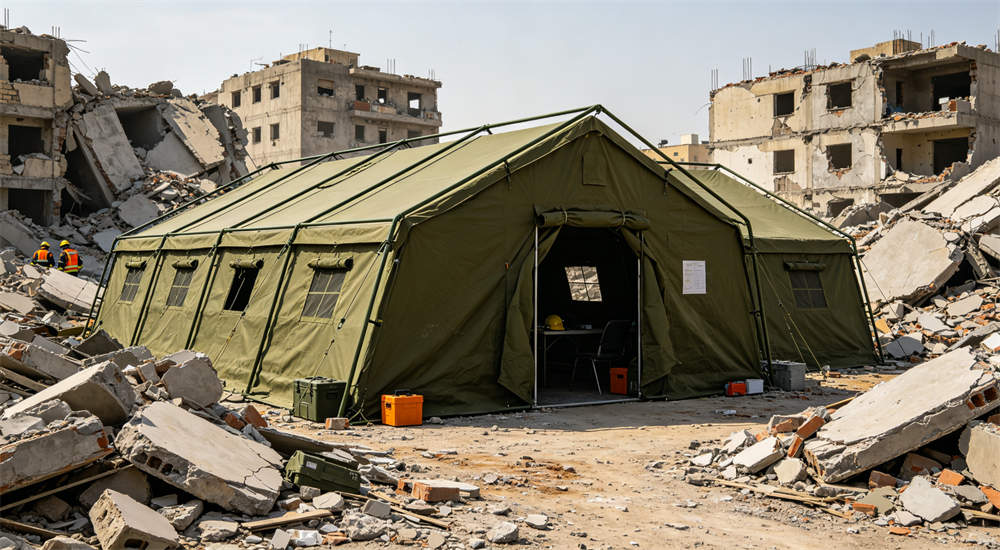
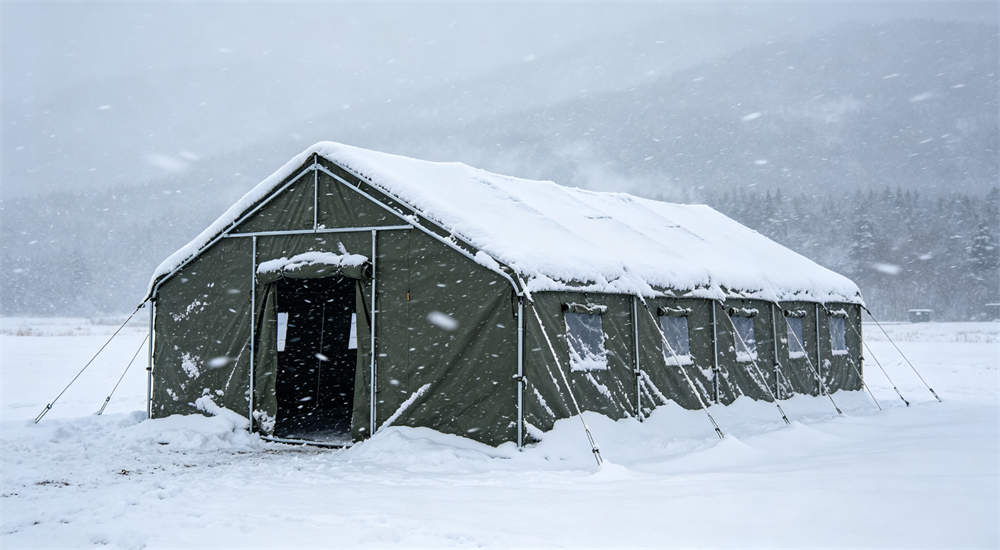
Standard units hold Beaufort 6-7 (60-70 km/h) with proper stakes and guy lines. Reinforced versions reach Beaufort 8. Snow load is limited on a tent roof — clear snow before it reaches 10 kg/m2. Confirm the rated wind speed for your exact model in writing.
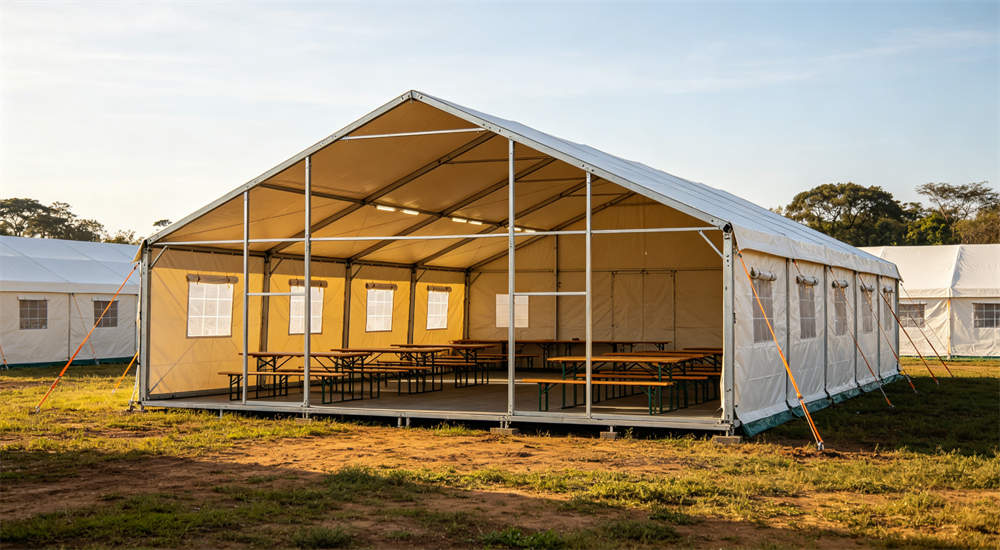
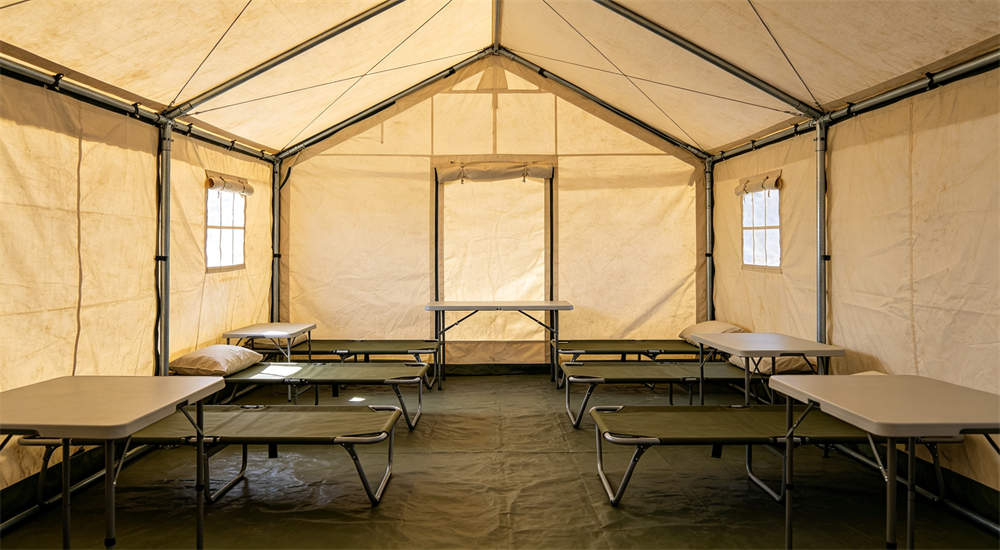
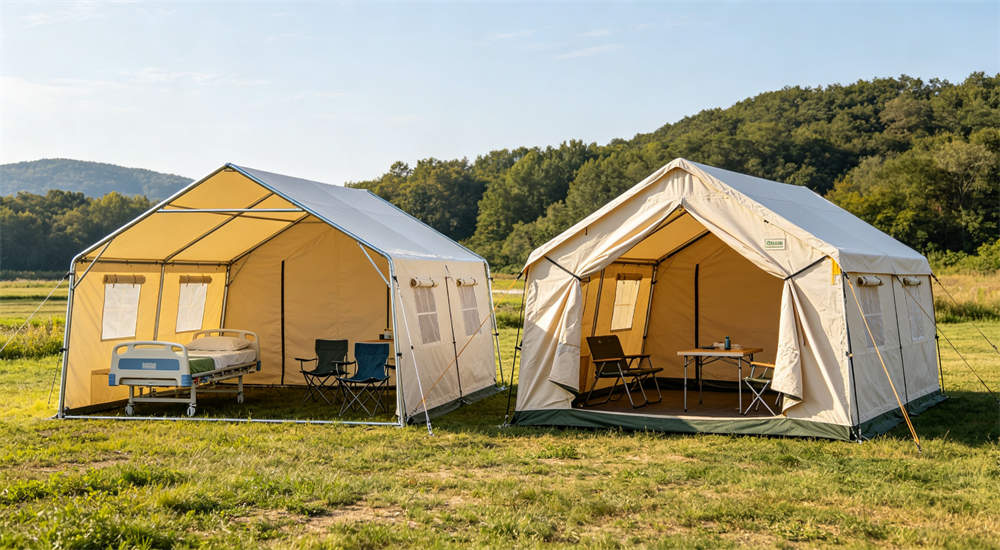
The interior layout shows how cots and tables fit within the 12m² frame, while the assembly process demonstrates why 3-4 trained workers are recommended for setup.
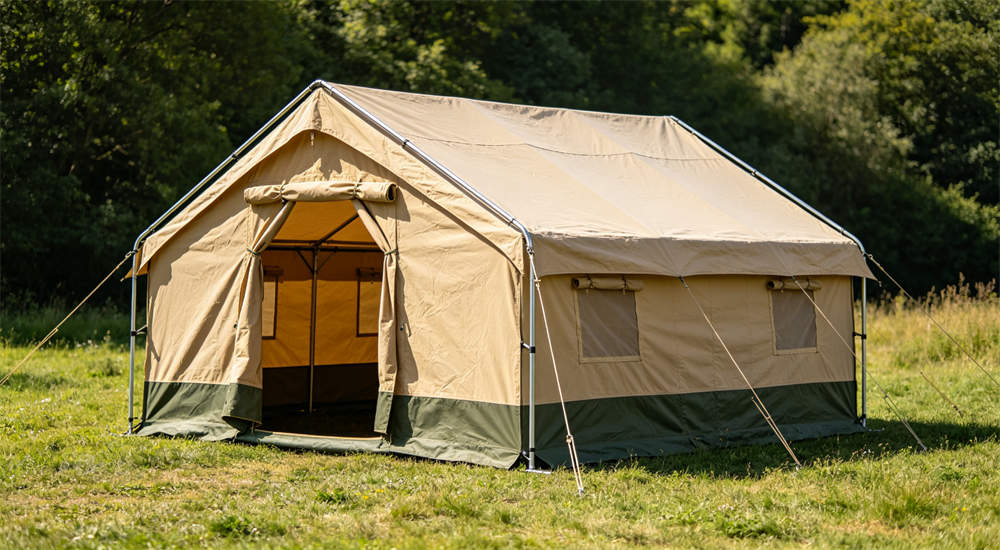
The galvanized steel frame lasts 8-12 years across 30-50 deployments. Canvas covers typically wear out after 5-8 years of UV and rain exposure and can be replaced without buying a new frame. Keep spare poles and connectors in stock.
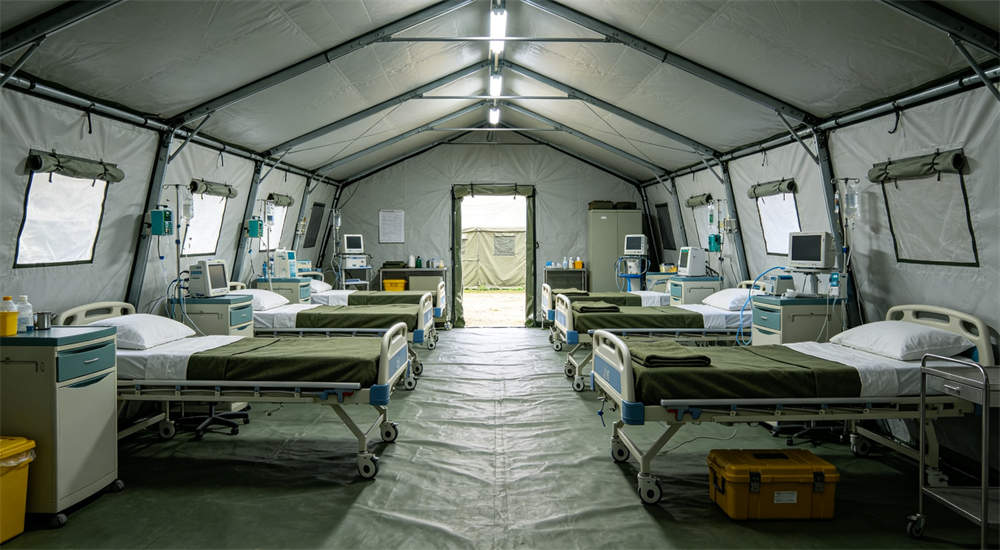
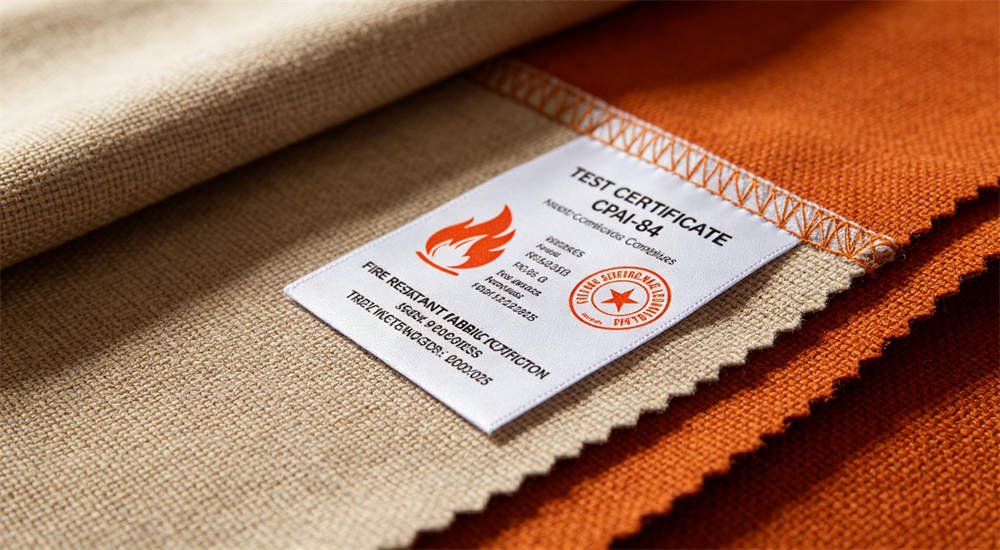
Look for ISO 9001 factory certification, CPAI-84 or NFPA 701 fire-retardant fabric reports, hydrostatic head test sheets, and compliance statements referencing MZ/T 011.1 or UNHCR family tent guidance. Warranty usually covers frame welds and fabric seams for 1-2 years.
For related government shelter categories, see our guides to firefighting command tents, medical emergency tents, and decontamination wash tents. Printed relief markings and agency logos are available at order quantity.
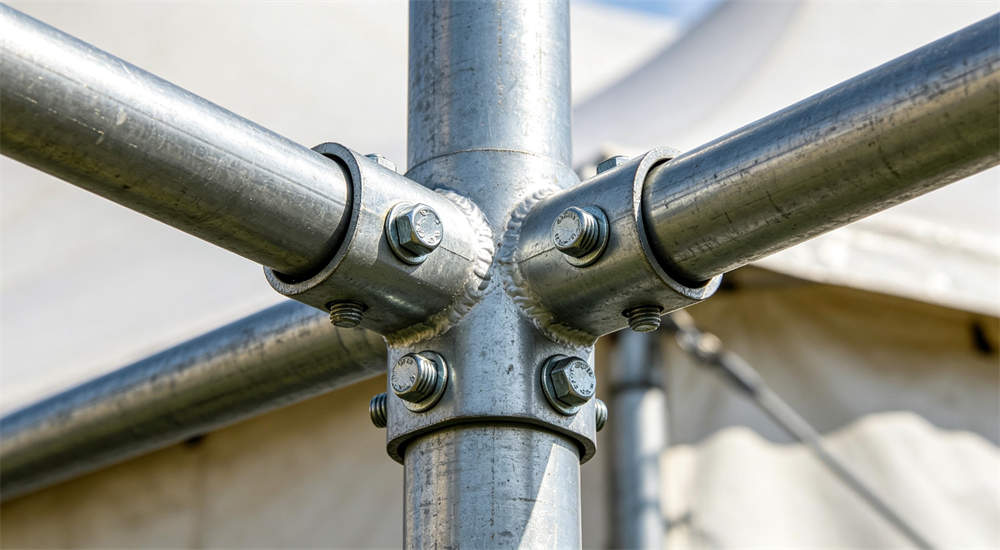
A civil affairs relief tent uses rigid steel tubes as the load-bearing skeleton.
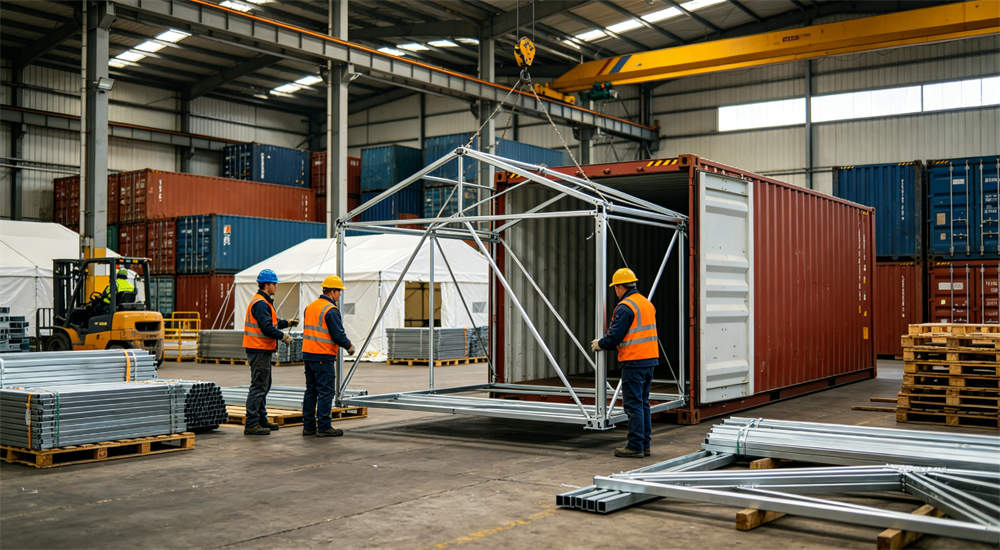
Poles connect at corners and ribs with swaged joints, bolts, or spring pins; the canvas or Oxford cover slips over the frame and is tensioned with webbing straps. Once staked out and guyed, the structure holds its shape in wind and rain without any pump, power, or inflatable chamber.
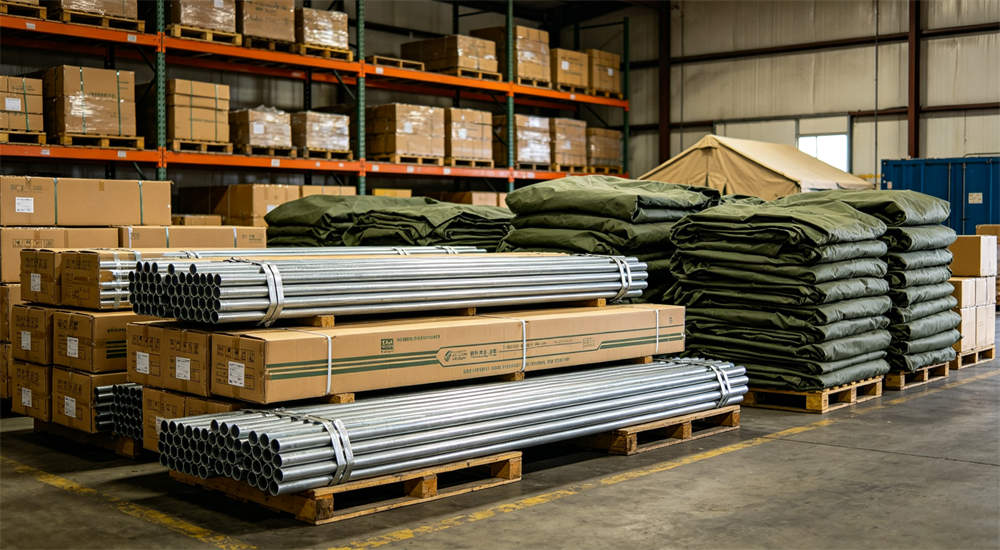
The most widely used 12m2 frame tent (3.2×3.7 m) packs into 2-3 cartons: one for the steel tubes (about 60-90 kg), one for the canvas cover and floor, and one for stakes, ropes, and repair parts.
A crew of 3-4 can raise it in 30-45 minutes. Larger relief camp tent blocks of 20-36 m2 weigh 150-300 kg and need a small hand cart on rough ground.
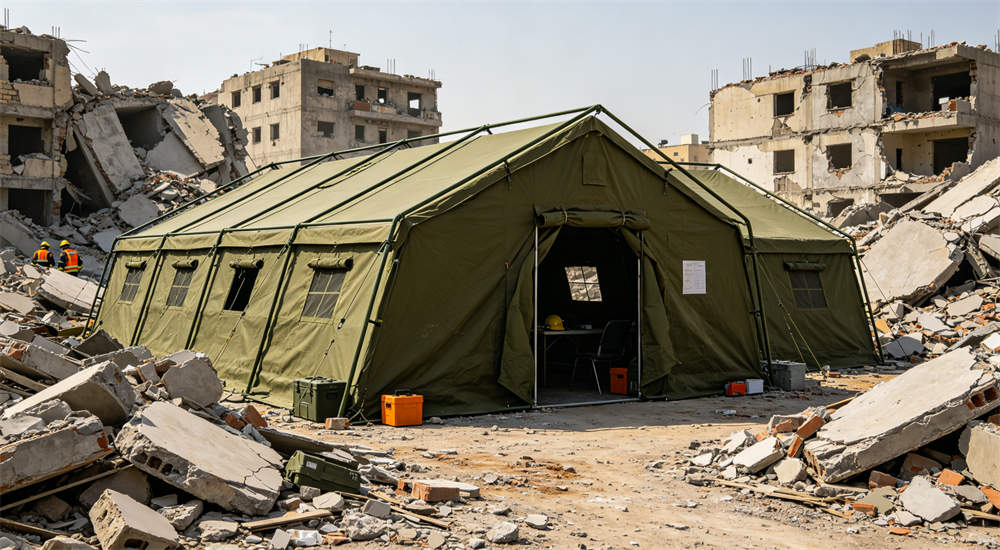
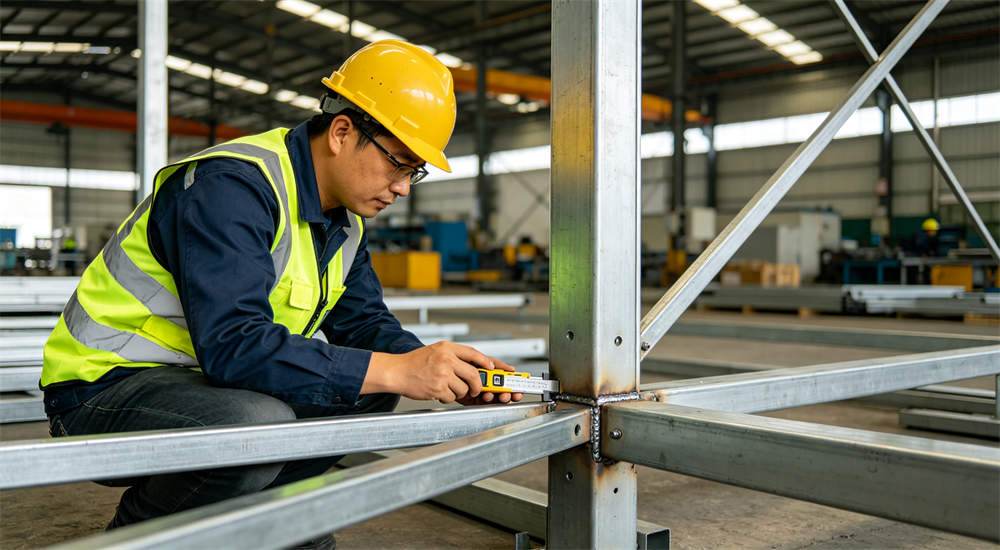
Always check: tube diameter and wall thickness, galvanization, fabric weight per m2, hydrostatic head, seam taping, anchor points, and fire-retardant finish. The phrase "government relief tent" describes the buyer category, not a guaranteed performance level. Ask which clauses of the relief procurement specification the actual unit meets.
A steel frame emergency tent works because the structure is passive: once erected, it stays up as long as it is anchored.
There is no pressure to monitor, no pump to fail, and no valve to freeze at -20°C. That is why winter relief deployment teams often prefer steel frames over air-beam designs.
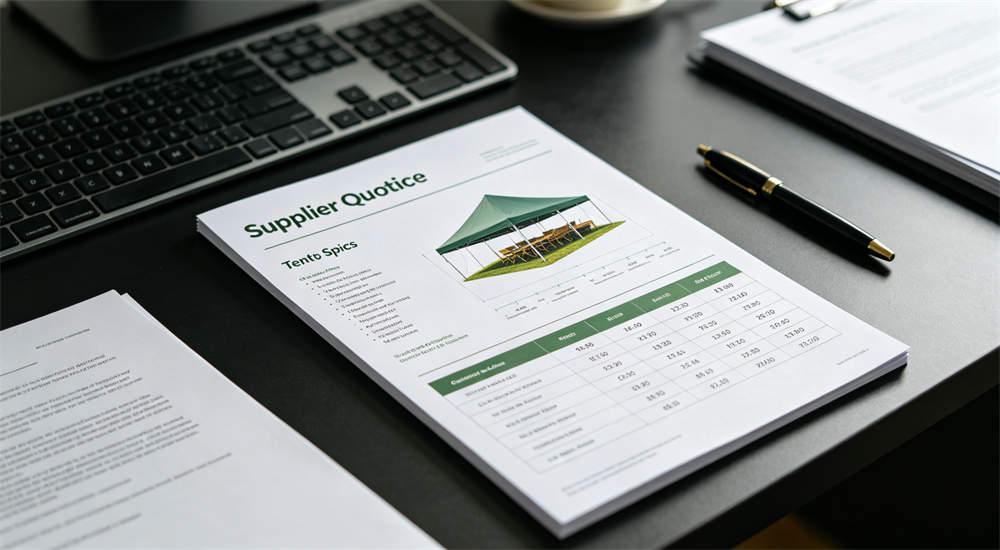
For a heavy duty frame tent used in relief camps, the steel skeleton decides everything else. Thin tubes bend in wind, poor galvanization rusts in monsoon weather, and undersized ribs sag under wet canvas. Below is the specification table to hold suppliers to.
|
Parameter |
Typical Relief Frame Tent Spec |
What to Ask the Supplier |
|
Steel tube diameter |
25-32 mm OD |
Main poles vs ribs: same or different diameter? |
|
Wall thickness |
1.2-1.5 mm |
Is this measured or nominal? Request a sample tube. |
|
Frame finish |
Hot-dip galvanized or powder-coated |
Salt-spray test hours? Touch-up paint included? |
|
Fabric (canvas option) |
280-420 g/m2 cotton canvas |
Shrinkage rate after washing? Color fastness? |
|
Fabric (Oxford option) |
600D Oxford, PU coated |
Denier guarantee? PVC backing or PU only? |
|
Waterproof rating |
PU3000 mm hydrostatic head |
Seams taped or double-stitched? Test report? |
|
Fire retardant |
CPAI-84 / NFPA 701 |
Does the test report match this fabric lot? |
|
Wind resistance |
Beaufort 6-8 (60-90 km/h) |
With what guy-line and stake configuration? |
|
Setup crew / time |
3-4 people, 30-60 min (12m2) |
Does this include staking and guying? |
|
Service life |
8-12 years frame; 5-8 years fabric |
Are replacement covers and poles available? |
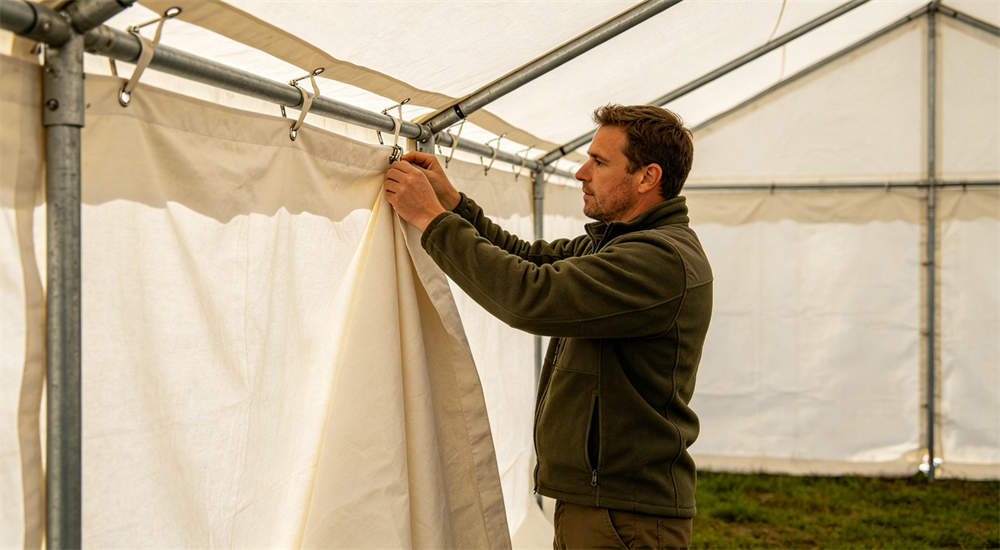
When comparing quotes, do not accept a line that says "steel tube, standard." A 1.2 mm tube bends where a 1.5 mm tube stands. A painted frame rusts where a galvanized frame lasts. See our full frame vs inflatable breakdown before you decide.
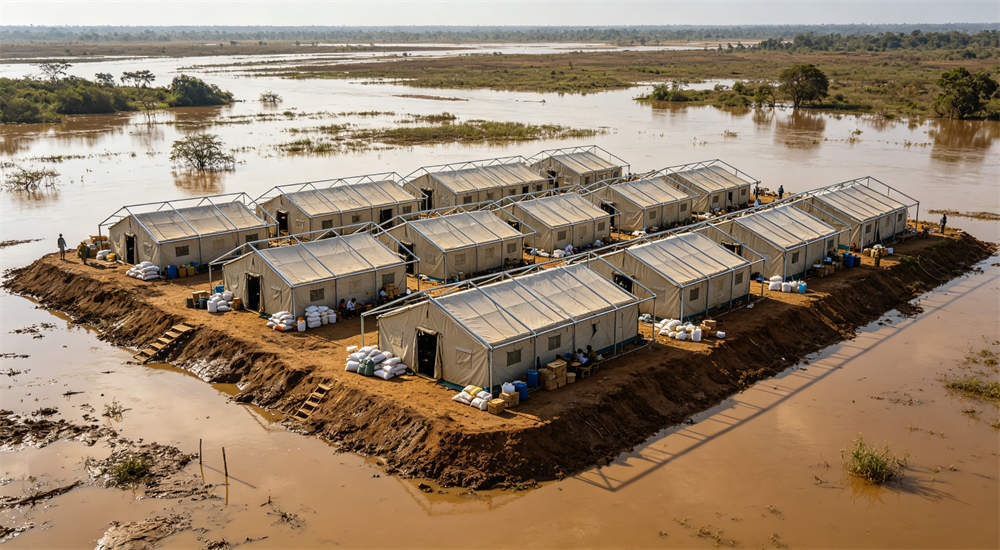
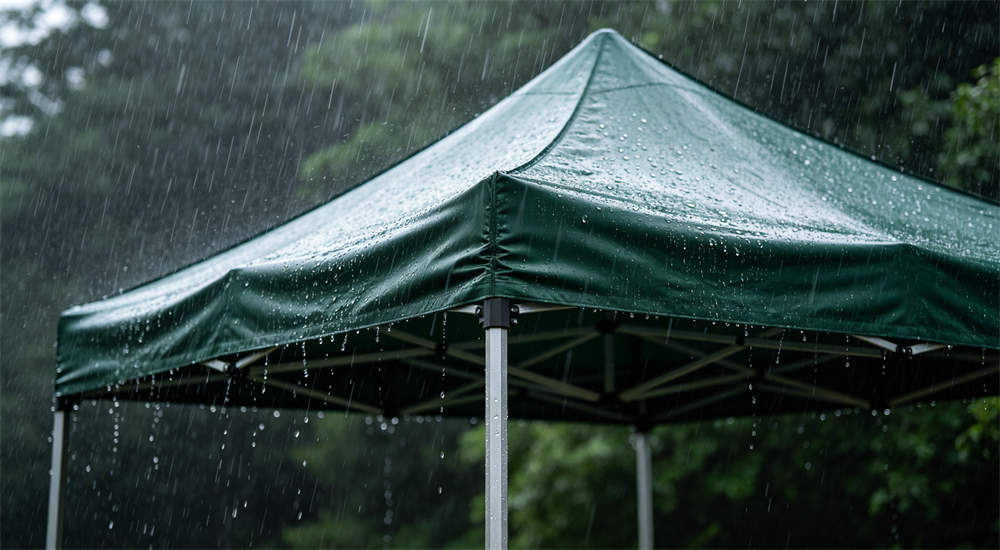
A rainproof disaster tent also depends on roof slope.
Flat roofs pond water and leak; a sloped ridge sheds rain and snow. Ask for the roof rise measurement — a 12m2 relief tent should have at least 1.8 m side height and 2.6-3.0 m ridge height for people to stand and for water to run off.
Choose a government procurement tent built on steel frame when your operation is: a displacement camp that stays for weeks or months, a school or hospital evacuation point, a winter relief distribution center, a remote site without power, or a heavy-equipment shelter that needs to hold shelves and beds. Each government relief tent must meet specific procurement standards for durability, fire safety and weather resistance.
These scenarios reward rigidity, low maintenance, and no pump.
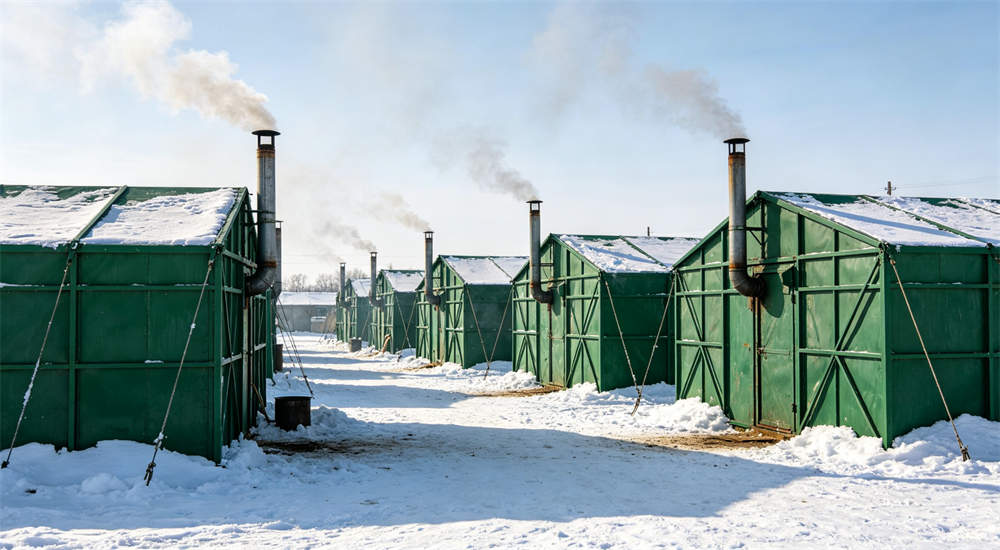
Common deployments: displaced family accommodation, emergency dining halls, temporary command posts, school evacuation shelters, warehouse-style supply tents, and winterized block camps.
A 12m2 unit fits 6-10 residents or 2-3 beds; a 36m2 block fits a 30-person dining area or a 10-bed family section.
For medical and clinical work, see our medical tent guide; for chemical or contamination response, decontamination tents need a different wet-zone design; for fireground command, firefighting command tents add heat and smoke ventilation.
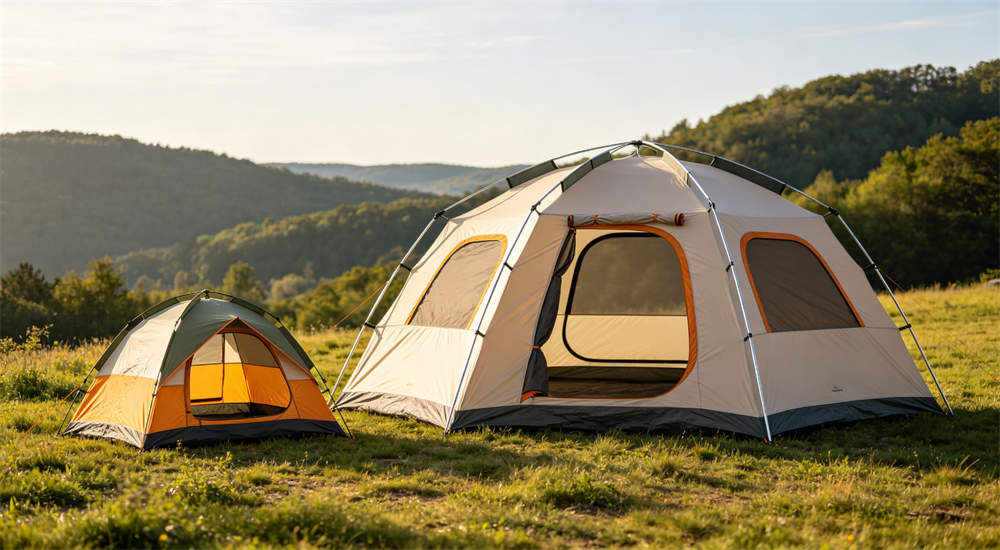
A general relief frame tent does not automatically give you clean water, heating, lighting, or insulation. Those are options you add deliberately. Start from the simplest configuration that holds up, then layer on winter liner, floor, and stove only when the site demands them.
When buyers ask for the best winter relief tent, the answer is not a different roof material — it is a framed structure that keeps shape in -20°C cold, accepts a cotton inner liner, and can safely vent a heater. Air beams stiffen in extreme cold; steel tubes do not.
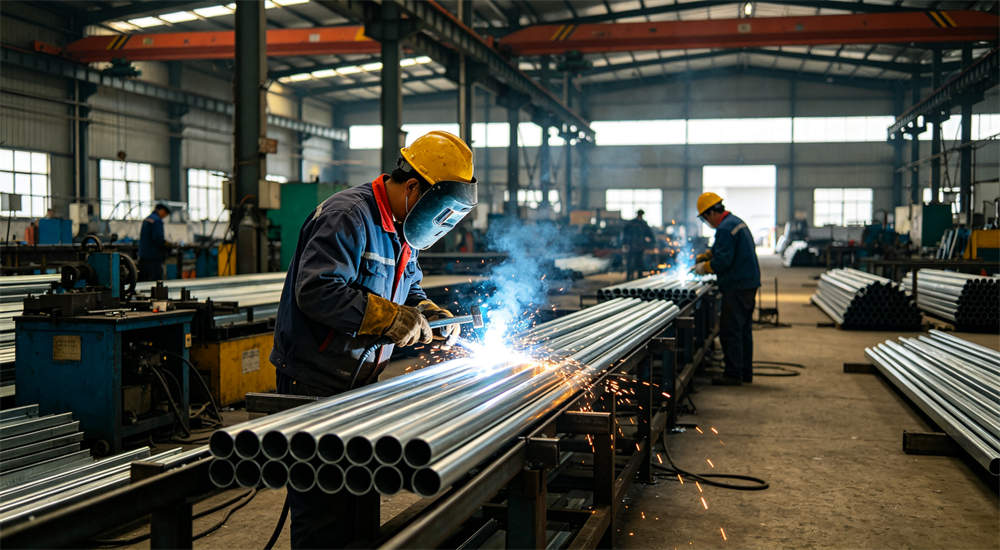
A camping tent is built for one or two people, short trips, and light packing. A 12 square meter relief tent built for civil procurement is engineered for repeated deployment, identifiable parts, replacement spares, and documentation. The visual shape can look similar; the engineering is not.
Check the gaps: clear headroom inside, door width for cots and stretchers, floor attachment, number of stake loops, repair method for a bent pole, and how the cover attaches to the frame.
A camping pole has no replacement-part continuity; a relief frame tent must let you order one spare tube two years later and have it fit.
Using a camping tent for a 200-person camp is unsafe. Using a full emergency shelter frame tent for a weekend trip is wasteful. Match the product to the mission duration, occupancy, and documentation requirement.
Institutional buyers should also ask: are parts serialized? Are repeat orders identical? Can you order a matching cover in year three? These questions decide whether a cheap unit becomes a maintenance headache after the first storm.
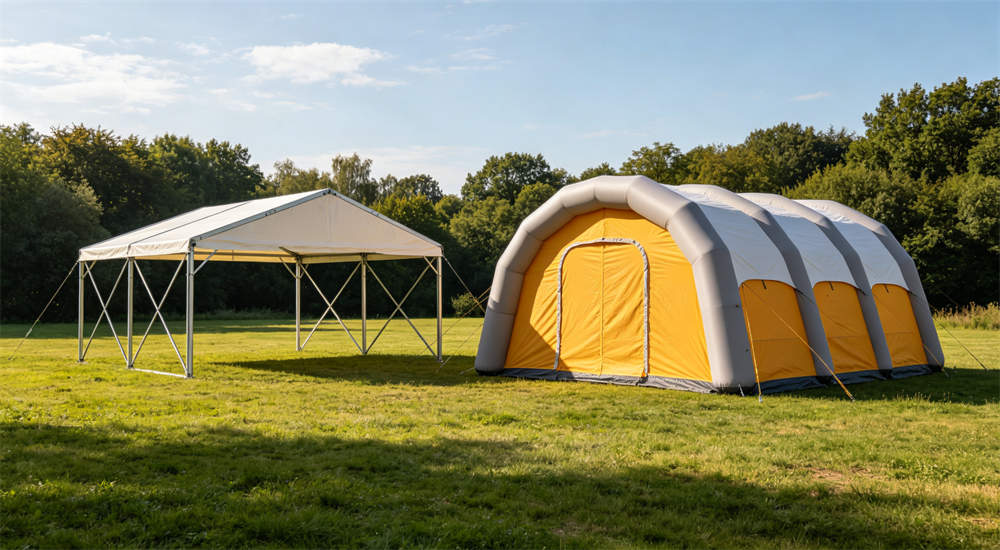
Both are legitimate emergency shelter frame tent options, but they answer different field problems. A steel frame costs less, needs no power, and outlasts an air-beam shelter. An inflatable tent deploys faster but depends on a pump and pressure.
|
Factor |
Steel Frame Relief Tent |
Inflatable Relief Tent |
|
Setup (12m2) |
30-60 min, 3-4 people |
15-30 min, 2-3 people + pump |
|
Power needed |
None |
Electric or hand pump |
|
Cold performance |
Stable to -30C |
Beams stiffen below -10C; pump battery drains |
|
Packed size |
Long tubes, 1.5-3m3 |
Folds flat, 0.8-2m3 |
|
Weight (12-20m2) |
80-180 kg |
45-120 kg |
|
Wind rating |
Beaufort 6-8, rigid under load |
Beaufort 6-7, depends on pressure |
|
Winter use |
Add cotton liner + stove easily |
Liner hangs less neatly; heater needs vent |
|
Heavy loads (shelves, beds) |
Strong frame supports hooks and racks |
Limited hanging points; walls bulge |
|
Price (12-36m2) |
$600-$2,500 |
$800-$5,000+ |
|
Lifespan |
8-12 years frame |
5-8 years fabric/beams |
|
Best for |
Long fixed camps, no power, low temp, heavy use |
Rapid 15-min response, frequent moves |
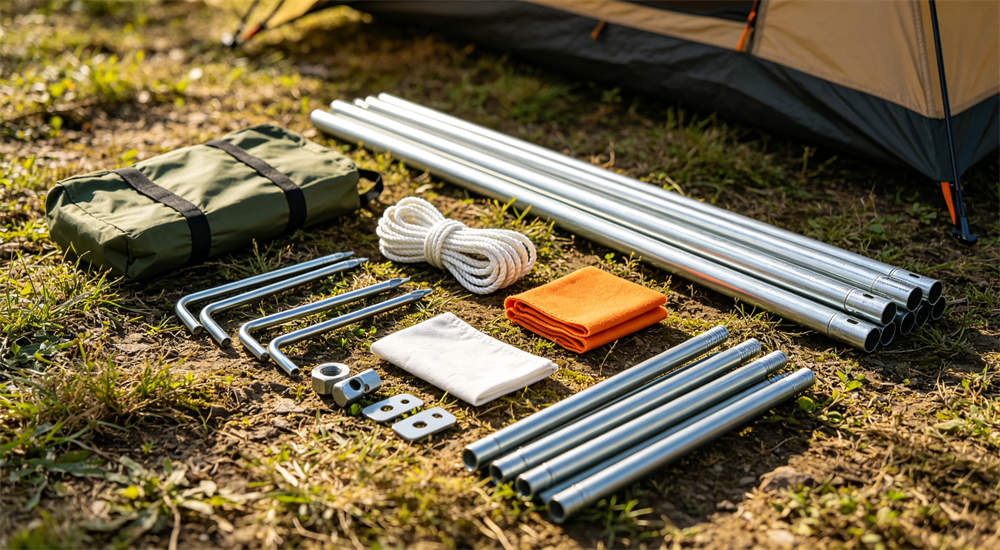
The rule: do not ask which is universally better. Ask which matches your site.
A wind resistant frame tent wins when the camp is fixed, the power grid is absent, and the weather turns cold. An inflatable wins when the mission is a 48-hour rapid response. For multi-room field hospitals, interconnected modular shelters are a separate category.
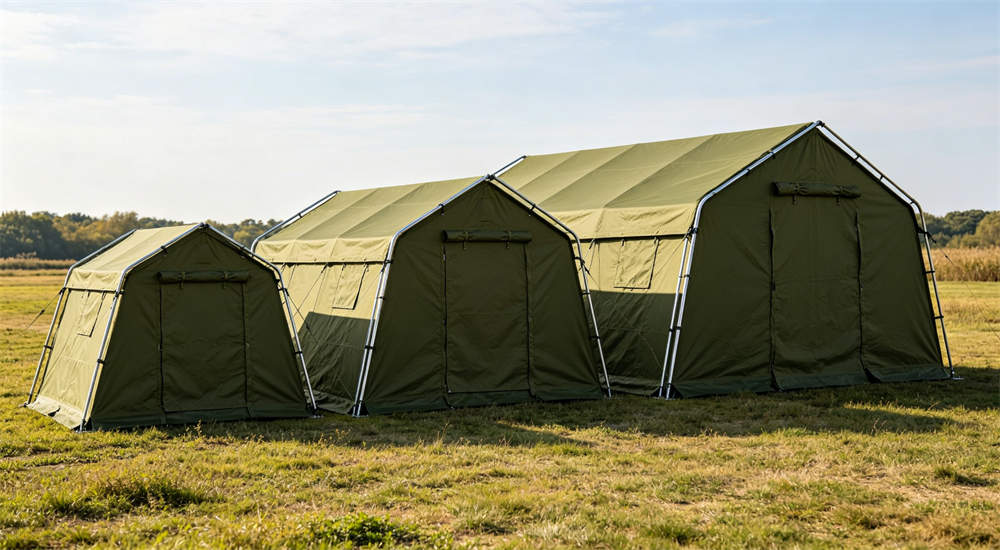
Price varies by size and configuration, with production lead time depending on order quantity and custom requirements.
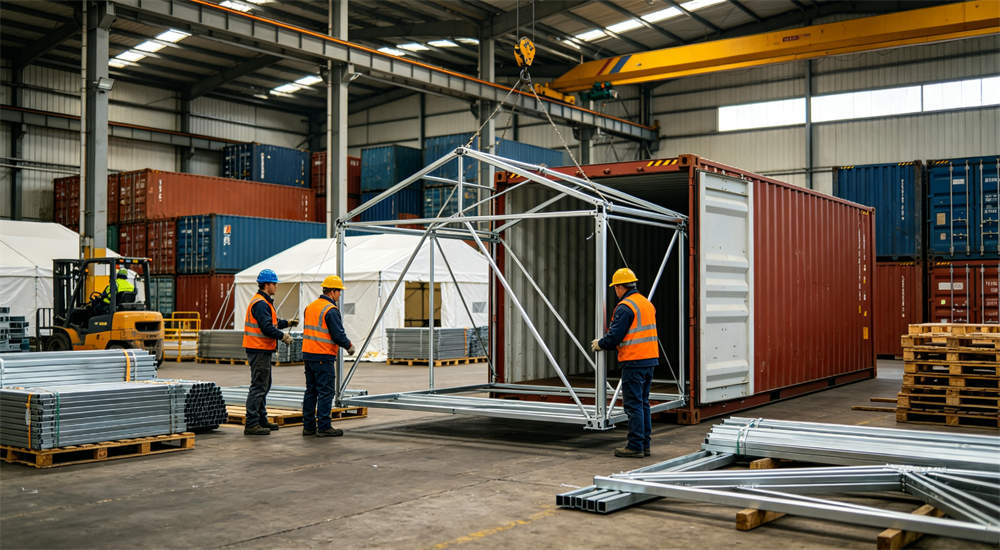
External length times width is not the usable floor area. Steel poles at corners, door openings, center ribs, and storage aisles all eat into the footprint. Six people sleeping on cots need a different layout than six people seated for a briefing.
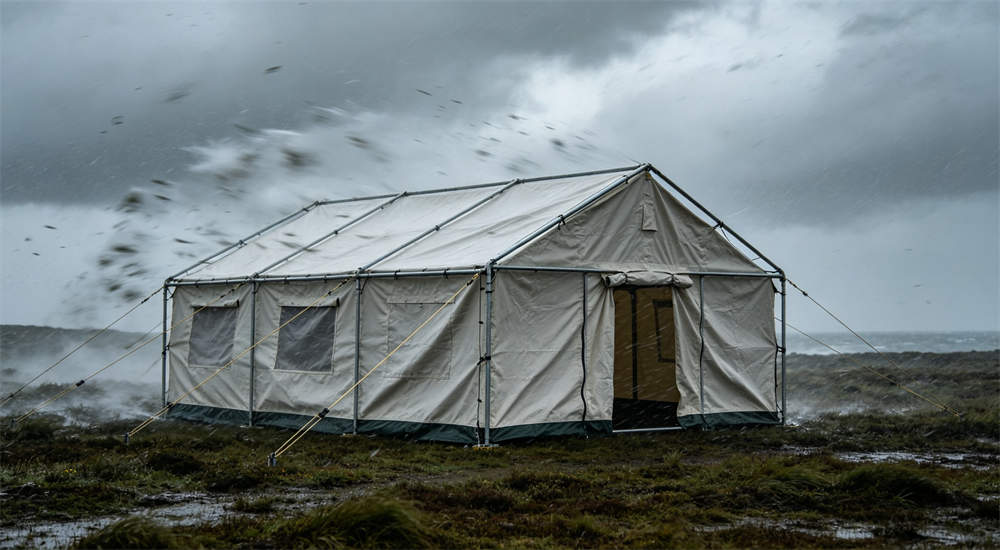
Draw a simple plan: where do people or beds go? Where is the main entrance? Which side faces the prevailing wind? Leave a 60 cm clear aisle for cots or stretchers. For winter use, mark where the stove sits and where the chimney vent passes through the roof wall.
Ask the supplier for internal dimensions, pole positions, door width, and recommended occupancy. A capacity number without layout assumptions is not a usable specification.
Request a marked floor plan for the size you intend to buy. It should show clear routes, bed or table positions, and restricted zones. This tells you whether a 20m2 unit actually solves the problem or just adds packing and shipping cost.
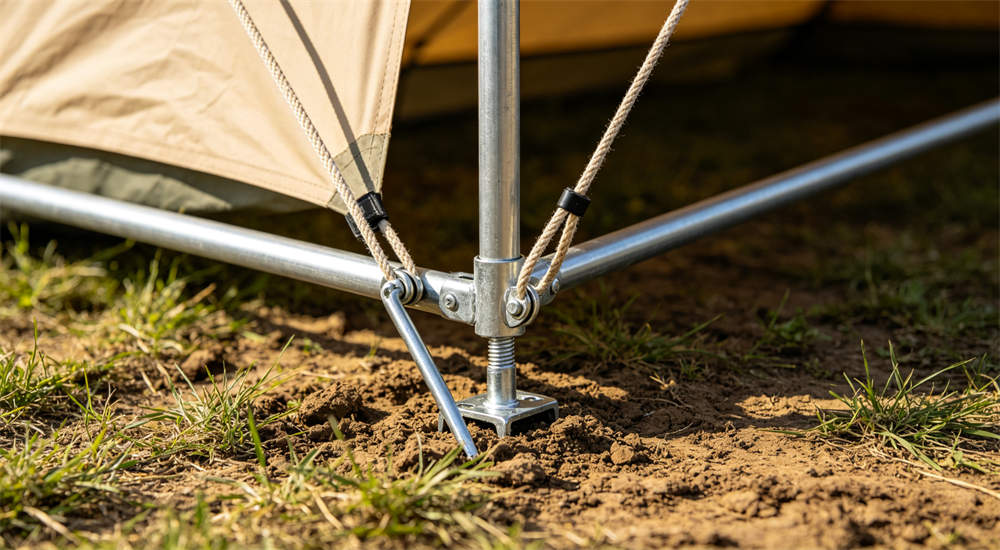
Not sure how to choose a 12 square meter relief tent?
Start with headcount: 12m2 fits 6-10 residents on cots or a 6-person work team; 20m2 fits a small clinic or dining group; 36m2 fits a 30-person assembly block. When in doubt, go one size up — a tent that is slightly empty is easier than one that is overcrowded.
Steel frame tents are less fussy than inflatables about ground, but they still need proper anchoring. Grass and soft soil take screw or forged steel stakes.
Hard clay needs a hammer and longer stakes. Pavement or concrete cannot take stakes — use sandbags or water barrels tied to the webbing loops instead. A site that bans ground penetration needs a ballast plan before you order.
State expected wind speed, rainfall, temperature range, and deployment duration. Any "wind resistant frame tent" or "rainproof disaster tent" claim must trace to a test report or engineering note for the exact configuration. Brochure numbers are not enough.
If the forecast exceeds the rated wind, rotate the tent so the ridge runs perpendicular to the wind, double up the guy lines, and add extra stakes. Do not leave field teams guessing after a storm warning.
Ask the supplier for the anchoring kit that matches your surface.
The reply should separate included stakes and ropes from optional sandbags, and should state which conditions require a heavier frame or a wind-wall baffle. Winter buyers should also confirm the canvas breathes — trapped condensation inside a closed tent can wet bedding overnight.
A standard canvas emergency shelter set ships in 2-3 cartons: steel poles with numbered labels, corner and ridge connectors, outer canvas cover, removable floor (optional), guy ropes, forged stakes, a small repair kit (needle, thread, fabric patches, seam sealer), and an instruction sheet.
Winter buyers add a cotton quilted inner liner; camps in cold climates add a chimney vent flap.
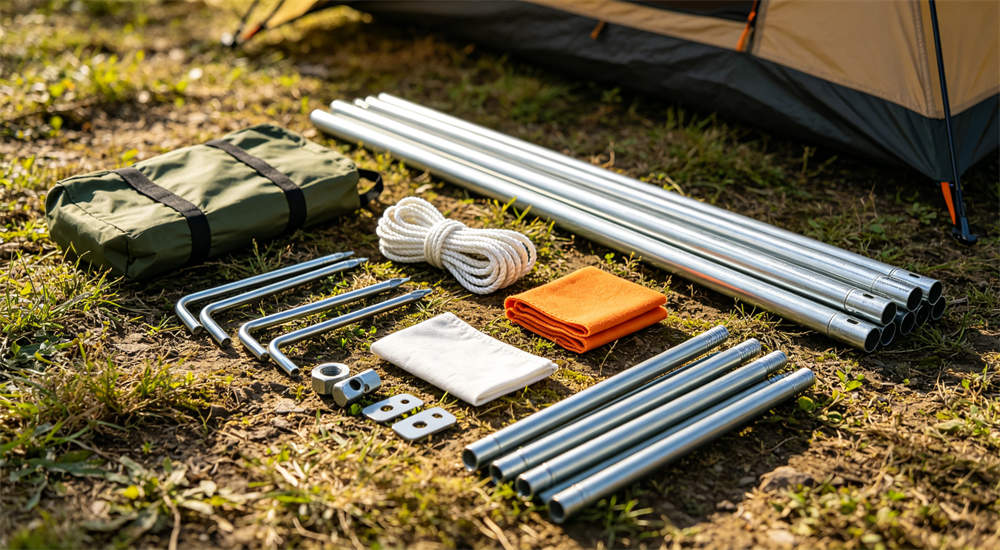
Check which carton holds which component. If one tube bends in transit, can you identify the replacement part? Confirm the repair fabric matches the cover color and weight. For repeat orders, ask whether parts remain compatible year over year.
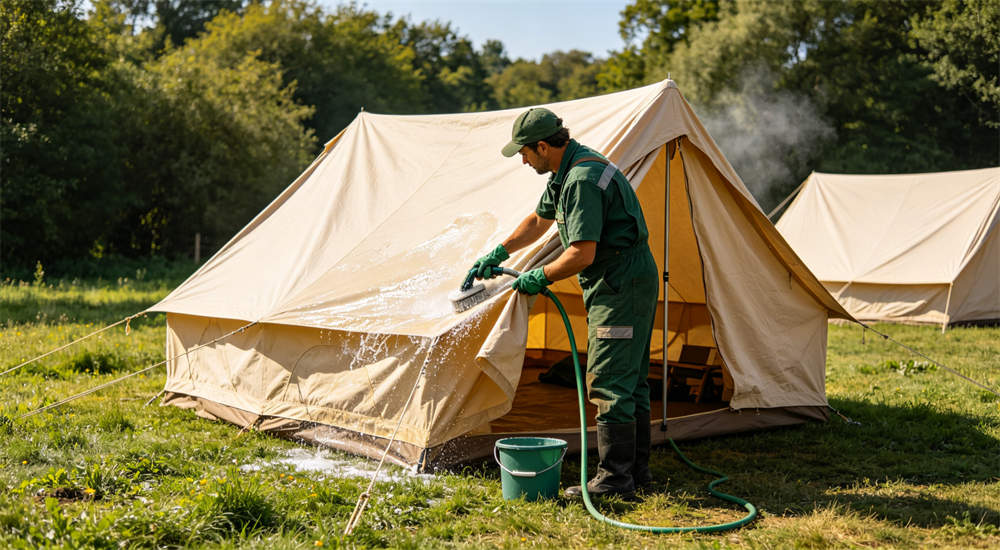
For long camps, plan the maintenance cycle: after every deployment, air-dry the cover, inspect pole welds, tighten connector bolts, and check for rust on tube ends. A set that is packed wet grows mold and rots the seams in one season.
A good packing list maps every carton to the tent configuration, with part names, quantities, and reorder references. It should also list recommended spares: 5% extra poles, 10% extra stakes, and a roll of seam tape. This makes shortages visible before the truck leaves the warehouse.
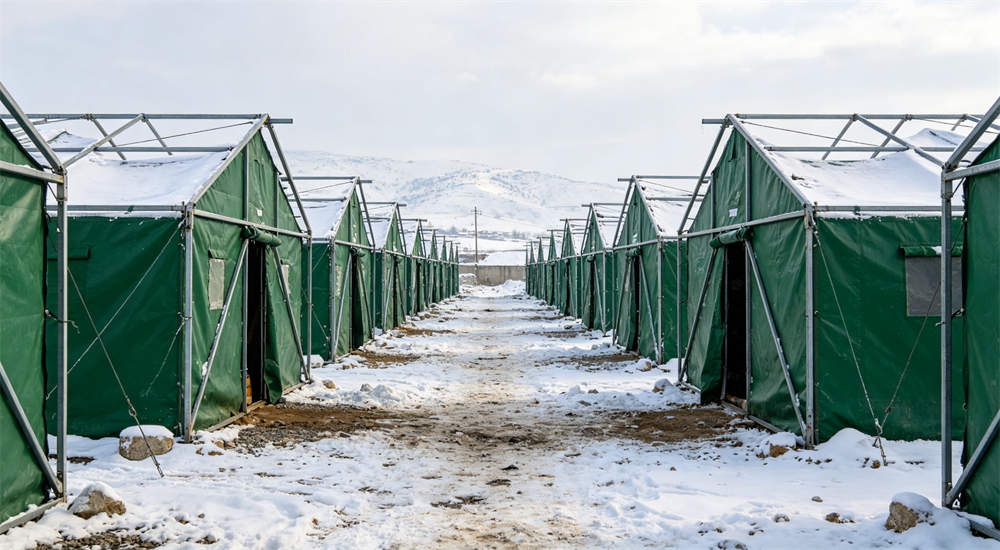
Project A — Winter family camp: 50 units for displaced families at 1,500 m altitude. Needs cotton liners, stove vent flaps, and stoves. Key decisions: thermal layering, ventilation to avoid condensation, and sturdy door flaps against wind-driven snow
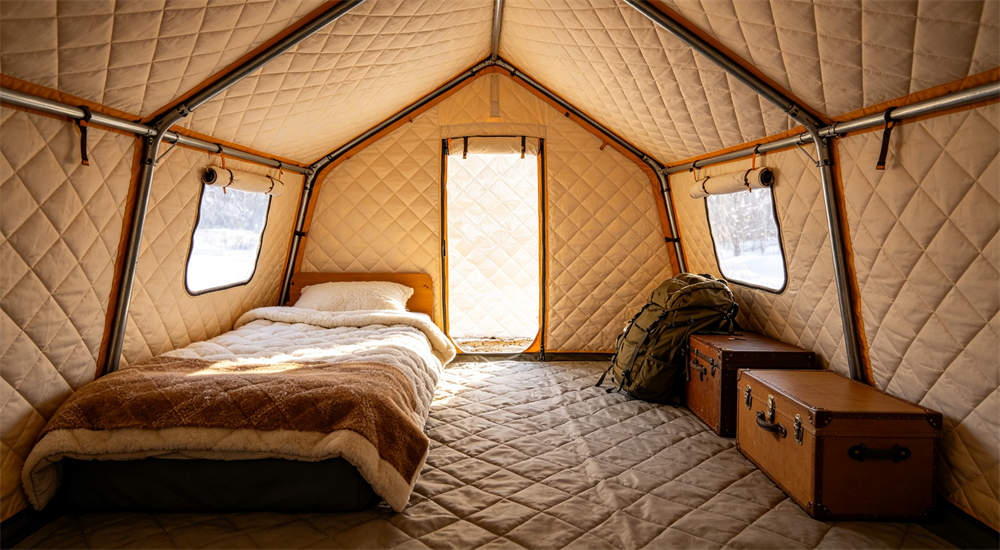
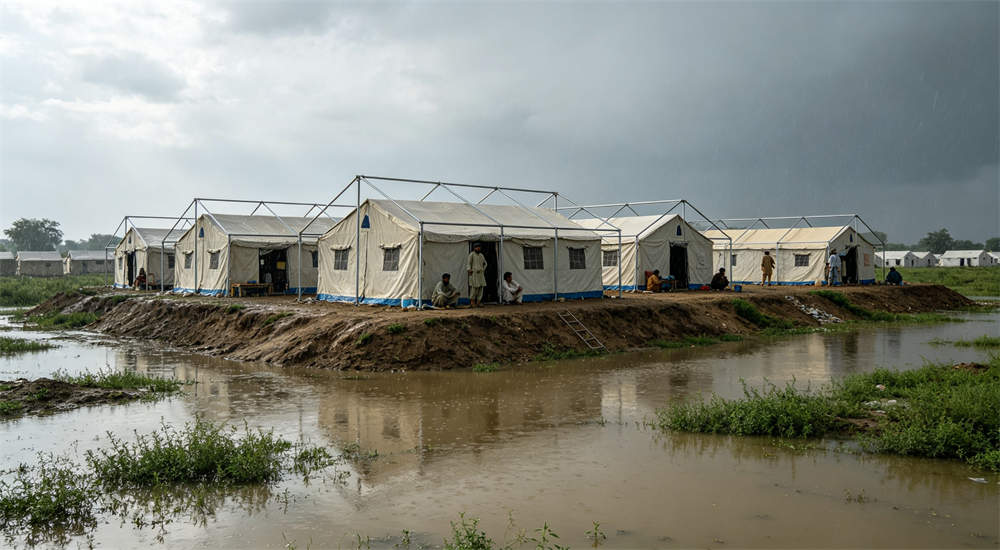
Project B — Flood-season distribution center: 10 units near a riverbank, used 4 months a year. Needs elevated floor mats, mildew-resistant fabric, and high anchor points for muddy soil. Key decisions: ground clearance, drainage around the perimeter, and UV-rated cover.
Both use steel frame tents, but the buying questions are different. A winter liner does nothing for flood rot; a mildew-resistant cover does not hold heat.
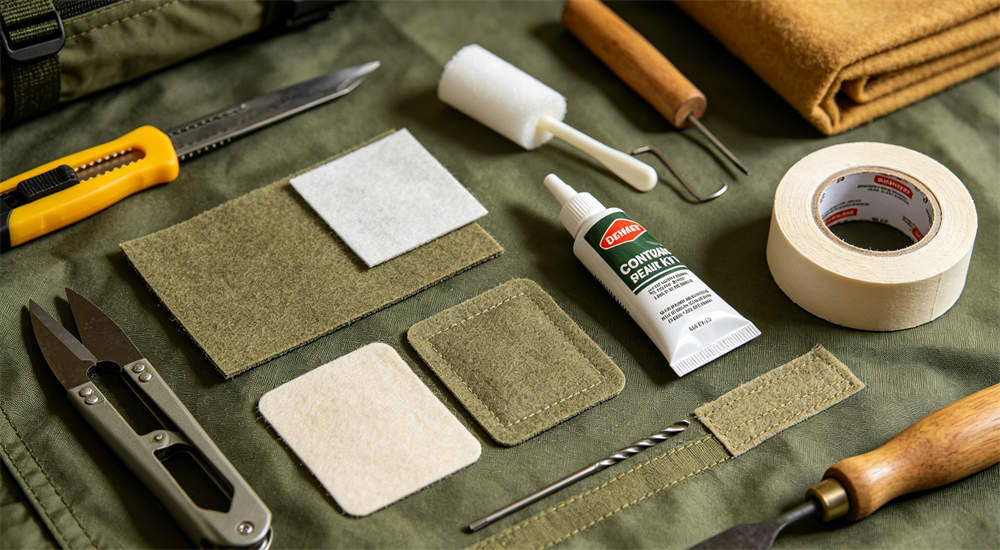
Project C — School evacuation shelter: 20 units on a playground, stored between events. Needs fast repeat setup, color-coded cartons, and a simple pictorial instruction sheet for untrained staff. Key decisions: setup time for a 4-person volunteer team, clear labeling, and a 15-minute refresher card.
State: primary task, location, expected occupants, internal layout, deployment duration, and order quantity. Add: ground type, expected wind and temperature range, anchoring restrictions, transport mode, and any required relief standard (MZ/T 011.1, UNHCR family tent, or local procurement spec).
Request: suggested frame size, internal dimensions, tube diameter and wall thickness, fabric weight and coating, complete component list, standard vs optional scope, packing carton count, available test reports, and unresolved conditions. MOQ, lead time, and price depend on the confirmed configuration.
When comparing replies, check that every supplier answered the same brief. One quote may include stakes, liner, and floor; another lists them as optional. A clean comparison exposes those gaps before price becomes the deciding factor.
In your inquiry, always ask: government procurement tent compliance clause, steel pole tent tube diameter and wall thickness in mm, canvas emergency shelter fabric g/m2 and PU rating, setup crew size and time, and spare-parts availability for repeat orders.
A professional reply starts with the exact frame direction for your stated task: clear internal space, pole arrangement, openings, floor, anchoring, and operating conditions. Every recommendation ties back to your project brief rather than a generic product catalog.
It separates included items, optional items, and site-supplied work — poles, connectors, cover, floor, liner, stakes, ropes, repair kit each get their own line. Never accept "complete set" without an itemized list.
Test reports must state which fabric lot and which frame model they cover. Packing info shows carton count, grouping, dimensions, and weight per carton.
Simple test: If you cannot yet explain what happens inside the shelter, do not select a model from photos alone. Define the task, users, weather, and duration first, then ask suppliers to match those conditions.
As a manufacturer, we organize every quote the same way: first the configuration matched to your site conditions, then an itemized accessory list, then test reports for the exact fabric and frame, then packing dimensions and lead time.
This structure lets you compare suppliers line by line instead of guessing what is included.
|
Size |
Capacity |
Price Range (USD, FOB) |
Typical Use |
|
12m2 (3.2×3.7m) |
6-10 people |
$600 – $1,200 |
Family shelter, small relief post |
|
20m2 (5×4m) |
10-15 people |
$1,000 – $1,800 |
Dining block, distribution point |
|
36m2 (6×6m) |
20-30 people |
$1,800 – $2,500 |
Assembly hall, command camp |
|
Custom modular |
Project-specific |
$2,500 – call |
Connected camp systems |
* Indicative FOB ranges for standard galvanized frame and PU3000 canvas. Cotton winter liner, floor mat, custom color, and relief-agency markings add cost. Always compare complete sets, not just the tent shell.
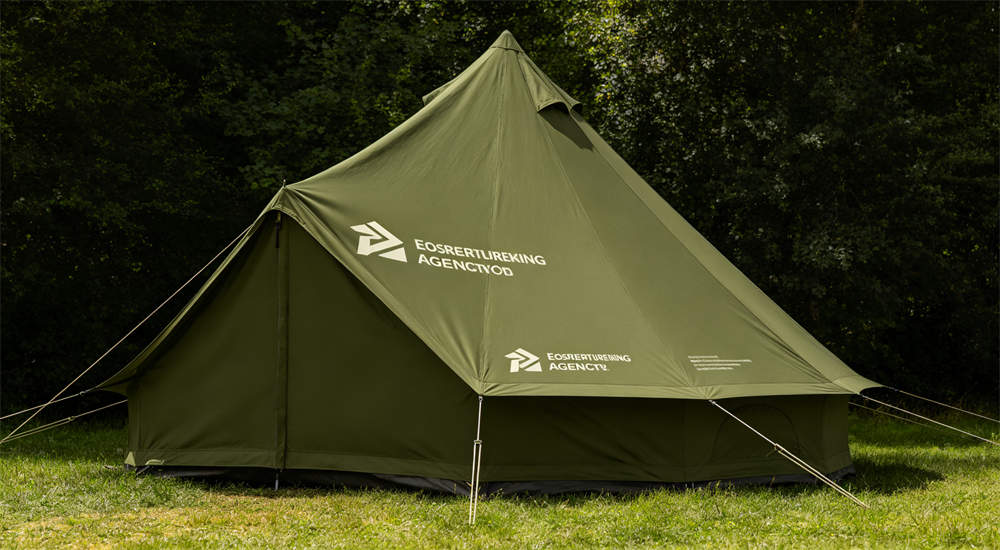
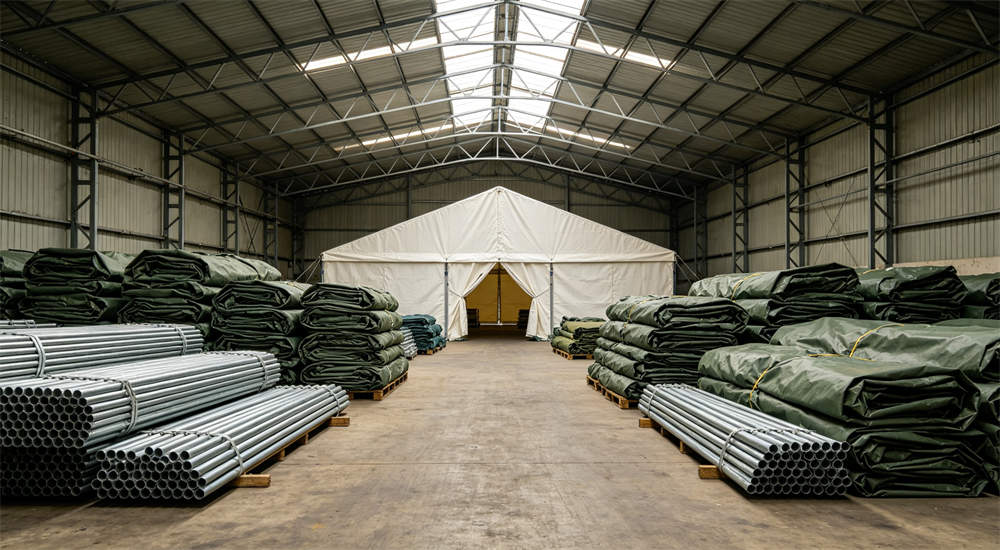
Custom logo printing is available for relief agencies, while proper storage extends the product lifespan significantly.
Configuration
MOQ
Lead Time
Notes
Standard colors (olive green, army blue, white)
10 units
20-30 days
Stock fabric and tube sizes
Custom relief-agency color
30-50 units
35-45 days
Fabric dye lot production
Logo / markings printing
50-100 units
35-45 days
Screen or print on cover and bags
Cotton winter liner included
10-20 units
30-40 days
Quilted liner sewn to order
Custom size / layout
20-30 units
45-60 days
New cutting pattern required
Size
Cartons / Set
Weight
20ft Container
40ft Container
12m2
2-3 cartons (long tubes)
80-120 kg
35-45 sets
80-100 sets
20m2
3-4 cartons
130-180 kg
25-30 sets
55-70 sets
36m2
4-5 cartons
220-300 kg
15-20 sets
35-45 sets
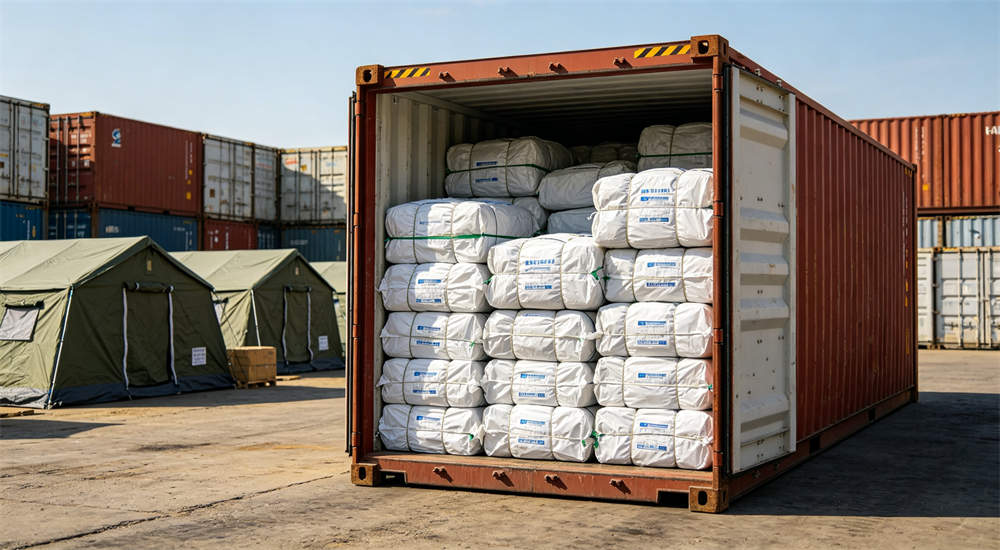
* Steel tubes are bundled and strapped; canvas folded in woven bags. Cartons are numbered and labeled to match the packing list. We provide a detailed per-carton
list with every order for customs and field inventory.
Our disaster relief frame tent line is built to civil procurement expectations. Buyers should require the documents below, not just the marketing copy. Government relief tent procurement typically requires ISO 9001, CPAI-84 flame retardant and fabric waterproof test reports.
|
Item |
Standard / Report |
What It Proves |
|
Factory quality system |
ISO 9001 |
Controlled production and inspection process |
|
Fabric fire retardancy |
CPAI-84 / NFPA 701 |
Cover fabric does not spread flame |
|
Waterproofing |
Hydrostatic head PU3000mm test |
Cover and seams resist standing rain |
|
Relief standard reference |
MZ/T 011.1 or UNHCR family tent |
Dimensions, load, and durability expectations |
|
Frame corrosion |
Salt-spray / galvanizing coating test |
Steel resists monsoon rust |
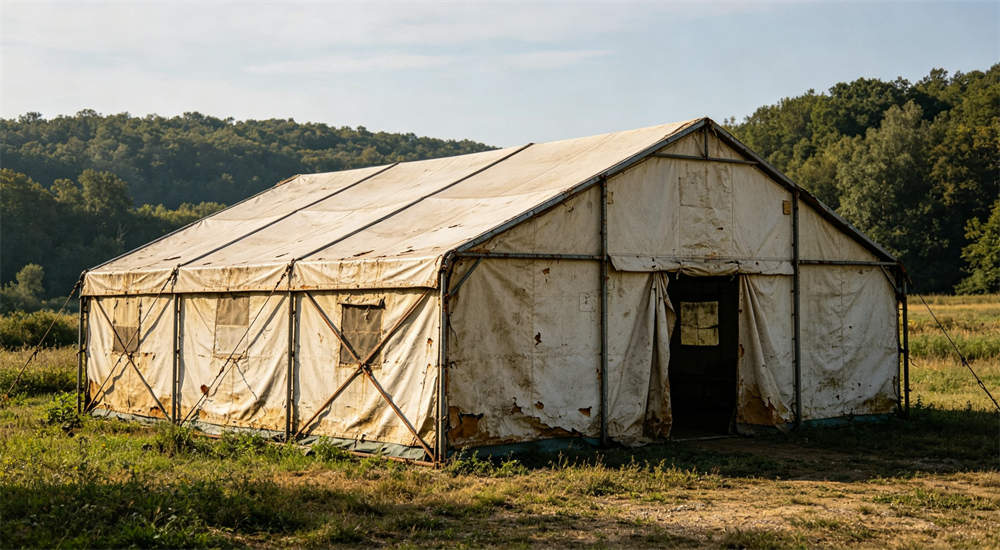
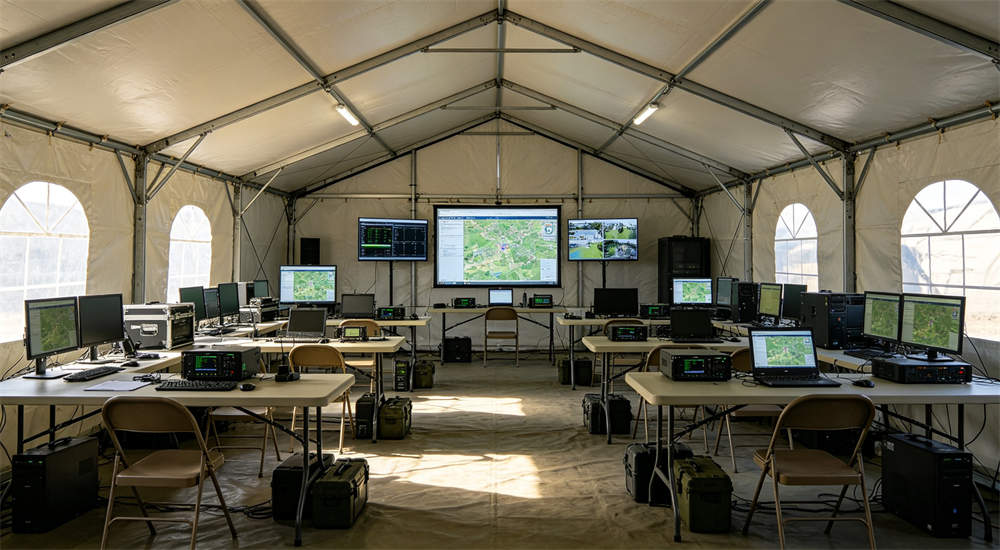
The medical configuration includes space for beds and equipment, while the command center layout supports communication and coordination.
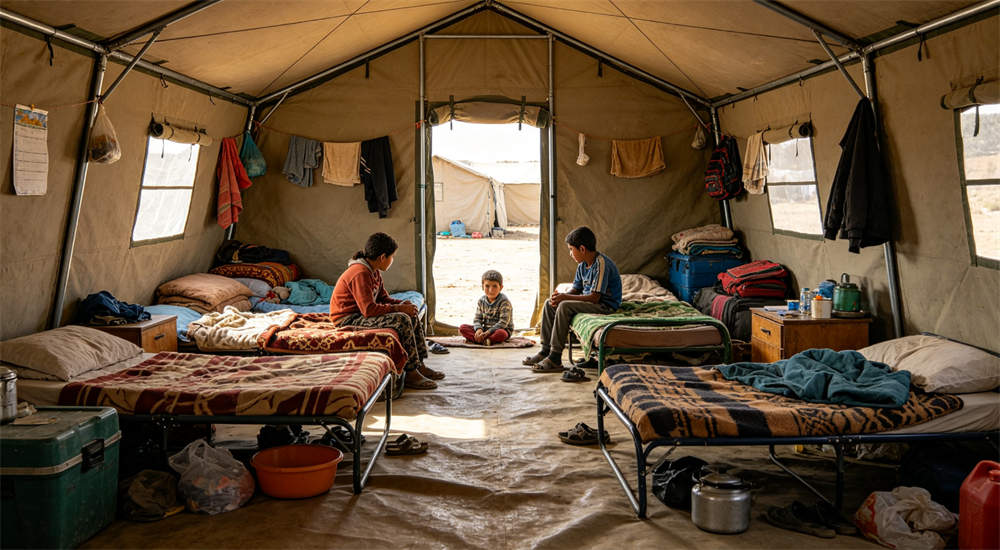
Family accommodation provides privacy for displaced households, with reinforced anchoring for high-wind environments.
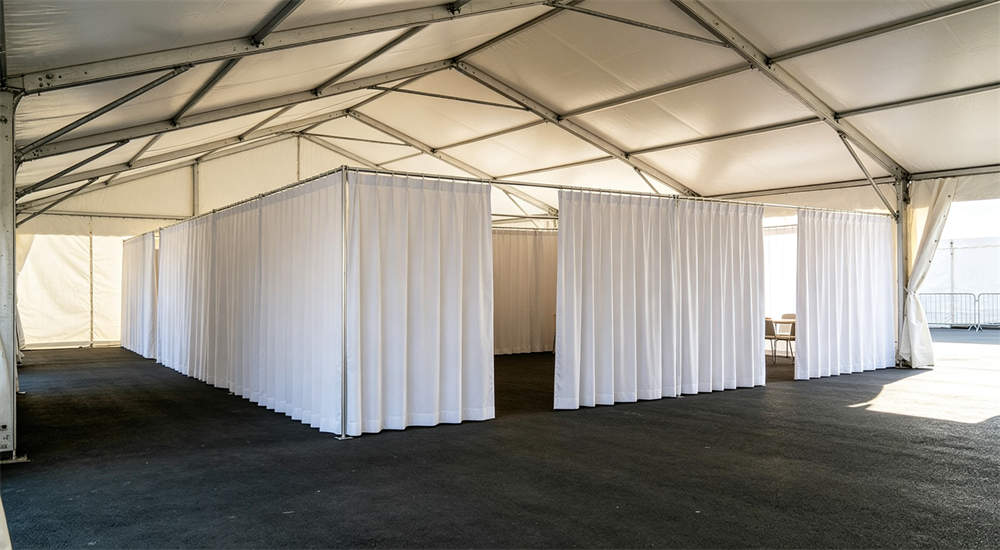
Standard frames use welded steel tube with hot-dip galvanized or powder-coated finish. Galvanized frames hold up to rain and humidity for 8-12 years with basic maintenance. Always ask whether the finish is galvanized, painted, or both, and what touch-up paint is supplied.
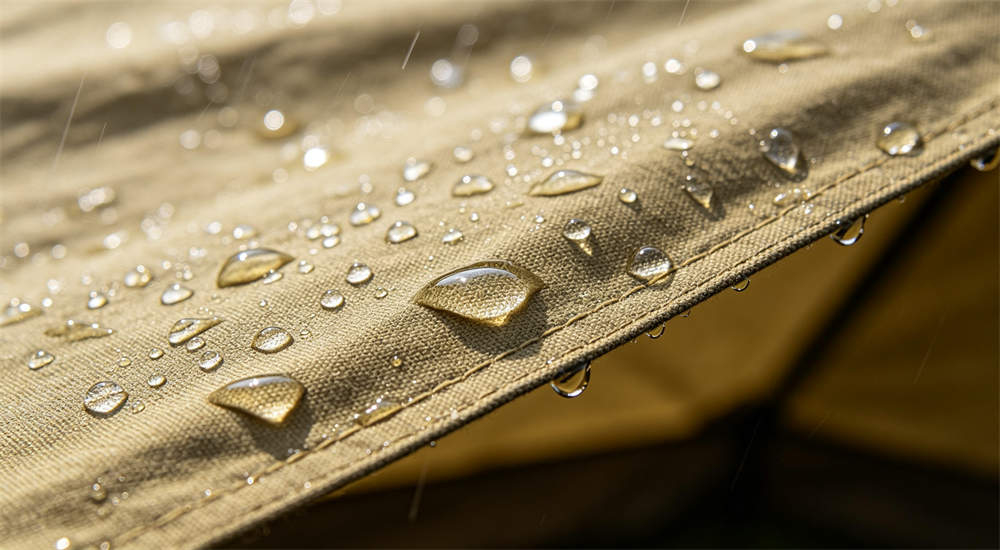
The outer cover is usually 280-420g/m2 cotton canvas or 600D Oxford with PU3000mm coating. Seams are taped or double-stitched. Standing water on the roof should drain, not pond. Ask for the hydrostatic head test report and seam-taping method, not just the word waterproof.
The single-wall canvas blocks wind but does not hold heat on its own. For winter use, add a removable cotton quilted inner liner and a safe heater or stove. Expect 5-10C inside above outside when lined and heated. Never use unvented combustion heaters inside a closed tent.
A 12m2 (3.2x3.7m) unit needs 3-4 people and about 30-45 minutes to raise the frame, attach the cover, and stake it. Larger 20-36m2 relief camps need 4-6 people and 60-90 minutes. Setup time excludes heating, furniture, and equipment.
Choose a steel frame tent for long-term fixed camps, remote sites without power, below-freezing weather, and heavy loads. Choose an inflatable tent for rapid 15-minute response and frequent moves. Frame tents cost less, last 8-12 years, and need no pump.
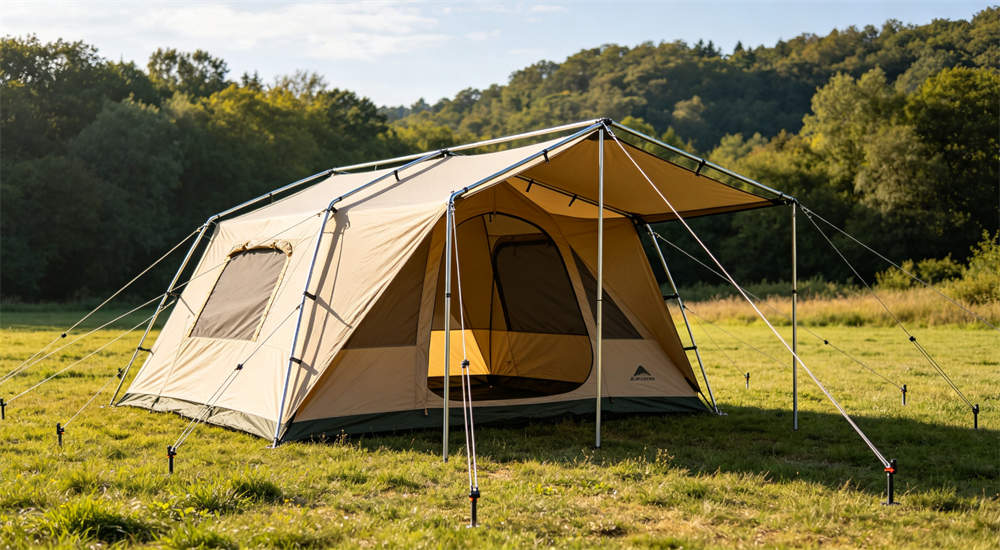
Standard frame relief tents are rated Beaufort 6-7 (60-70 km/h) with proper stakes and guy lines; reinforced models reach Beaufort 8. Rain resistance depends on PU3000mm coating and taut roof slope. Do not assume a tent rated for light rain survives a typhoon.
A basic 12m2 steel pole relief frame tent runs about $600-$1,200 FOB. A heavy-duty 20-36m2 camp unit with galvanized frame, 420g canvas, and cotton liner runs $1,500-$2,500. Government bulk orders and custom markings change the final number.
Standard colors (olive green, army blue, white) usually start at 10-50 units. Custom printing of relief agency logos or markings typically starts at 50-100 units. Confirm the MOQ and lead time with your inquiry; sample orders may be possible at a higher unit price.
Many suppliers reference the MZ/T 011.1 relief tent specification or UNHCR family tent benchmarks. Ask which clause the frame, fabric, and fire-retardant finish actually meet. A brochure claim is not a test report; require the actual document.
With proper use and storage, expect 8-12 years or 30-50 deployments. The steel frame outlasts the fabric; canvas covers typically need replacement after 5-8 years of outdoor exposure. Keep spare poles, connectors, and a repair kit.
Yes. A removable cotton quilted liner, waterproof floor mat, and divider curtains are common options for winter camps and family shelters. They add cost and packed volume. Ask whether the liner clips to the frame and whether it can be washed.
Recommended spares: 2-3 spare steel poles, a bag of joint pins and bolts, guy ropes and ground stakes, canvas repair patches, and seam tape. Long-term relief camps should keep 5-10% spare poles and 10% stakes as consumables.
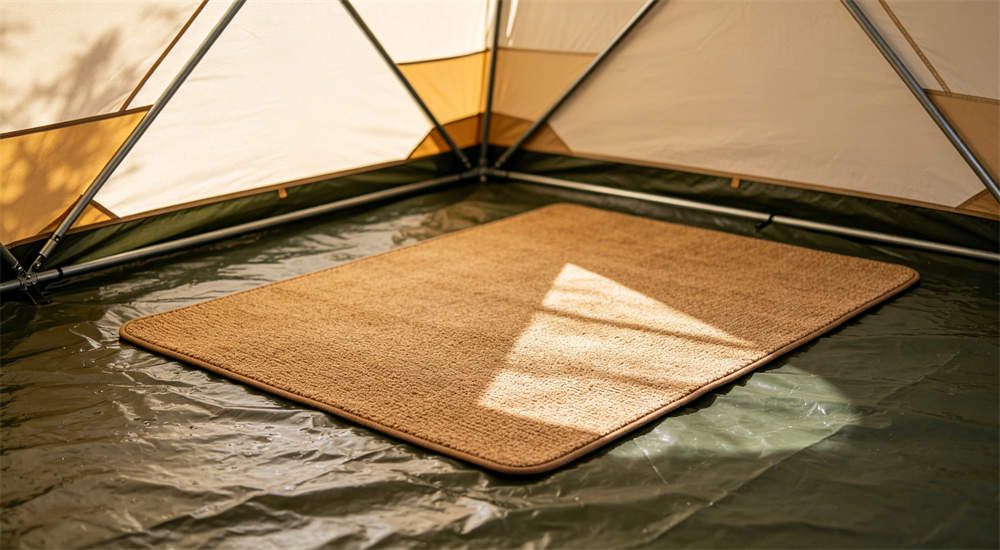
Browse our bulk disaster relief inflatable shelter series built for disaster response deployments. Suitable for field medical stations, emergency refuge and on-site command. Click to view full product range, technical datasheets and request your custom wholesale quote.
Enlaces amistosos :
Derechos de autor © Custom Disaster - Relief Bedding: Tents, Sleeping Bags, Blankets Reservados todos los derechos
el equipo profesional al servicio !