Categorías
Many buyers focus on the sleeping bag product and give packing little attention — then find six months later that boxes have softened from moisture, bags smell musty, and labels cannot be read. The sleeping bag may be perfect, but if it arrives damaged from poor storage packing, the order value drops. This guide explains how to pack sleeping bags so they stay in good condition during months or years of reserve storage, for institutional and wholesale buyers.
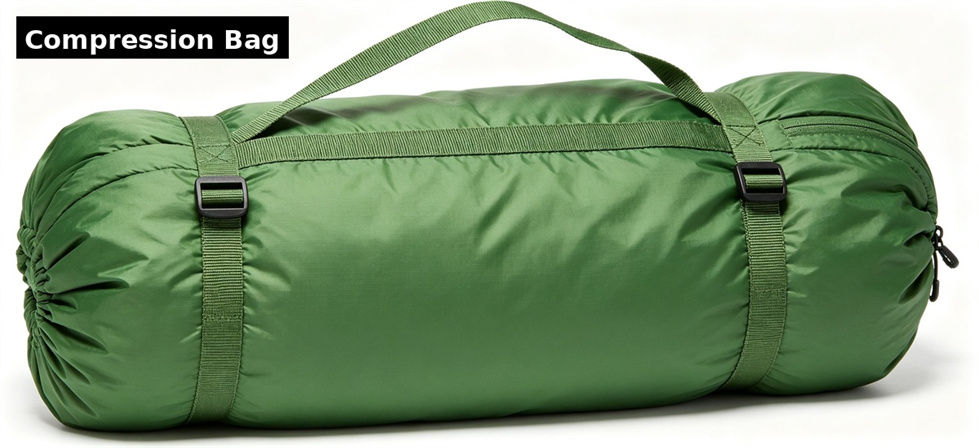
Whether you store sleeping bags for emergency shelters, refugee camps, schools, or outdoor programs, these packing steps apply. The same method works for envelope, mummy, and double sleeping bags — only the box count and weight change.
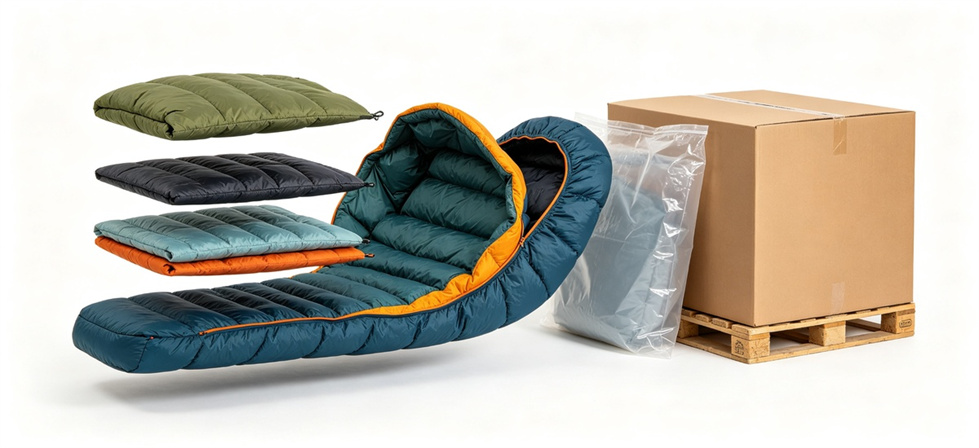
Sleeping bag packing is more than putting a bag in a box. There are five layers, and each one has a job. Skipping a layer creates a weak point where moisture, dust, or damage can enter.
|
Layer |
What it is |
What it protects against |
|
1. Sleeping bag |
The product itself |
— (the item being protected) |
|
2. Storage bag |
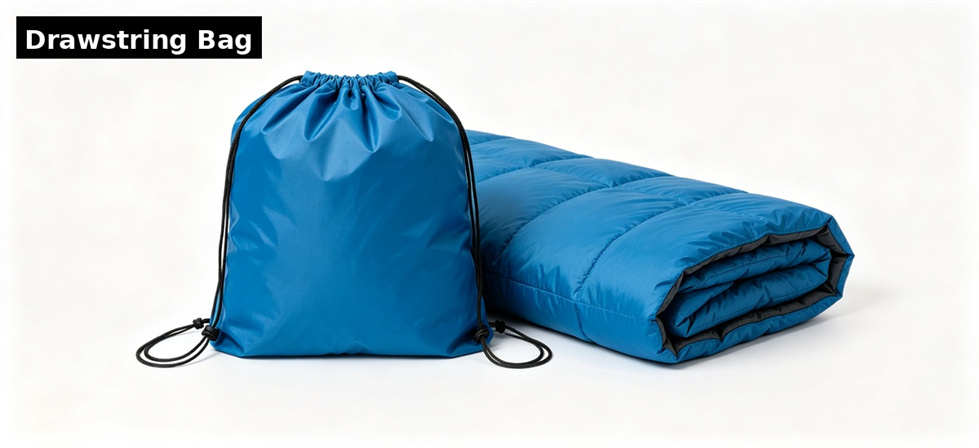
Drawstring, compression, or mesh bag |
Handling damage, dirt, loss of accessories |
|
3. Inner protection |
Individual PE moisture bag |
Dust, incidental moisture, humidity during storage |
|
4. Carton |
Five-layer corrugated export box |
Crushing, stacking pressure, light exposure |
|
5. Pallet / wrap |
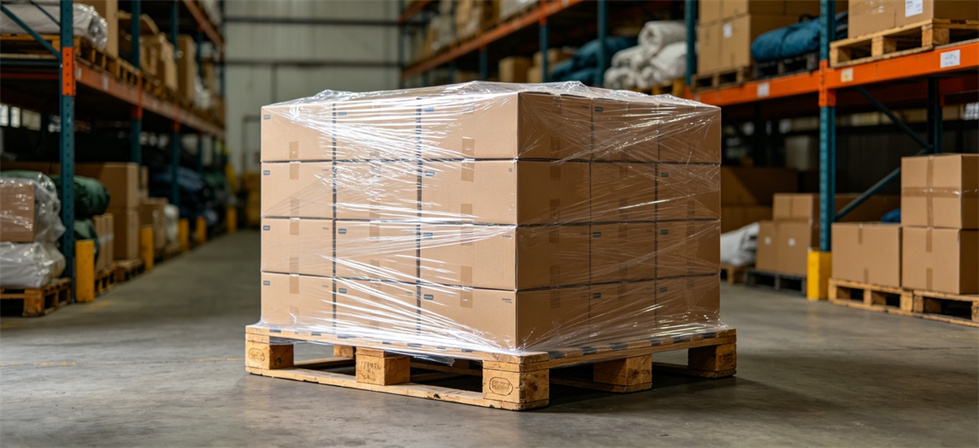
Pallet with stretch film or straps |
Handling damage in transit, easy warehouse counting |
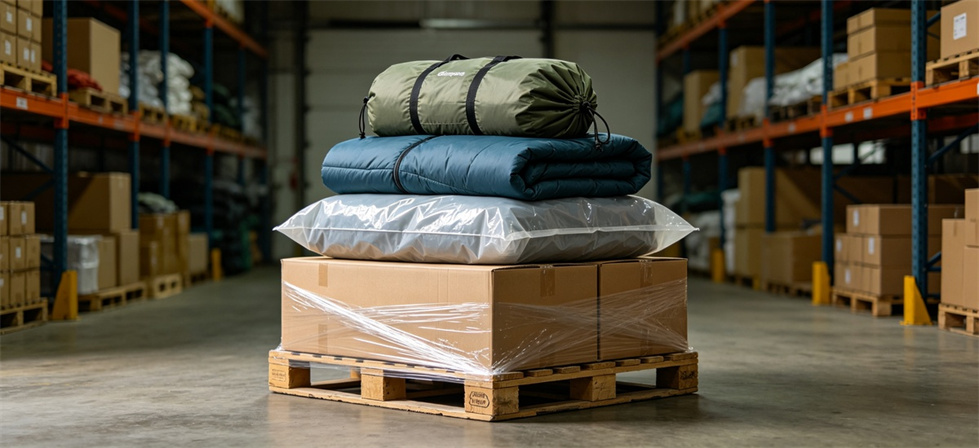
Not every order needs all five layers. A short-term indoor reserve might skip the PE inner bag. A long-term outdoor warehouse storage should use all five. Match the layers to your storage conditions, not to a default template.
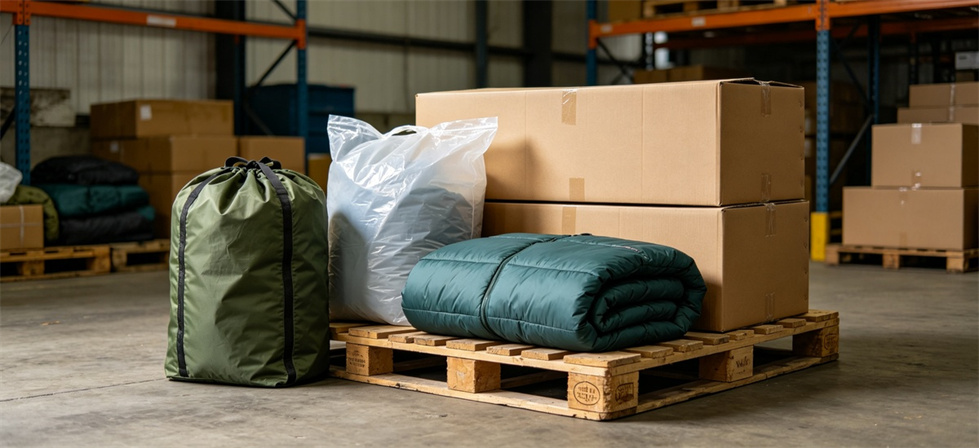
The storage bag is the layer users touch most often. Choose it based on how the sleeping bags will be stored and used.
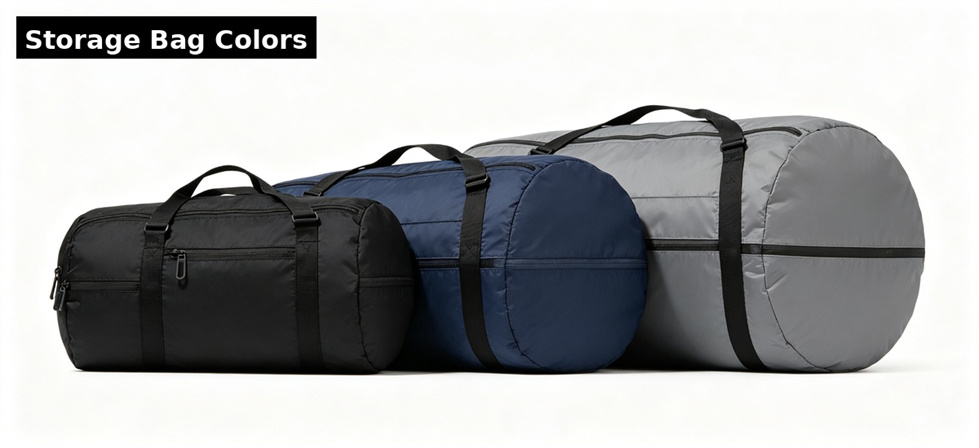
For most institutional reserve orders, a standard drawstring polyester bag is the practical choice. It is low cost, easy to use, and does not stress the filling. Choose compression only when storage space is genuinely limited. Storage bag colours can be matched to the sleeping bag or ordered in a standard neutral colour (black, navy, grey) for wholesale orders. Custom logo printing on the storage bag is available for quantities above standard levels.
Packing differences by sleeping bag shape: Envelope (rectangular) bags fold flat and stack neatly in boxes — they are the most space-efficient. Mummy bags have a tapered shape and hood, so they roll rather than fold flat; allow 10–15% more box space per unit. Double bags are wider and heavier — usually 4–6 units per box, and they need a wider box (65 × 45 × 50 cm typical).
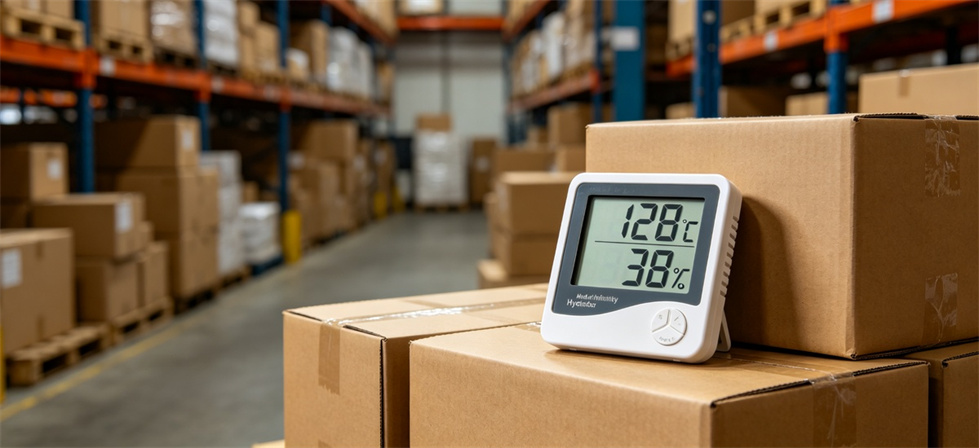
Moisture is the number one enemy of stored sleeping bags. It causes mildew, musty smell, fabric degradation, and filling clumping. The right moisture protection depends on where and how long you store.
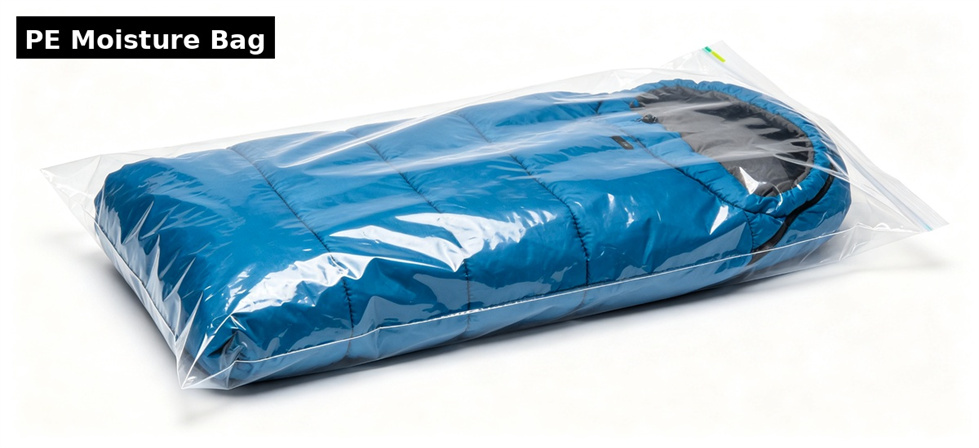
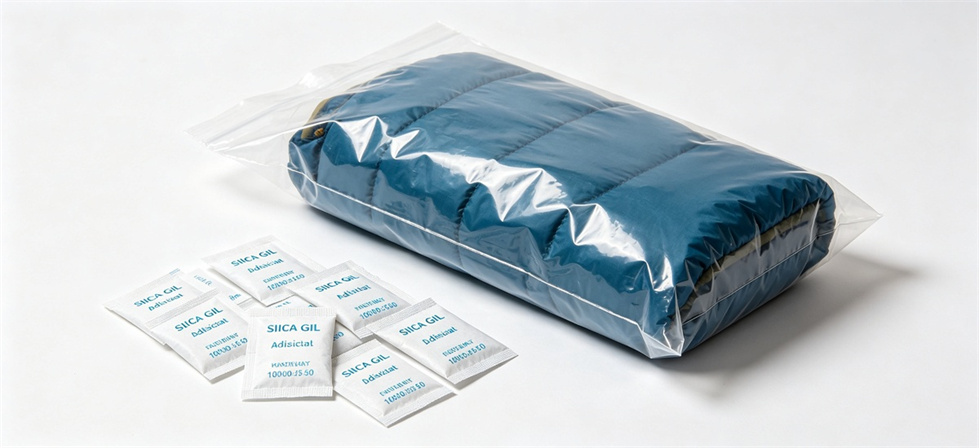
Individual PE moisture bag:
Storage environment by climate zone:
|
Climate zone |
Humidity range |
Recommended packing |
Extra measures |
|
Tropical / humid |
60–90% RH |
All five layers + PE bag + desiccant packets |
Dehumidifiers, 3-month inspection, elevated shelving |
|
Temperate |
40–60% RH |
All five layers + PE bag |
6-month inspection, avoid exterior walls |
|
Dry / arid |
20–40% RH |
Storage bag + carton (PE optional) |
Annual inspection, dust protection |
|
Cold / sub-zero |
30–50% RH |
All five layers + PE bag |
Watch for condensation when thawing, 6-month inspection |
General storage rules:
The carton protects the sleeping bags during transport and stacking. Getting the carton right means knowing how many bags fit and how heavy the box gets.
|
Sleeping bag weight |
Typical pieces per carton |
Estimated carton gross weight |
Notes |
|
0.7 kg (lightweight) |
18–20 pieces |
14–16 kg |
One person can carry; most volume-efficient |
|
1.3 kg (medium) |
12–15 pieces |
17–21 kg |
Two-person lift recommended |
|
1.8 kg (cold weather) |
8–10 pieces |
16–20 kg |
Volume limit reached before weight limit |
|
2.4–3 kg (heavy) |
6–8 pieces |
17–26 kg |
Use trolley or forklift; do not stack more than 3 high |
Carton specifications for export and long-term storage:
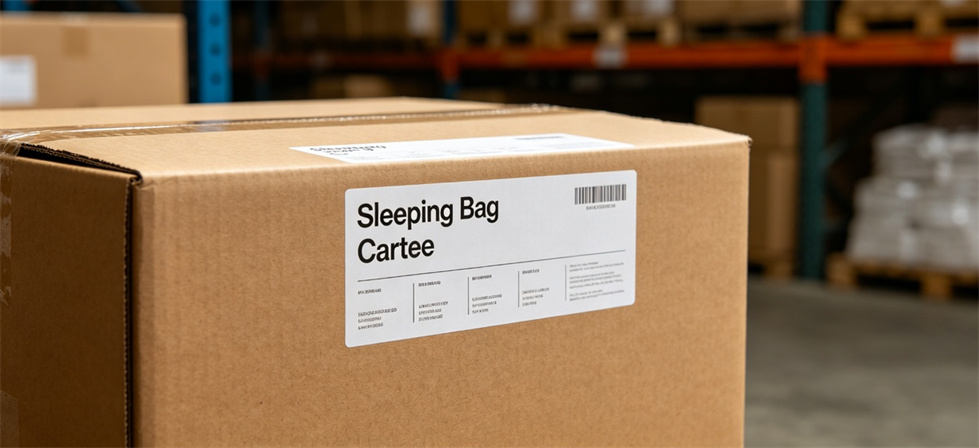
Always ask the supplier for the actual pieces-per-carton and gross weight for your exact setup. Numbers change significantly between sleeping bag sizes and weights.
The same sleeping bag order needs different packing depending on how it ships. Sea freight, air freight, and road transport have different risk profiles.
|
Shipping method |
Main risks |
Packing adjustment |
|
Sea freight |
Humidity, long transit, multiple handling |
All five layers + PE bag + desiccant; palletized recommended |
|
Air freight |
Weight cost, pressure changes, limited handling |
PE bag + carton; compression bags to save volume; pallet optional |
|
Road / truck |
Vibration, shifting, shorter transit |
Carton + pallet with stretch film; PE bag optional for short distances |
|
Express / courier |
Rough handling, small parcels |
Individual PE bag + reinforced carton; no pallet |
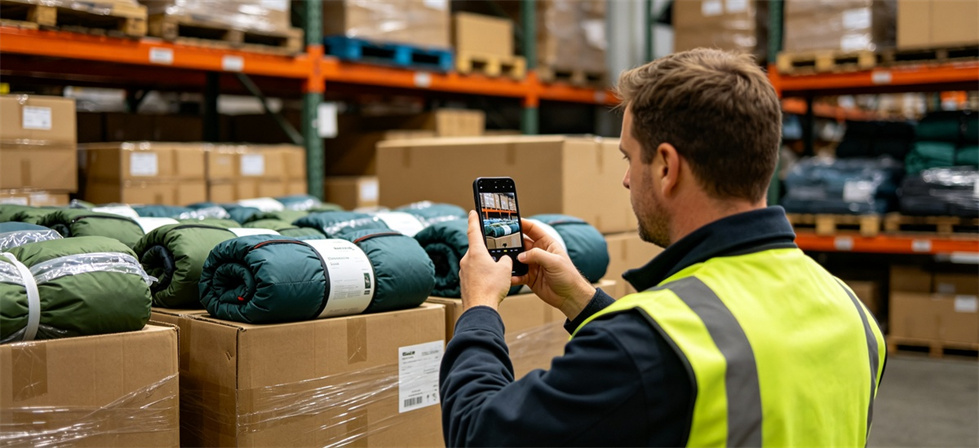
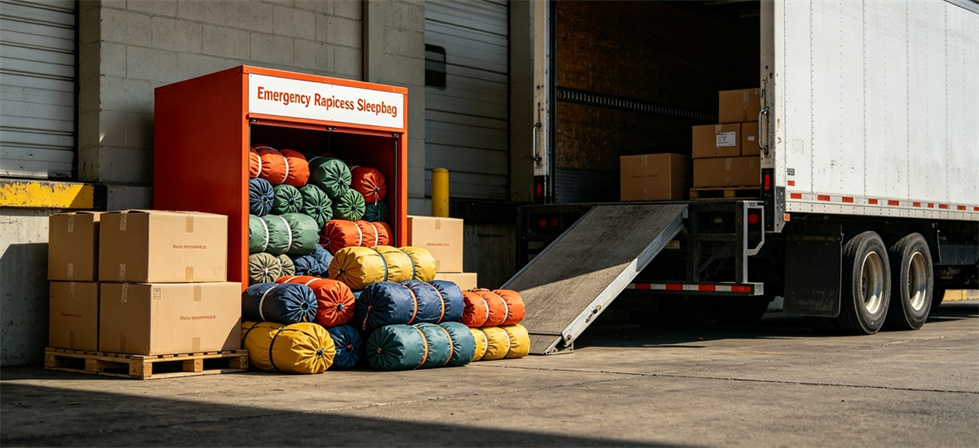
For emergency rapid distribution (shelters, refugee camps), consider pre-packing sleeping bags in easy-to-carry bundles of 5–10 units inside the box. This speeds up distribution at the destination without opening every box.
Insurance and claims: For sea freight or high-value wholesale orders, take photos of the packed boxes and pallets before shipping. If damage occurs in transit, photos of the original packing plus the damaged goods support insurance claims. Keep a copy of the packing list and box weights with the shipping documents.
Palletizing makes warehouse handling faster and safer, but it must be done correctly to avoid crushing the bottom cartons.
Pallet planning:
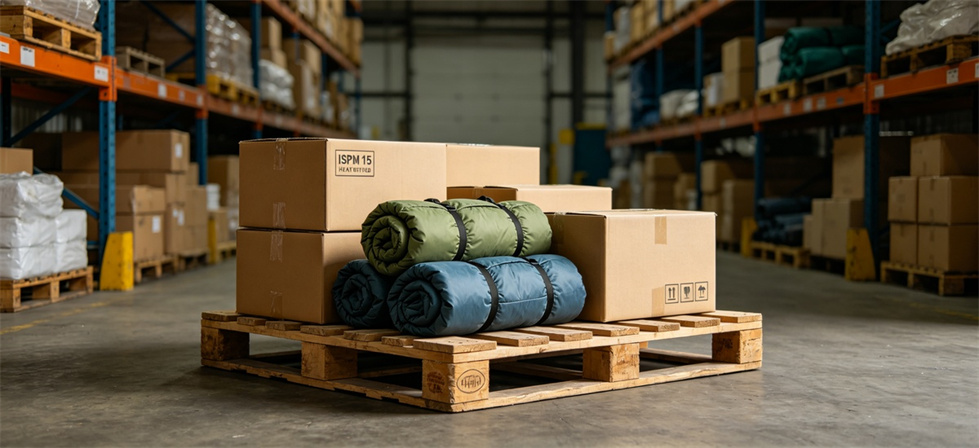
Warehouse stacking rules:
Labels are how you find the right sleeping bag without opening every box. Each layer needs different information.
Individual sleeping bag label (on the storage bag or hangtag):
Product: Emergency Sleeping Bag
Size: 200 x 80 cm
Filling: Hollow Polyester Fibre 350 g/m2
Net Weight: 1.3 kg
Colour: Blue
Batch No: [YYYYMMDD-XXX]
Production Date: [MM/YYYY]
Care: Machine wash 30C, do not bleach, dry flat
Carton label:
Product: Emergency Sleeping Bag
Setup: 200x80cm / 350g/m2 / 1.3kg / Blue
Quantity: 12 pieces
Gross Weight: 17.5 kg
Carton Size: 58 x 42 x 45 cm
PO Number: [your PO]
Supplier: YRF Textile
Country of Origin: China
This Side Up | Keep Dry
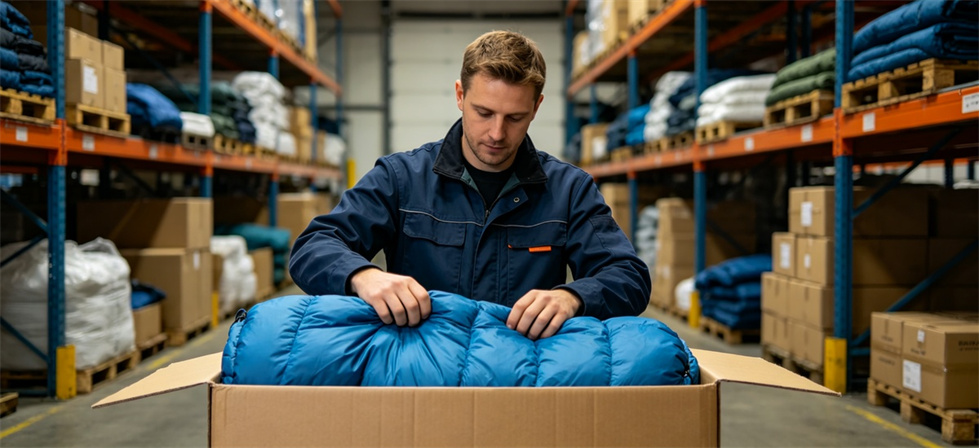
Pallet label:
Total Cartons: 8
Total Units: 96
Total Gross Weight: 140 kg
PO Numbers: [range]
Batch Numbers: [range]
Pallet 3 of 12
Labels should be printed, not handwritten, for readability. Place box labels on the long side, not the top, so they are visible when stacked. For bulk warehouse management, add a barcode or QR code on each box label — this speeds up receiving, inventory counts, and picking. The barcode can encode PO number, batch, quantity, and storage location.
Different filling materials age differently in storage. Understanding this helps you set realistic reserve timelines and inspection schedules.
|
Filling type |
Expected storage life |
What degrades first |
How to extend life |
|
Hollow polyester fibre |
3–5 years |
Filling loft loss from compression |
Loose storage bag, air out every 12 months |
|
Silk-like cotton |
2–3 years |
Clumping, mildew if damp |
PE bag essential, dry storage, 6-month check |
|
Polyester-cotton blend |
2–4 years |
Cotton portion absorbs moisture |
Humidity control, annual airing |
After the expected storage life, the sleeping bag is still usable — it may just need fluffing or a lighter weight rating. Inspect a sample from each batch before distribution.
If sleeping bags have been in compressed storage for more than 6 months, restore loft before distribution:
(1) remove from compression bag and shake vigorously for 30 seconds,
(2) hang or lay flat in a dry, ventilated area for 2–4 hours,
(3) gently massage clumped areas by hand,
(4) if still flat, tumble dry on low heat with 2–3 clean tennis balls for 10 minutes (check fabric care label first). Bags that do not recover loft after these steps have degraded filling and should be rated for milder temperatures.
Pests can damage fabric and filling, and make stock unusable. Prevention is cheaper than treatment.

These are the issues that appear most often in long-term sleeping bag storage. Each one has a clear cause and a matching solution.
Cause: three-layer cardboard, overloaded cartons, or stacking too high. Solution: use five-layer corrugated cartons with ECT 32+ rating, keep gross weight under 25 kg, max 3 cartons high without pallet racking.
Cause: moisture trapped in packaging, storage on concrete floor, or high humidity. Solution: PE inner bag, 15 cm floor clearance, humidity below 60%, annual airing.
Cause: cheap ink, exposure to light or moisture. Solution: use printed labels with water-resistant ink, place labels inside a clear tape cover, avoid direct sunlight on stored cartons.
Cause: prolonged compression in tight bags. Solution: use loose drawstring bags for long-term storage, air out bags every 6–12 months, avoid compression bags for reserve stock.
Cause: mixed setups packed together, no carton label. Solution: pack one setup per carton, label every carton clearly, random-check at receiving.
To get comparable packing quotes, include these items in your RFQ. Copy and adjust this template:
Subject: RFQ - Sleeping Bag Packing for [Project Name]
We are sourcing packing for [indoor reserve / outdoor storage / humid region] sleeping bags.
Please quote the following:
1. Sleeping bag: [size, filling, net weight]
2. Quantity: [number] units
3. Expected storage duration: [short-term / 1 year / 3+ years]
4. Storage environment: [climate-controlled / unheated indoor / outdoor / humid]
5. Storage bag: [drawstring polyester / compression / mesh / none], specify fabric weight
6. PE inner moisture bag: [required / optional], specify thickness
7. Carton: [five-layer required?], ECT rating, max carton weight, custom printing?
8. Pallet: [palletized required?], pallet size, max height
9. Labeling: info on each layer, language, barcode needed?
10. Shipping method: [sea / air / road / express]
11. Destination handling: can the site handle pallets? doorway clearance?
Please return: packed unit dimensions, pieces per carton, carton gross weight,
carton size, cartons per pallet, pallet total weight, and packing cost per unit.

Ask every supplier to return the quote in the same format. Quotes that bundle multiple items under one price are hard to compare — request a breakdown.
At YRF Textile, we supply bulk wholesale emergency sleeping bags with packing matched to your storage conditions. Standard options include drawstring polyester bags, PE inner moisture bags, five-layer export boxes, and palletized shipping. We can provide custom box printing, barcode labels, and multi-language labels for institutional buyers.
We also supply complementary emergency blankets, foam mattresses, and folding beds that can be packed together for complete shelter kits. If you need help matching packing to your warehouse conditions, view our sleeping bag range or contact us directly.
Good sleeping bag packing is about matching five layers to your storage conditions. Start with the storage environment and duration, choose the right storage bag, add moisture protection for humid climates, use five-layer boxes with proper ECT rating, and palletize for safe handling. Label every layer so stock is traceable, and inspect every 6 months for the first year. For wholesale and institutional buyers, the right packing setup protects your investment through the full storage period.
The cheapest packing option can become the most expensive if sleeping bags arrive damaged or musty. Calculate the total cost including inspection, replacement, and distribution delay — then choose the packing setup that protects your stock for the full storage period.
It depends on the environment. If your warehouse is climate-controlled with humidity below 50%, a PE bag is optional but still recommended for long-term storage over 12 months. If humidity is above 60% or the warehouse is not temperature controlled, PE bags are essential to prevent mildew and musty smell.
With proper packing (loose storage bag, PE inner bag, five-layer carton, dry warehouse), hollow polyester sleeping bags can store 3–5 years without significant quality loss. Silk-like cotton bags have a shorter 2–3 year storage life. After that, inspect for filling loft loss, fabric yellowing, and odour. Compression-stored bags should be aired out every 6–12 months regardless of total storage time.
Not recommended for more than 3 months. Vacuum compression squeezes all air out of the filling, and over months the fibres lose resilience and do not fluff back up. Use loose drawstring bags for reserve storage. Compression bags are fine for transport and short-term kits, but plan to air out the bags periodically.

What ECT rating should export cartons have for sleeping bags?
Five-layer (double wall) export cartons should have a minimum Edge Crush Test (ECT) rating of 32 lbs/in. For heavy sleeping bags (2.4 kg+) or high stacking (3+ cartons high), choose ECT 44 lbs/in for extra stacking strength. Three-layer (single wall) cartons with ECT 23 are only suitable for light items and short transport — not for long-term reserve storage.
Palletizing is recommended for sea freight because it reduces handling damage and makes loading/unloading faster. However, palletizing reduces container volume efficiency by about 10–15% because of pallet gaps. If container space is tight and the destination can handle loose cartons, you can ship unpalletized, but expect more carton damage.
How do I prevent mildew in a humid sleeping bag warehouse?
Four steps:
(1) use individual PE moisture bags inside each storage bag,
(2) store cartons at least 15 cm above the floor on pallets,
(3) use dehumidifiers or ensure warehouse ventilation keeps humidity below 60%,
(4) inspect stock every 3 months in tropical climates and air out any cartons that feel damp. Do not store cartons against exterior walls where condensation forms.
It is possible but not recommended for reserve storage. Mixed cartons cause picking errors, make inventory counts inaccurate, and slow down distribution. Pack one setup per carton and label it clearly. If you must mix (e.g. small quantity of a special size), label the carton "ASSORTED" and list the contents on the outside.
What information must be on the sleeping bag carton label?
At minimum: product name, setup (size/filling/weight), quantity, gross weight, buyer PO number, and country of origin. For reserve stock, add batch number and production date for FIFO rotation. Labels should be printed (not handwritten) and placed on the long side of the carton so they are visible when stacked.
Every 6 months for the first year, then annually if conditions are stable. In tropical or humid climates, inspect every 3 months. Check for: carton damage or dampness, signs of pests, label readability, and (open 1–2 cartons per batch) filling loft and any odour. Record the inspection date and results so you can track conditions over time.
Only in very humid environments where air circulation is more important than dust protection. Mesh bags breathe well but offer no protection from dust, dirt, or moisture. For most warehouses, a polyester drawstring bag with a PE inner bag gives better all-round protection. Mesh is a specialty choice, not a default.
Can I reuse the shipping carton for long-term sleeping bag storage?
Yes, if the carton is five-layer corrugated and arrived undamaged. Inspect each carton before placing it in reserve storage: if corners are crushed, the box is damp, or the cardboard is soft, repack into a new carton. A damaged carton offers much less stacking protection and can collapse under weight.
On pallets, in an interlocking brick pattern, maximum 1.5 m high including pallet. Do not stack pallets more than 2 high unless racking is rated for it. Keep 10 cm gaps between pallets for air circulation. Never stack cartons directly on concrete floors — always use pallets or shelving with at least 15 cm clearance.
Desiccant packets (silica gel or clay) absorb excess moisture inside a sealed carton or PE bag. They are most useful for sea freight and tropical storage, where humidity fluctuates. Place 1–2 packets (50–100 g each) per carton, depending on carton size. Replace desiccants if you open and reseal cartons, as they become saturated over time. Desiccants supplement — do not replace — proper PE bag sealing and warehouse humidity control.
We supply drawstring, compression, and mesh storage bags with five-layer export cartons and palletized shipping. Send us your storage conditions and we recommend the right packing setup.
|
|
|
 |

|
Enlaces amistosos :
Derechos de autor © Custom Disaster - Relief Bedding: Tents, Sleeping Bags, Blankets Reservados todos los derechos
el equipo profesional al servicio !