Categorías
After two decades of sitting across the table from blanket suppliers — and sitting in the receiving warehouse when the containers arrived — I can tell you the most expensive mistake in relief blanket procurement isn't picking the wrong factory. It's comparing three quotes that aren't actually quoting the same thing. This guide is the field method I use to make sure every candidate answers the same brief before anyone looks at a price.
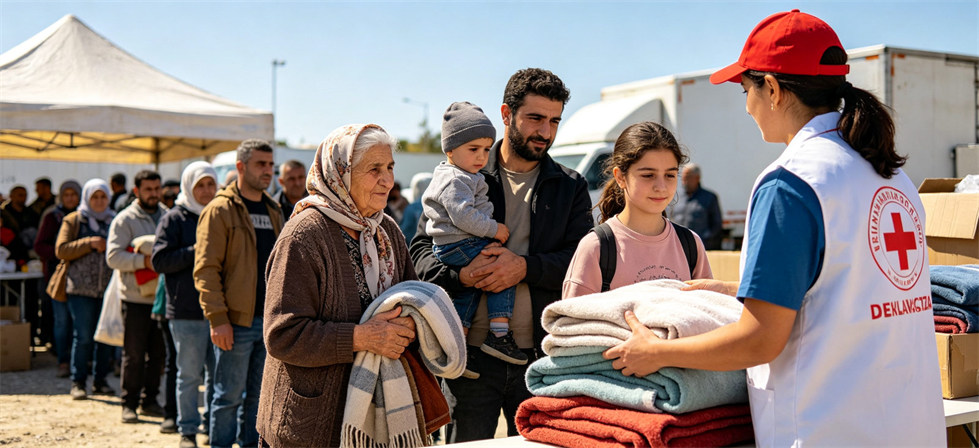
The comparison sheet should make omissions visible. It should not reward a response simply because it uses more promotional language or an attractive headline price.

A buyer can test comparability with a simple question: if two replies were swapped into the same receiving plan, would the warehouse team know what to expect from each one? If the answer is no because packing, label, document or configuration details differ, the offers are not yet competing on the same scope. The comparison work should resolve that difference before commercial ranking begins.
A supply-source comparison is reliable only when every candidate answers the same current project. Comparing countries, website claims or product photos does not show whether a wholesale blankets blanket supplier can support the selected configuration, packing route, document scope and receiving plan. Start with one buyer brief and require each response to state what is confirmed, optional, excluded or still pending.
This method protects a buyer from a false low-price comparison. A lower offer may simply omit packing detail, destination marks, sample handling, document review or a change route. The comparison file should make such omissions visible as a scope difference, not hide them inside a single commercial line.
The bulk blanket sourcing question is whether a source can answer the current brief clearly and provide order-specific documents or records tied to the selected configuration. General claims about a region, industry or institutional blankets blanket supplier history do not replace a comparable order response.
Supply-source comparison is most useful when buyers compare responses to the same project, not broad claims about countries, regions or factory histories. This guide gives blanket procurement teams fields that expose different commercial scope, product scope and response quality without importing a competitor's facts.
▶ To determine whether product photos can truly verify a blanket's material, GSM and quality before a bulk order, check out our article *Can Product Photos Prove Blanket Material, GSM, and Quality Before Bulk Orders?* — it helps you clarify the limits of visual verification and what supplementary testing you need.
Compare project responses, not marketing narratives. A bulk blankets blanket supplier can describe a broad product line in an appealing way while still not answering the current order question. Put the same use, configuration, quantity basis, destination, packing, documentation and receiving fields beside every reply. The buyer can then see who has addressed the project and who has only repeated general background material.

Plain English: "We export to 40 countries" is a marketing line. "For your 150×200 cm, 800 gsm, -25°C spec, we can provide an ISO 11092 warmth report dated within 12 months, vacuum-compressed on ISPM 15 pallets, CIF Hamburg, with EAC documents if you need them" is a project response. One tells you about the wholesale blankets blanket supplier; the other tells you about your order. You're buying the second one.
relief blanket procurement checkpoint: Before you read any price, read every response against a checklist of the same 8–10 fields (use, configuration, quantity, destination, packing, documents, delivery term, receiving plan). If a institutional blankets blanket supplier left a field blank, that's not "they forgot" — that's a scope gap. Mark it red and ask them to fill it before you compare prices.
When suppliers receive identical request documents, their response quality becomes directly measurable. A supplier who asks clarifying questions about institutional blankets specifications is usually more reliable than one who returns a quote within hours without any questions.
Document the exact request sent to each source, including date, contact person, and specification version. This creates an audit trail that protects the buyer if a blanket supplier later claims different requirements were communicated.
Before requesting prices, identify the fields that cannot change: required construction, sizing basis, packing constraints, document scope, delivery destination and acceptance route. This stops a source from appearing cheaper simply because it omitted part of the requirement.
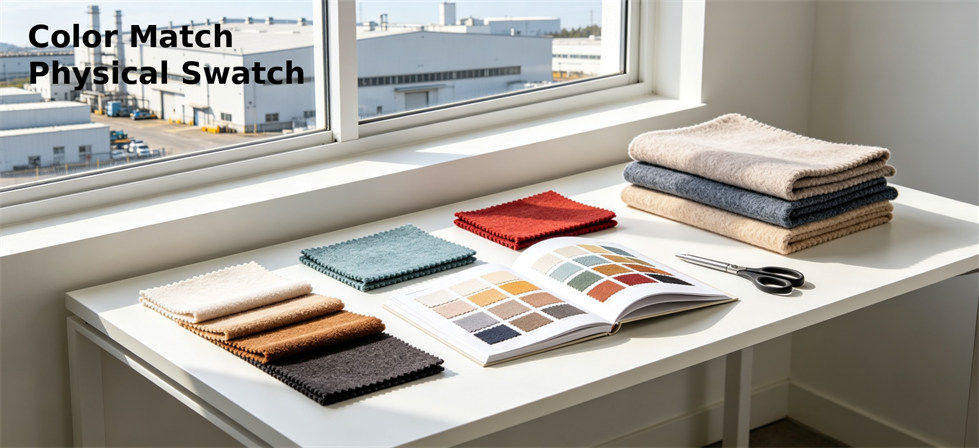
Set non-negotiable fields before reviewing offers. They might include the selected construction, dimensions, weight basis, required visible features, unit presentation, outer identification, document scope and destination allocation. The exact list belongs to the project, not to a generic webpage. Its purpose is to prevent an attractive alternative from being treated as equivalent when it fails a field the operations team actually needs.
For wholesale blankets blankets, the non-negotiables I always lock first are: shell gsm and coating type (e.g. 110 gsm ripstop with PU coating, 2000 mm waterproof minimum), insulation wadding weight (e.g. 800–1200 gsm for -25°C), warmth test standard (ISO 11092 or ASTM F1868 — not "we can pass"), fire standard (ASTM D4151 / EN ISO 12952 / BS 5866 / 16 CFR 1633 as applicable — not CPAI-8 which is for tents), packing method (vacuum-compressed or folded — this changes container count by 40–60%), and per-carton weight against the 24 kg air-freight limit if there's any chance the order flies.
The comparison table below helps institutional blanket procurement teams evaluate relief blanket supply sources across response quality, commercial scope and support capability. Use it to align requirements with your bulk blankets blanket supplier before final selection.
|
Buyer control |
Question to close |
Useful record |
|
Project brief |
What is the actual use and destination? |
Current requirement sheet |
|
Configuration |
Which physical fields are fixed? |
Written specification |
|
Confirmation |
What is covered by a sample or document? |
Scope note |
|
Receipt |
How will differences be handled? |
Receiving record |
Price, delivery term, sample treatment, packing inclusion and destination handling should be compared against the same configuration. A commercial quote without these boundaries is not a reliable procurement comparison.
A practical comparison table can use four notes for each source: what is included, what is proposed as an alternative, what is excluded, and what remains pending. Add the decision consequence beside the note. For example, an unconfirmed packing route may prevent the buyer from finalising a distribution plan; a document with unmatched scope may block a project requirement. This makes the table a working decision tool rather than a list of bulk blankets supplier claims.
Commercial scope must be read beside product scope. Ask whether the stated commercial response relates to the same configuration, quantity basis, packing approach, delivery assumption and included support. When a field is missing, record the effect: the price cannot yet be compared, the receiving plan cannot be completed, or the team must ask for a corrected response. This turns a vague concern into a practical decision step.
Here's a comparison template I use. Copy it into a spreadsheet, add one column per wholesale blankets supplier, and fill in every cell. Blank cells are scope gaps, not free wins.
Field
What to record
If blank or different
Configuration
Shell gsm/coating, insulation gsm, liner, size, weight — all three layers broken out separately
Price is for a different product; don't compare
Warmth test
Lab name, standard (ISO 11092 / ASTM F1868), measured CLO/tog, report date, appendix covers this exact product
Self-declared temperature rating — reject for sub-zero tenders
Fire test
Standard number (ASTM D4151 / EN ISO 12952 / etc.), topical vs inherent, report date
Ask which standard; reject if it's a tent standard (CPAI-8) on a blanket
Packing
Vacuum-compressed or folded? Pieces per carton, cartons per pallet, cartons per 40HQ, gross weight per carton
Can't calculate shipping or compare total cost
Delivery term
FOB / CIF / DAP? Named port? First-batch date vs total lead time?
Apples-to-oranges; normalize before comparing
Documents
Which included (warmth report, fire report, OEKO-TEX, CoO, content form, EAC/REACH/CPSC as needed)? At whose cost?
Budget for obtaining them yourself or ask supplier to include
Payment terms
T/T 3-stage installment for bulk orders; 50% deposit + 50% pre-shipment balance for fully custom blanket orders (stockpile orders adopt T/T settlement only)
Factor into cash-flow and risk assessment
Sample policy
Free or paid? Courier cost? Lead time? Sample fee deductible from first order?
Budget for sample evaluation; confirm deductible
Inspection
Which points open (during production / before shipment / at loading)? Third-party PSI at whose cost?
Can't verify before it ships — risk goes up
Exclusions
What's NOT included (e.g. ISPM 15 pallets, multilingual labels, air-freight option)
These are real costs; add them to total cost
This table is a starting point. Add or remove rows for your specific project — but never delete a row because a supplier didn't answer it. That blank cell is information.
A supplier may provide company-level material, but buyers should distinguish it from configuration-specific documents and sample proof. Record what supports screening and what still needs confirmation for the order.

Where a source provides general background documents but cannot tie them to the selected configuration, record the limitation precisely. The buyer may continue the comparison while asking for a scoped response, a sample reference or a clearer order record. This is more useful than rejecting all background material or, in the opposite direction, treating it as proof of everything. The comparison should show what decision the record can support today.
Check support at the level where it will be used. A general catalogue may support screening, while a sample, packing confirmation, label proof or scoped test report may support a later order decision. Do not ask one document to answer every question. Identify what the document or record covers, which selected configuration it relates to and what remains outside that scope.
Think of it as three tiers: Tier 1 is marketing material (website, brochure, "we export to 40 countries") — useful for deciding whether to send an RFQ, useless for deciding whether to award a contract. Tier 2 is company-level documents (ISO 9001, OEKO-TEX certificate, business license) — proves the factory exists and runs a decent system, but doesn't prove your specific blanket is warm or fire-resistant. Tier 3 is order-specific evidence (the warmth report for your exact insulation weight, a fire report dated within 12 months, a sealed sample matching your spec, a packing confirmation for your quantity) — this is what you award on. A supplier who only has Tier 1 and Tier 2 is a candidate; a supplier who has Tier 3 for your exact spec is a contender.
A usable response identifies assumptions, unanswered fields and the person responsible for clarification. Fast but vague replies create more downstream work than a slower, complete response.

Communication should be reviewed over more than one message. A supplier may answer an opening enquiry clearly but lose the version link when a sample or packing question is raised. Track whether the same configuration reference survives the conversation. This is a better operational test than trying to infer reliability from a website description or the amount of promotional material supplied.
Communication quality is an execution signal because unclear replies become unclear handoffs. Look for whether the supplier returns the buyer's fields in a usable format, distinguishes confirmed items from alternatives, and explains what is needed to close an open point. A fast but generic reply may be less useful than a structured response that reduces later clarification work.
A sample request reveals whether the supplier can align configuration, packing and documentation in a controlled way. Use it to check the process, not to make a blanket judgement from appearance alone.

A small sample request can test the handoff process, not just the visible product. Ask the supplier to identify the sample against the current configuration and explain which packing, label or document reference will later be confirmed for the order. The response shows whether the supplier can maintain a single version trail when the project moves from enquiry to approval.
When samples arrive, don't just unfold them and say "feels thick." Do these five things:
(1) Weigh the whole sample, then if possible cut or peel to weigh shell, insulation, and liner separately — compare to the quoted gsm.
(2) Stack a 50 kg weight on it for 72 hours, then wait 24 hours and measure spring-back.
(3) Hold it up to a fan or hair dryer on one side and feel for air coming through the other — if you feel it, the shell doesn't block wind.
(4) Hold a seam up to a bright light — pinpricks of light through stitching mean warm air escapes at -20°C.
(5) Sniff it — a strong chemical or acrid smell can mean residual solvents or poor coating quality.
Procurement checkpoint: Treat the sample as a mini-production run. The sample that arrives in a pretty bag with no label, no batch number, and no reference to your spec is a gift, not a sample. A real sample has a spec reference, a date, and a named contact — because it's the thing you'll compare the bulk delivery against.
Sample Evaluation Framework for Bulk Blankets
Sample evaluation is where many blanket procurement comparisons fail. Different suppliers send different configurations, making direct comparison impossible. Use this framework to standardize your sample assessment across all sources.
Pre-sample specification: Before requesting samples, send every supplier the same written specification: GSM tolerance ±5%, finished size tolerance ±2cm, edge finish type, label placement, and packing unit. This ensures all wholesale blankets samples are directly comparable.
Physical inspection points: weigh each sample individually to verify GSM, measure dimensions at three points, check edge stitching consistency, examine label durability, and test fabric hand feel. Record all measurements in a shared table rather than relying on memory.
Performance tests: For institutional blankets intended for cold climates, conduct a simple insulation comparison by wrapping identical warm objects and measuring temperature retention over 2 hours. This practical test often reveals differences that lab reports do not capture.
Documentation review: Each sample should arrive with a corresponding spec sheet confirming material composition, GSM, and test report references. Suppliers who cannot match samples to documentation create traceability risks for bulk blankets repeat orders.
Retain all samples with labeled tags for at least 12 months. They become the reference standard for pre-production approval and shipment quality verification.
Document why an option was selected, what was excluded and which items remain pending. This protects the next buyer from restarting the comparison without the reasons behind the original choice.

The decision record should retain a short counterfactual: what information would have made an excluded source usable? It may be a clarification of document scope, a different packing response or a corrected configuration line. This gives a future buyer a constructive reference. It also stops a team from interpreting an earlier project decision as a permanent statement that the source can never be considered again.
Keep a comparison decision record with a column for the buyer's reason, not only a score. Note which fields were satisfied, which were pending, which alternative was rejected and what information would have changed the decision. This record makes procurement defensible and gives the next project team a starting point without treating the result as a permanent supplier ranking.
▶ Wool blanket‑Warmth and comfort, emergency disaster relief. Click this title link to get product specification sheets, sample application terms and delivery schedules for various disaster‑relief procurement projects.
Compare Exclusions for Blanket Manufacturer Evaluation
A source may look competitive because it leaves a requirement outside its response. Record what each option excludes, postpones or conditions; the absence of a field is itself useful comparison information.
Exclusions deserve the same attention as offers. A supplier may be unable to support a required label, may leave document scope unconfirmed, or may offer a different packing route. These are not necessarily faults, but they must be recorded as differences. An excluded item should explain why the offer cannot be used for this project rather than disappearing from the comparison without a reason.
Exclusions deserve the same attention as offers. A supplier may be unable to support a required label, may leave document scope unconfirmed, or may offer a different packing route. These are not necessarily faults, but they must be recorded as differences. An excluded item should explain why the offer cannot be used for this project rather than disappearing from the comparison without a reason.
What goes wrong
A supplier's quote doesn't mention ISPM 15 pallets, multilingual labels, or vacuum packing. The buyer assumes they're included. They're not.
Consequence
At order time, the supplier says "oh, that's extra" — adding cost you didn't budget for, or refusing a requirement you thought was standard. If it's a label language requirement for the destination country, it can hold up customs.
How to prevent it
Every field in your comparison table must have an answer. If the supplier didn't mention it, ask. "Not mentioned" is not "included" — it's "unknown," and unknown is a risk.
Red Flag Checklist for Blanket Supplier Evaluation
When comparing blanket supplier sources, certain warning signs appear repeatedly across failed procurement projects. Use this checklist to screen candidates before investing time in detailed negotiations.
Communication red flags: delayed responses beyond 48 hours, vague answers to technical questions, reluctance to provide reference contacts, or frequent changes in the account contact person. These patterns often indicate insufficient capacity or poor internal coordination for bulk blankets orders.
Capability red flags: inability to show factory photos or production line details, no test reports for the exact GSM being quoted, MOQ below industry norms without explanation, or pricing that is 30%+ below comparable wholesale blankets quotes. Unrealistically low prices usually signal material substitution or hidden fees later.
Commercial red flags: refusal to split payment milestones, demand for 100% upfront payment, no written confirmation of packing and labeling requirements, or contracts that omit quality acceptance clauses. Institutional blankets procurement requires clear commercial terms to protect both parties.
Logistics red flags: no experience with the destination port, inability to provide loading photos, unclear lead time commitments, or lack of pallet packing specifications. A reliable blanket manufacturer should handle these details routinely.
Score each candidate against this checklist. Any two red flags in the same category should trigger a deeper review before shortlisting.
Ask sources to respond against the same project stage: quotation, sample, production confirmation, shipment or receipt. A statement valid only for early screening should not be compared with an order-stage commitment.

Use the same decision horizon for every source. Compare what each supplier can confirm for the current project and what must still be confirmed before production or shipment. Do not reward a reply for making broad promises that another supplier has responsibly left conditional. The buyer needs an answer that can survive sample, packing and receiving review.
Plain English: "We can do that" in a first email is not the same as "We will do that" in a signed contract. Don't score a supplier higher because they promised more earlier — score them on what they'll commit to in writing at the stage you're actually in. A cautious "we need to confirm with the factory but expect to meet this by Friday" is worth more than a confident "no problem" that never makes it into the contract.
A shorter response can be stronger when it identifies the requested configuration, open items and responsible contact precisely. Long marketing material does not improve a comparison if it avoids the fields the buyer must actually close.

Clarity can also be tested by asking whether another colleague could turn the response into a sample review note, packing confirmation or receiving note without rewriting it. If the answer is no, the supplier may have acknowledged the request without giving the project an executable record. That is a real decision risk even when the product description and price initially look attractive.
Score clarity rather than promotional volume. A clear answer links the requested configuration to a sample or written record, identifies scope limits and gives the next action. A long list of unconnected claims does not reduce procurement risk. The comparison should therefore reward useful fields, traceable references and transparent open points.

A supplier is warm, responsive, and sends nice photos. The buyer likes them personally and starts scoring them higher on quality metrics they haven't actually proven.
Consequence
You award the order to someone you like instead of someone who can prove the spec. Friendliness doesn't keep anyone warm at -20°C.
How to prevent it
Score on fields, not feelings. If a supplier scores high on communication but low on document evidence, that's a note — not a pass. The comparison sheet doesn't care how nice someone is.
Keep a concise record of why an option was not chosen: mismatch, incomplete scope, missing confirmation or a commercial boundary. This lets later reviewers understand the decision without turning the log into an unsupported judgement about a supplier.

A rejected-option log is valuable when it records a project-specific reason: incomplete scope, incompatible handling route, missing order-specific confirmation or unresolved communication. It should not make general negative claims about a supplier, country or product line. On a later project, the buyer can reassess the source against a new brief instead of reusing an old rejection without context.
Need a starting template for your supplier comparison?
If you're building a comparison sheet for an upcoming relief blanket tender, you can reach us through the site inquiry form with a brief description of your project and target spec. We can share a blank comparison template with the fields in this article already laid out — no commitment, no client data shared. Final terms are always subject to signed contract.
Standard bulk stockpile orders support 3-stage T/T installments; fully customized blanket projects adopt a fixed 50% upfront deposit + 50% balance settled before shipment rule, all transactions follow T/T settlement only.
Compare the current configuration, quantity basis, destination, packing, document needs, receiving route, payment terms and commercial scope. Price becomes comparable only after those fields describe the same project.
A headline price may omit part of the configuration, packing, document scope, delivery assumption, payment plan or support needed for the project. Ask for the same fields before comparing offers.
No. Country of origin or supplier history cannot establish suitability for a current order. Compare each response against the same project brief, configuration, packing, document scope and receiving route.
It is a project requirement that must be addressed before offers can be treated as alternatives, such as a selected configuration field, packing constraint, document need, destination instruction or receiving route.
Check what each document or record covers, the selected configuration or order it relates to, and what remains outside its scope. General background material supports screening; it does not automatically close an order-stage requirement.

A clear response returns the buyer's fields, identifies what is confirmed or optional, states any open item and names the next action or contact needed to close it.

Use the sample request to test whether the supplier keeps the same configuration reference across the sample, packing and document discussion. Appearance alone does not settle the full project scope.

Record the project-specific reason, such as an unmatched configuration, incomplete scope, different handling route or unresolved field. Do not turn one project's result into a general judgement about a supplier.

No. A previous order or company history is background only. Confirm the current configuration, packing, destination, document needs and change handling for the new project.
A short decision record should identify the selected response, governing configuration reference, excluded alternatives, open items, document-scope limits, payment plan and the next owner.

For a first-time buy, three to five qualified responses is the sweet spot. Fewer than three and you can't see the market; more than five and you're drowning in paper that all looks the same. Pre-qualify before you quote — don't send the RFQ to 20 factories and hope three come back comparable.

Go back and check harder. If every field is genuinely identical — same shell, same insulation, same packing, same documents, same delivery term, same payment terms — then the cheaper one wins. But in my experience, "identical" usually means you missed a field. Re-check the warmth report (is it for the same gsm?), the fire treatment (topical vs inherent?), the packing (vacuum vs folded?), and the payment terms. One of those will explain the gap.
For government and NGO relief blanket tenders, I use a 60/40 split: 60% technical compliance (does it meet every non-negotiable field, are the documents real, did the sample pass?) and 40% commercial (price, delivery term, payment). If a supplier fails any non-negotiable technical field, they're out regardless of price. You can't weight a 22% price advantage against a blanket that doesn't keep people warm.

Document every version. If the spec changes between quote and sample, that's a red flag — either they didn't understand the RFQ or they're trying to substitute cheaper materials. Require written confirmation of the final spec before production, and reference that confirmation (not the latest email) in the contract. If they can't hold a spec for 30 days between quote and contract, they won't hold it for 60 days of production.
The independent warmth test report for your exact configuration. Everything else — price, packing, delivery, communication, payment terms — is negotiable or fixable. A blanket that doesn't meet the temperature rating can't be fixed after it arrives. If that one field is missing or wrong, nothing else matters.
One last line: the comparison sheet isn't paperwork — it's the thing that keeps you from awarding a contract to a quote that looked cheap because it was quoting a different product. Fill in every field, mark every gap, confirm matching payment plans and don't rank the prices until every row says the same scope. The ten minutes you spend making them comparable saves ten weeks of arguments at the receiving warehouse.
Primary Keyword: Emergency Relief Blanket Supply Sources
Long-Tail Keywords: compare relief blanket suppliers, relief blanket procurement comparison, blanket supplier evaluation, relief blanket RFQ comparison, how to compare blanket quotes, blanket supplier comparison template, blanket vendor selection, blanket procurement fields, relief blanket supplier scoring, emergency blanket supplier due diligence, blanket sample evaluation, relief blanket document comparison, blanket supplier communication risk, relief blanket comparison sheet, blanket procurement decision record, rejected supplier log, relief blanket non-negotiable spec, blanket commercial scope vs product scope, relief blanket bulk installment payment, custom blanket 50/50 deposit payment
Frequently Asked Questions
How to calculate blanket quantities for relief projects?
To calculate wholesale blankets quantities for relief projects, estimate the number of affected households or individuals, multiply by units per person or family, and add a 10-15% reserve margin. Consider seasonal needs and storage capacity when finalizing bulk blankets order sizes for institutional blankets distribution.
How to verify blanket packing and labeling before shipment?
Request pre-production packing photos, confirming carton markings match the purchase order for wholesale blankets, checking label placement on samples, and arranging third-party inspection if required for institutional blankets. Your blanket supplier should provide packing confirmation before production begins.
How government stockpiles should plan blanket specifications?
Define core specifications for institutional blankets, establish approved blanket supplier lists through tender, maintain batch traceability records, and schedule annual stock rotation for wholesale blankets. A written blanket specification checklist ensures consistency across annual blanket procurement cycles for bulk blankets.
How to store and rotate emergency blanket stockpiles?
Store bulk blankets in dry, ventilated conditions with pallet separation, record receipt dates by batch, and follow first-in-first-out rotation for institutional blankets. Inspect stock annually for moisture damage and replenish wholesale blankets based on usage rates rather than fixed calendar dates.
How buyers can verify recycled content before ordering blankets?
Request material composition statements, test reports showing fibre percentages, and batch traceability records from the blanket manufacturer. A blanket supplier that can provide clear composition details for institutional blankets reduces the risk of mislabeled recycled content in bulk blankets orders.
How to control blanket specification changes on repeat orders?
Maintain a signed appendix with revision identifiers, requiring written confirmation for any GSM, size, label or packing alteration for bulk blankets, and requesting updated samples when changes affect product identity for wholesale blankets. This prevents silent substitutions in repeat relief blanket procurement orders for institutional blankets.
▶ For institutional procurement requirements such as government material stockpiles, prison accommodation and military camps, we support large‑volume wholesale supply of emergency relief blankets. We strictly comply with project technical specifications to guarantee consistent supply capacity. To learn key points for institutional bulk purchasing, please refer to our article *Emergency Disaster Relief Blankets | For Government Stockpiles, Correctional Facility Blankets & Military Camps – Bulk Wholesale Supply*.
✅ Factory video link (YouTube): https://x.c1ns.cn/zVNIU
✅ Facebook homepage: https://a.c1ns.cn/SjJla
|
Access our full product document |
Quick real‑time chat for urgent project questions |
 |
 |
|
Get full‑range product specs & package solutions in PDF |
Connect with us for instant project support |
Enlaces amistosos :
Derechos de autor © Custom Disaster - Relief Bedding: Tents, Sleeping Bags, Blankets Reservados todos los derechos
el equipo profesional al servicio !