Categorías
Updated: October 22, 2026 | By YRF Emergency Supplies Team | Reviewed by Former Hazmat Response Officer
Chemical spills can happen anywhere—in factories, laboratories, hospitals, even at home under the kitchen sink. When a corrosive or toxic chemical leaks, every second counts. Having the right chemical spill kit on hand can mean the difference between a minor incident and a life-threatening emergency. As a leading chemical emergency response equipment manufacturer, we supply chemical PPE and emergency safety equipment to industrial facilities, laboratories, and first responders worldwide. This guide covers everything you need to know about building an effective chemical exposure response kit.
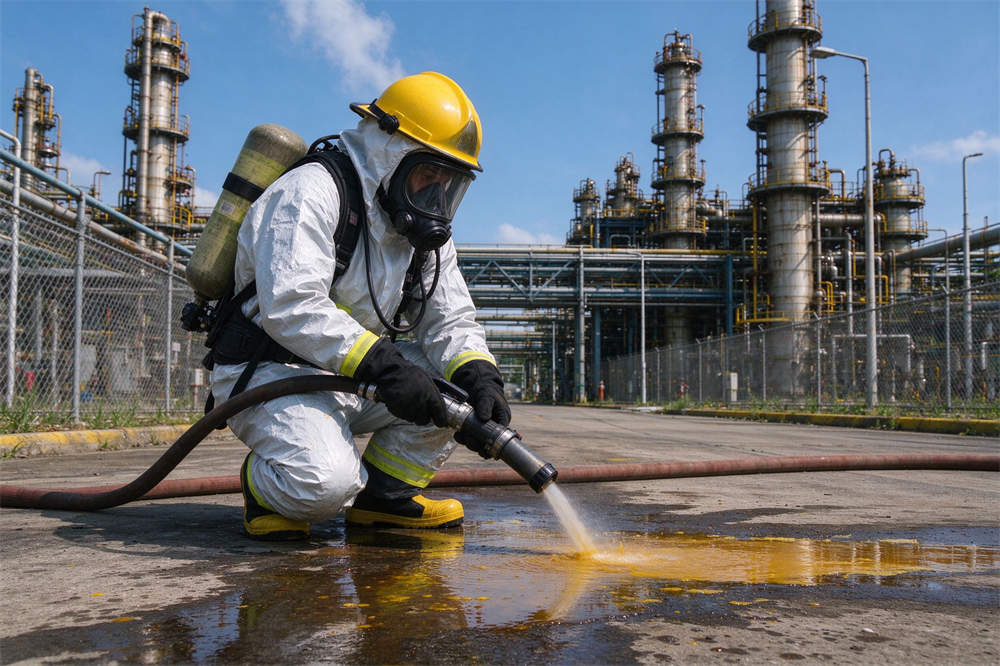
Whether you run a small lab, a large chemical plant, or a fleet of delivery trucks, you need a plan. That plan starts with having the right equipment on hand: eyewash stations that work, PPE that actually protects, spill kits that can handle the job, and first aid supplies that can save a life. This guide walks you through every piece, why you need it, and how to choose the right one for your facility.
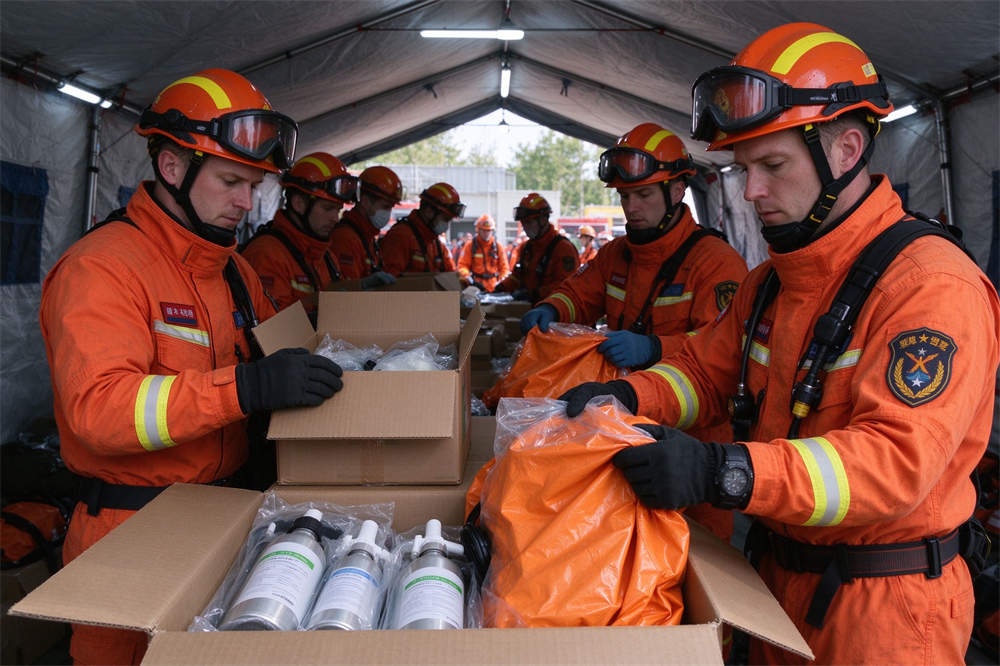
We'll cover common chemical types and their hazards, step-by-step response procedures, what PPE you really need, why eyewash stations are the most important piece of equipment you can install, first aid for chemical exposure, spill cleanup supplies, and what different facilities need. We'll also cover the most common mistakes people make—and how to avoid them. By the end of this guide, you'll know exactly what you need to keep your people safe.
A chemical spill is the uncontrolled release of a hazardous chemical—whether corrosive, toxic, flammable, or reactive. Spills can range from a small bottle broken in a lab to a full-scale tanker truck accident on the highway. The OSHA chemical spill response guide categorizes spills into three levels: minor (small, contained, no health risk), moderate (requires PPE and spill kits), and major (evacuation, emergency services). For global standards, see the WHO emergency response guidelines and EPA chemical spill resources.
! Critical Fact: 80% of chemical exposure injuries happen during cleanup, not during the initial spill. People rush in without proper PPE and get burned or poisoned. Always protect yourself first.
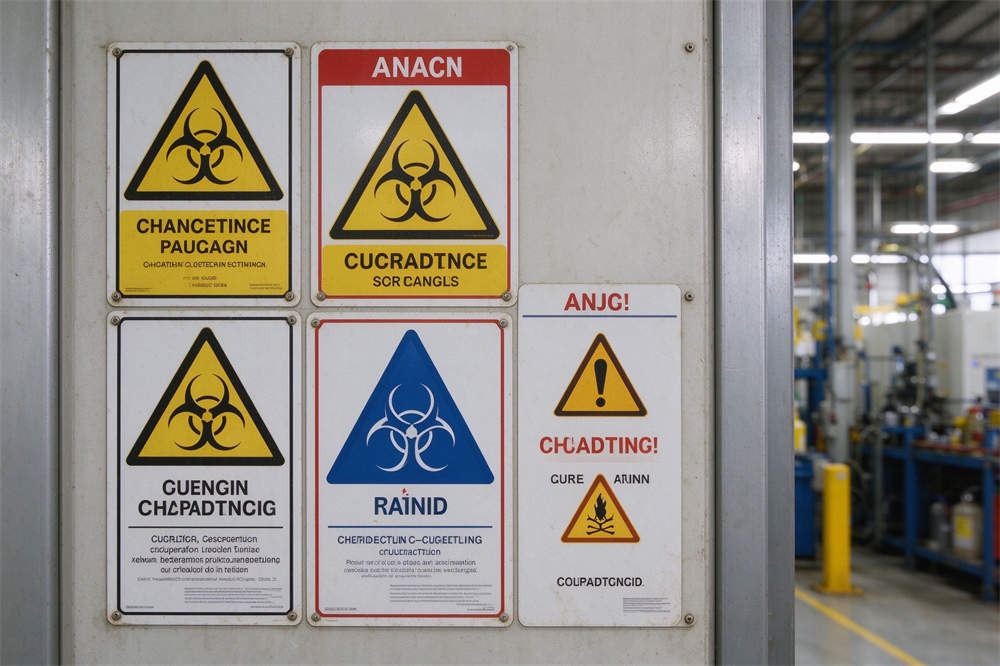
Not all chemical spills are the same. Understanding what you're dealing with is the first step to proper response:
|
Chemical Type |
Examples |
Hazard |
|
Corrosive Acids |
Sulfuric acid, hydrochloric acid, nitric acid |
Eats through skin and metal, permanent tissue damage |
|
Corrosive Bases |
Sodium hydroxide, ammonia, bleach |
Deeper burns than acids, eye damage, respiratory irritation |
|
Flammable Solvents |
Gasoline, acetone, alcohol |
Fire and explosion risk, toxic fumes |
|
Toxic Gases |
Chlorine, ammonia gas, hydrogen sulfide |
Inhalation can be fatal in minutes |
|
Reactive Chemicals |
Sodium metal, peroxide, cyanide |
Explosive reaction when mixed with water or air |
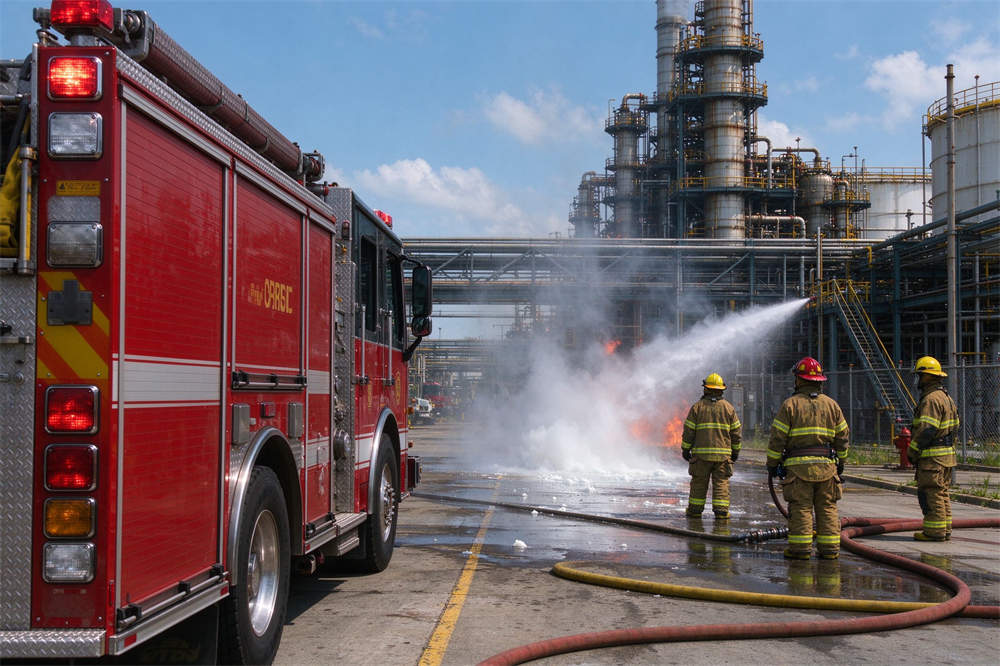
Every chemical spill response follows the same basic steps. Following these steps saves lives:
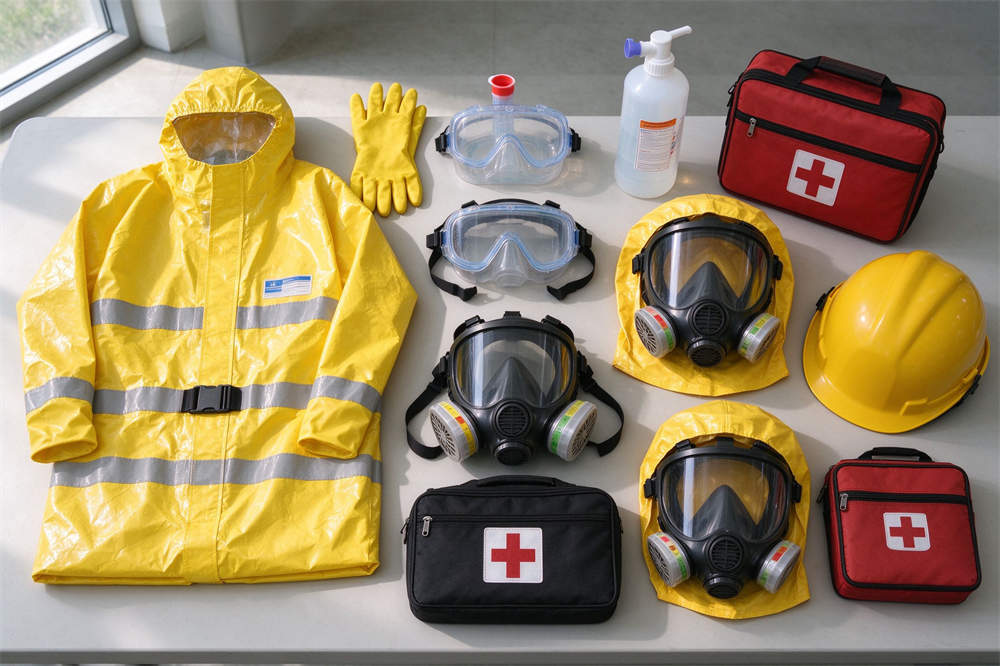
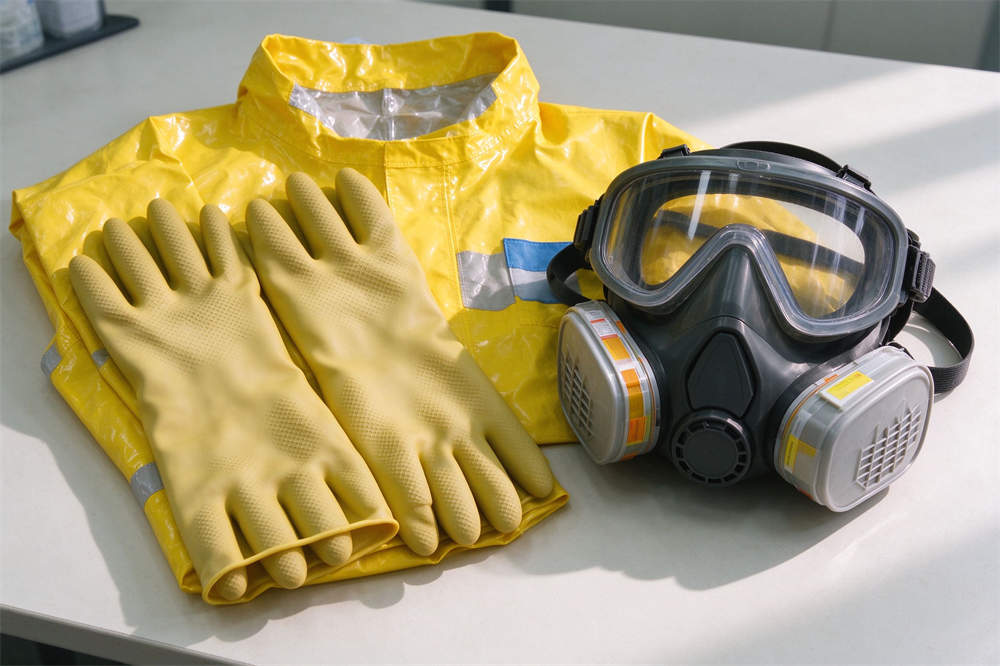
The most important part of any chemical spill kit is personal protective equipment. You can't help anyone if you become a victim too. Here's the PPE you need:
PPE Item
Why It's Essential
Chemical-resistant gloves
Nitrile or neoprene gloves protect against acids, bases, and solvents. Latex offers no protection against most chemicals.
Safety goggles / face shield
Chemical splashes to the eyes can cause permanent blindness. Goggles must be splash-proof, not just impact-resistant.
Respirator / smoke hood
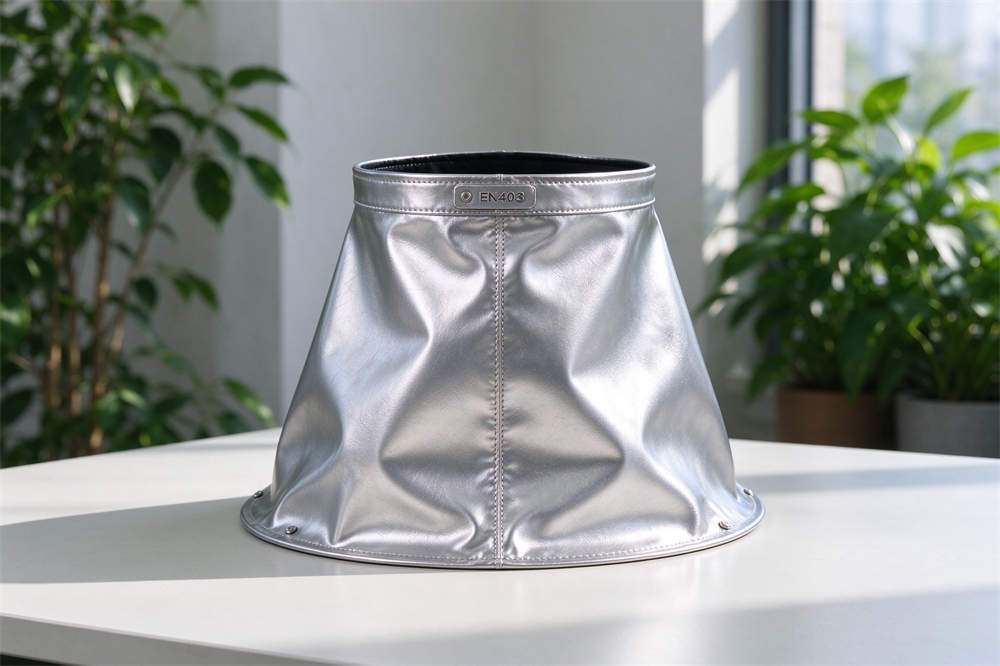
For toxic fumes and vapors. Our EN403 certified smoke hoods provide 15-30 minutes of clean breathing air for evacuation.
Chemical-resistant coveralls
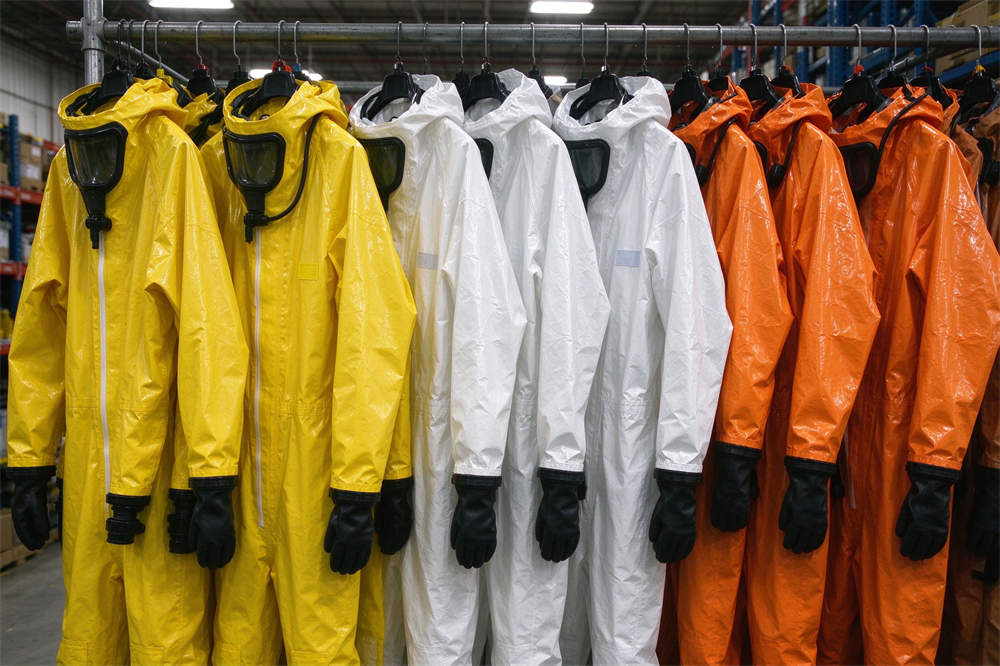
Protect your skin and clothing from splashes. Disposable Tyvek-style coveralls are ideal for one-time use.
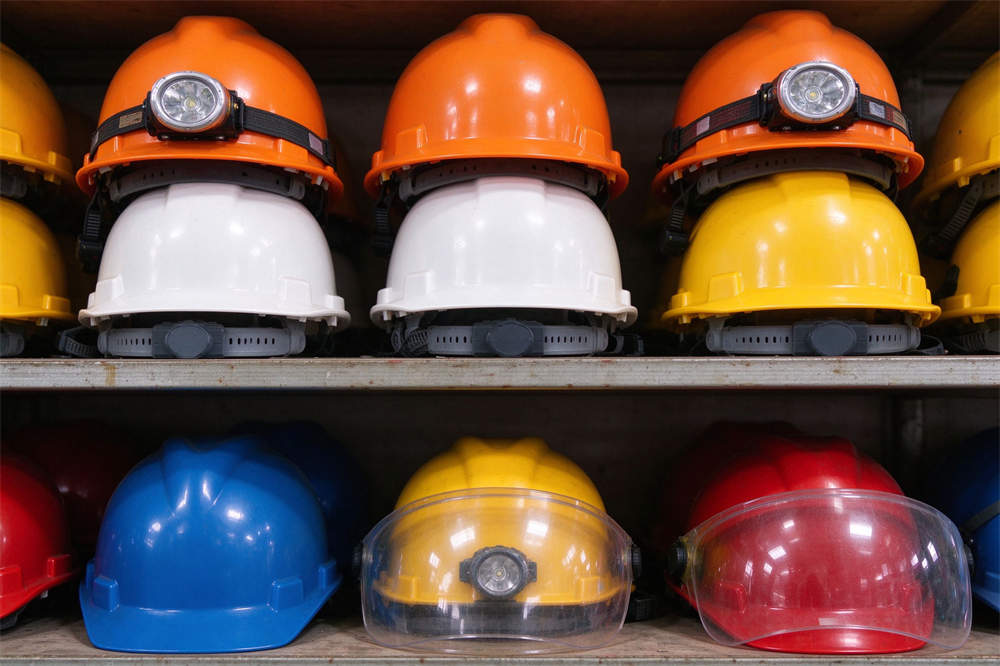
Safety helmet (EN397)
Protect your head from falling debris in accident scenes. Available in multiple colors.
Chemical boots
Protect your feet from corrosive liquids. Steel toe for impact protection.
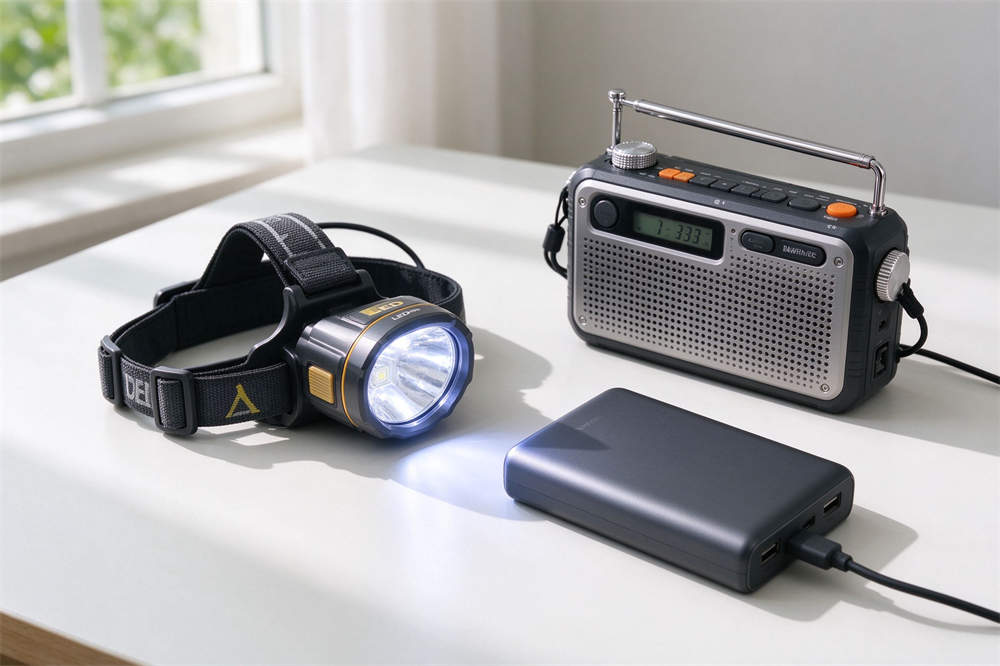
During a major chemical spill, power will likely be cut to the area. You need hands-free lighting that works without electricity:
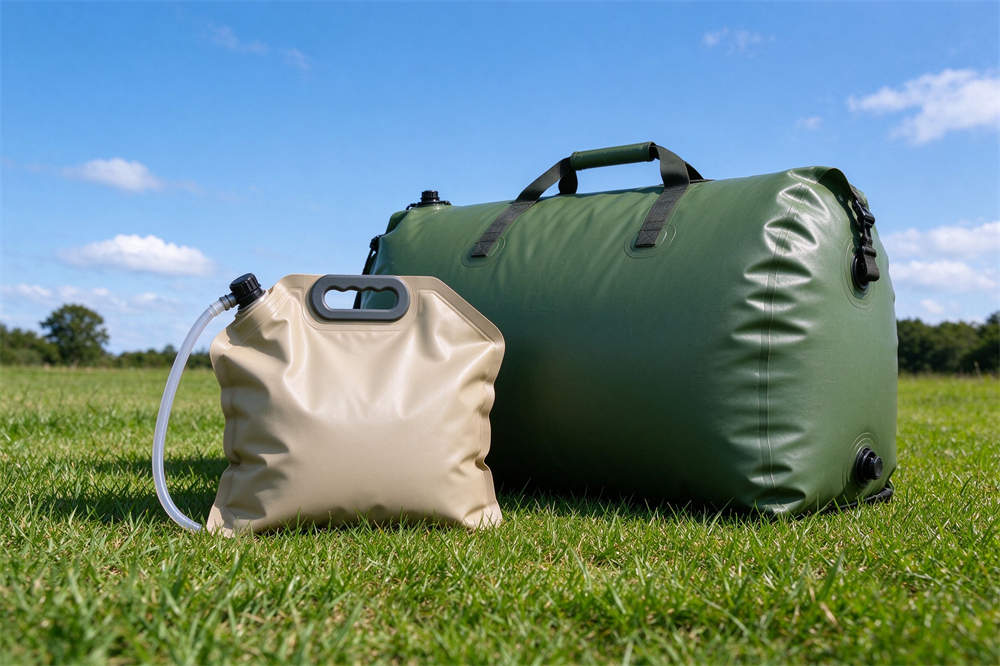
After a chemical spill, you need lots of clean water for decontamination—flushing people, flushing equipment, flushing the area. Our foldable water tanks are perfect for this:
Many chemicals are flammable. When there's a chemical spill, there's also a fire risk. Don't forget fire safety equipment:
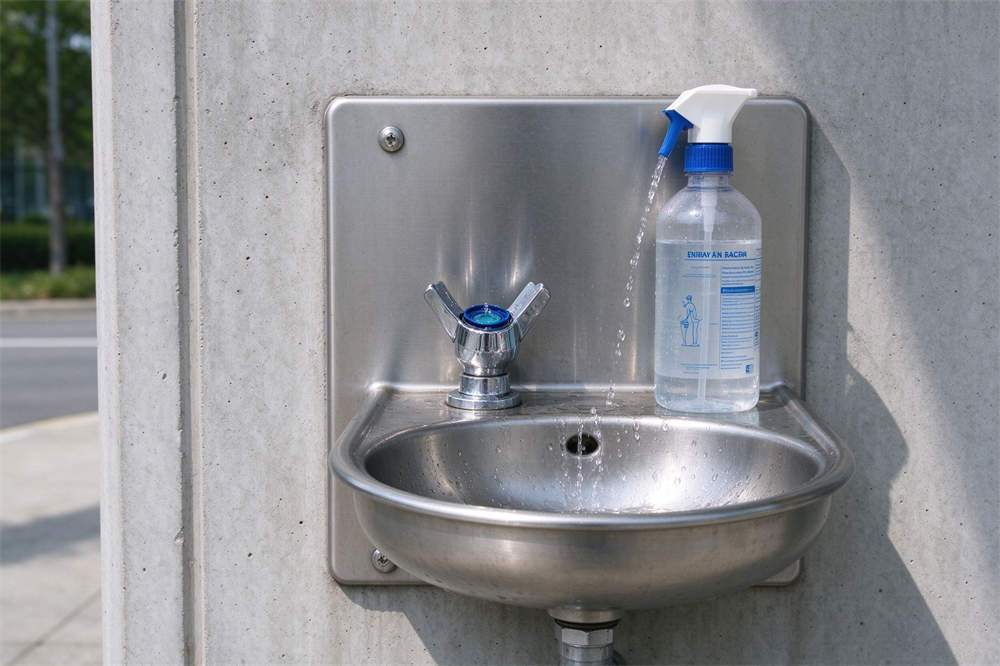
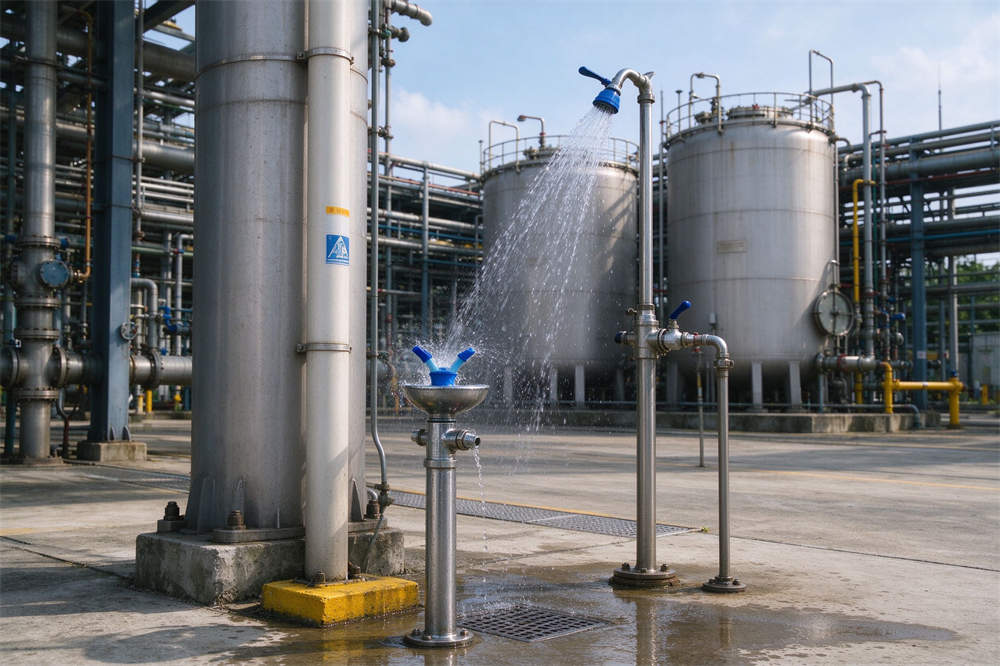
If a chemical gets in your eyes, you have literally seconds to flush it out. The OSHA eyewash standard requires that eyewash stations be within 10 seconds of any hazardous chemical work area, and able to flush eyes for 15 continuous minutes.
This is the most important piece of chemical emergency response equipment you can install. Most chemical eye damage isn't from the chemical itself—it's from waiting too long to flush.
Pro Tip: Portable eyewash stations are perfect for labs, small workshops, and construction sites where plumbing isn't available. They're gravity-fed, no water connection needed, and deliver a gentle but forceful flow that won't damage eyes.
Chemical exposure requires special first aid—not the regular kind. Our chemical exposure first aid kits include specialized supplies:
What you do depends on how the chemical got on someone:
Exposure Type
Immediate First Aid
Chemical in eyes
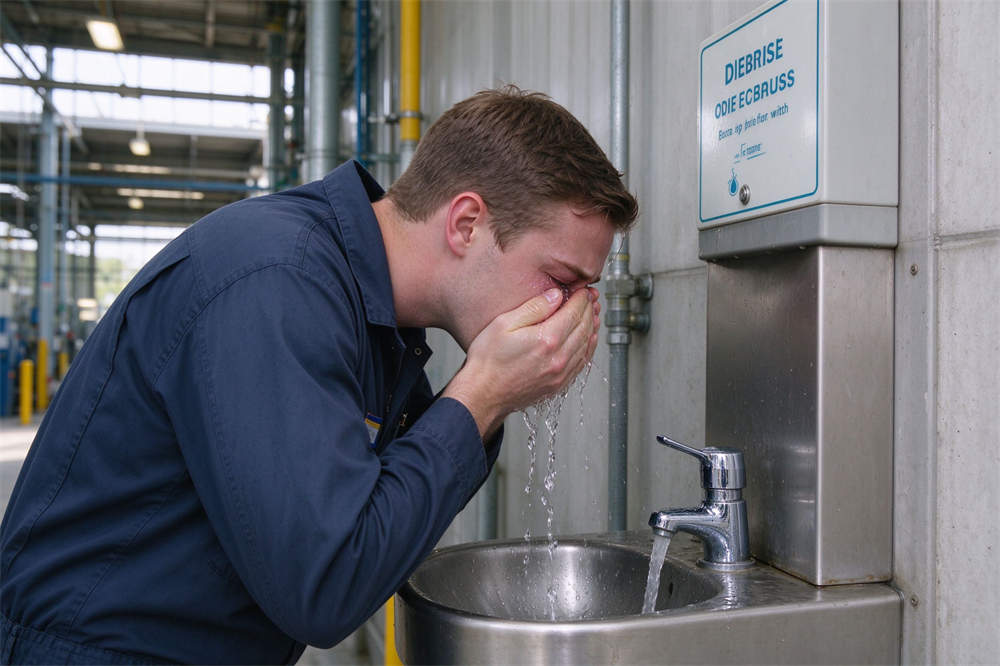
Flush with water for 15 minutes immediately. Hold eyelids open. Don't rub eyes. Call poison control.
Chemical on skin
Remove contaminated clothing. Flush skin with water for 15 minutes. Don't apply creams or ointments.
Inhaled fumes
Move person to fresh air immediately. Loosen tight clothing. If not breathing, start CPR. Call emergency services.
Swallowed chemical
Call poison control immediately. Don't induce vomiting unless told to. Give water or milk if advised.
!Never Do This: Don't try to neutralize a chemical on someone's skin with another chemical—it can make the burn worse. Just flush with lots of water. That's always the right first step.
Once people are safe, you need to clean up the spill. Different chemicals need different absorbents:
|
Spill Type |
Cleanup Supplies |
|
General Chemicals |
Universal absorbent pads, socks, pillows |
|
Acids & Bases |
Neutralizing absorbents, berms to contain spread |
|
Flammable Liquids |
Fire-resistant absorbents, no sparks tools |
|
Toxic Liquids |
Hazmat bags, sealed containers, PPE for cleanup crew |
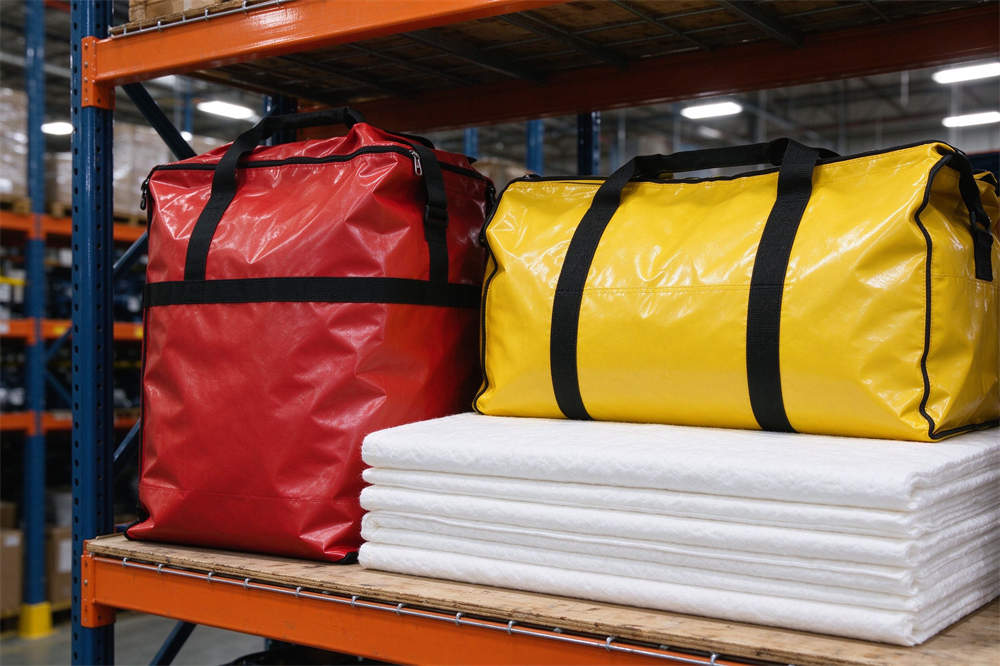
Spill kits come in different sizes based on how much liquid you might need to clean up:
We supply spill kits in all sizes, and can custom-build a kit for your specific needs. All our kits come in durable, easy-to-carry bags or wheeled bins for quick deployment.
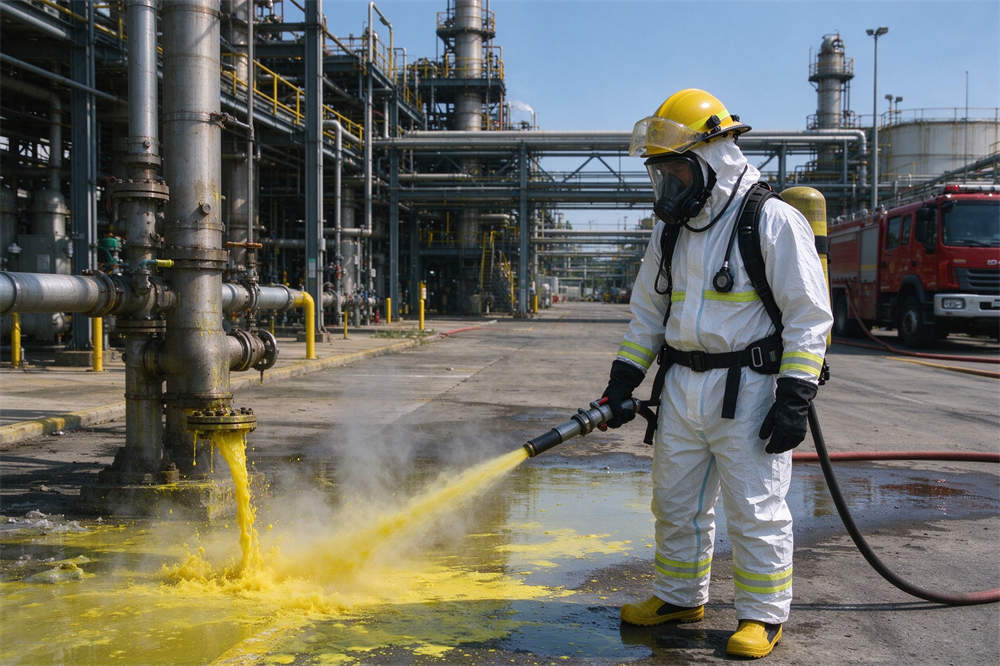
You need wall-mounted emergency eyewash and shower stations at every chemical work station. Spill kits on wheels for quick deployment. Full PPE suits and respirators. Our 122-piece industrial first aid kit plus eyewash station is the standard setup. We supply complete industrial safety packages to manufacturing facilities, chemical plants, and refineries worldwide.
Smaller scale, but chemicals are still corrosive. Portable eyewash bottles, splash goggles, nitrile gloves, and a small spill kit under every lab bench. Our 21-piece compact first aid kit is the perfect size for labs and doctor's offices.
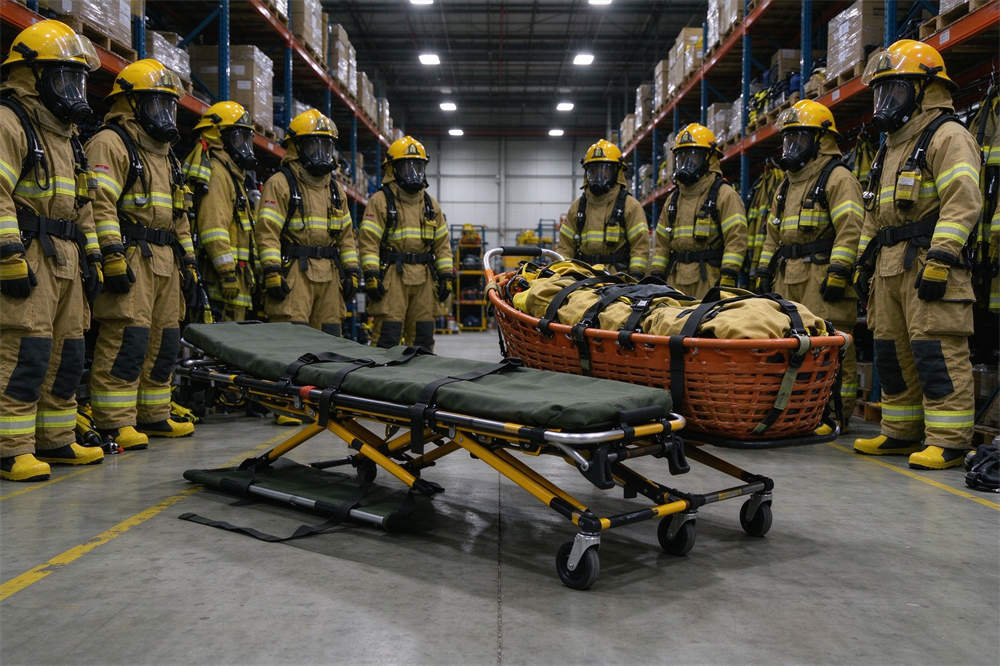
For tanker truck accidents: hazmat suits, respirators, containment booms, and emergency shower units. First responders need our rescue stretcher beds and EN397 safety helmets. We also supply rescue tools like fire axes and pry bars for vehicle extrication.
Even at home, drain cleaners, bleach, and ammonia are corrosive. Keep a box of baking soda to neutralize acid spills, eyewash station equipment in the bathroom, and chemical-resistant gloves under the sink. A small 9-piece first aid kit under the kitchen sink is a good start.
Farmers work with pesticides, fertilizers, and fuel all the time. Our agricultural emergency kits include chemical-resistant gloves, eyewash bottles, spill pads, and burn dressings. The 88-piece comprehensive emergency backpack is our most popular farming kit.
Mechanics work with oil, battery acid, and solvents. A wall-mounted eyewash station near the battery charging area is essential. Our 90-piece fire & rescue kit includes everything a garage needs for chemical spills and small fires.
Construction sites have fuel, concrete acids, and sealants. Portable gravity-fed eyewash stations (no plumbing needed), hard hats, safety boots, and spill kits are essential. Our orange emergency backpack is designed for construction workers—high visibility, water-resistant, and easy to grab.
During a major chemical spill, phone lines might be down, cell service might be overwhelmed. That's why you need emergency communication equipment as part of your response plan:
We can't say this enough—don't rush in. 80% of chemical injuries happen to the people trying to help, not the initial victim. Put on gloves, goggles, and a respirator first.
Not all chemicals should be flushed with water. Some (like certain metals) react violently with water. Know what chemicals you're working with before you start cleanup.
OSHA requires eyewash within 10 seconds. If you have to run across the room to get eyewash, you've already lost the fight to save someone's eyesight. Install one at every workstation.
Using regular sawdust on acid spills is a terrible idea—it can cause a chemical reaction. Use the right absorbent for the chemical you're dealing with.
Having equipment isn't enough—people need to know how to use it. We've seen facilities with expensive spill kits sitting in a corner, never opened, because nobody knew where they were or how to use them. Do quarterly spill drills. Train every new employee on day one.
One spill kit at the end of a long hallway is useless. You need one within 30 seconds of every area where chemicals are stored or used. If it takes more than a minute to grab, it's too late.
Even the best chemical spill kit won't help if nobody knows how to use it. OSHA requires annual hazmat training for anyone who works with hazardous chemicals. Here's what a good training program covers:
Pro Tip: Do a spill drill every 6 months. Set off a fake spill, time how long it takes people to get PPE on, grab the spill kit, and contain the leak. You'll be surprised how long it takes—and what people forget.
Where you put your safety equipment is just as important as what you buy:
You don't have to train everyone to be a hazmat technician. But every employee who works near chemicals should know:
That's it. Just those four things. If every employee knows those, you're ahead of 80% of workplaces.
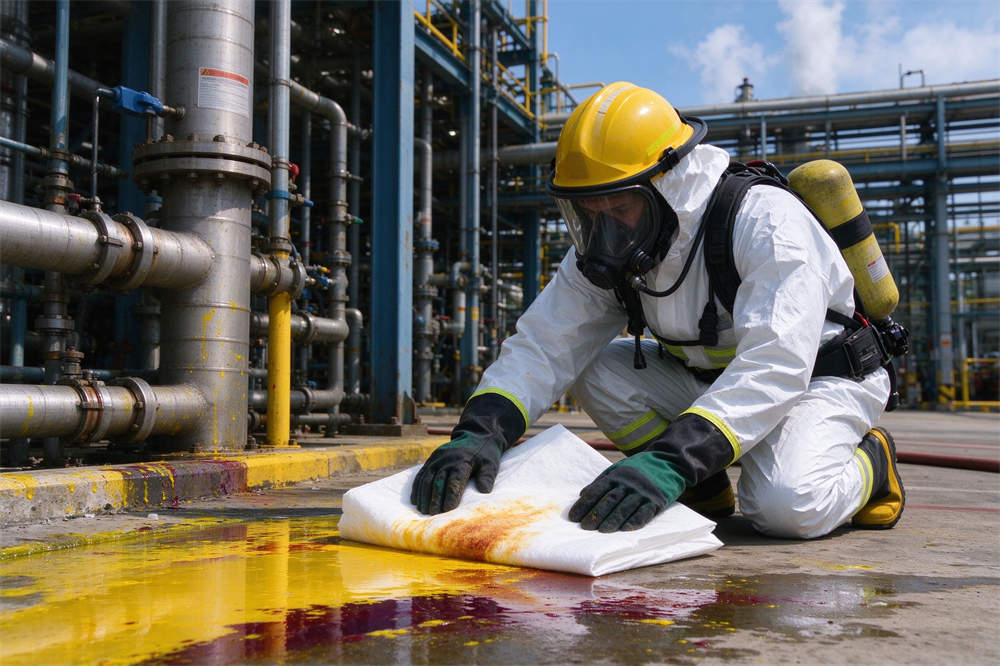
Chemical spill preparedness isn't just good practice—it's the law. If you're a business that handles hazardous chemicals, you're required by law to have:
|
Requirement |
What It Means |
|
Eyewash station within 10 seconds |
OSHA 29 CFR 1910.151—must be accessible within 10 seconds of any chemical work area |
|
Safety Data Sheets on site |
Every chemical you store or use must have an SDS, easily accessible to employees |
|
PPE available for all employees |
Gloves, goggles, and protective clothing must be provided at no cost to employees |
|
Spill response plan |
Written plan for how to respond to spills, and employee training on that plan |
|
Emergency contact numbers posted |
Poison control, local hazmat team, emergency services—posted where everyone can see |
! Legal Risk: If there's a chemical spill and an employee gets hurt because you didn't have eyewash or PPE, you're looking at massive OSHA fines—and worse, a lawsuit. The cost of proper equipment is tiny compared to the cost of an accident.
The worst chemical disaster in history—the Bhopal gas tragedy of 1984—killed 15,000-20,000 people and injured half a million. The plant had no working gas alarms, no emergency response plan, no PPE for the community nearby. It could have been prevented with basic preparedness.
We're not saying your spill will be that big. But the same principles apply: alarms, PPE, eyewash stations, spill kits, and training. These aren't expensive luxuries—they're basic survival equipment.
Don't have budget for a full industrial setup? Start with the basics. Even the smallest lab or shop can afford:
That's under $200 total for basic preparedness. That's cheaper than one visit to the emergency room.
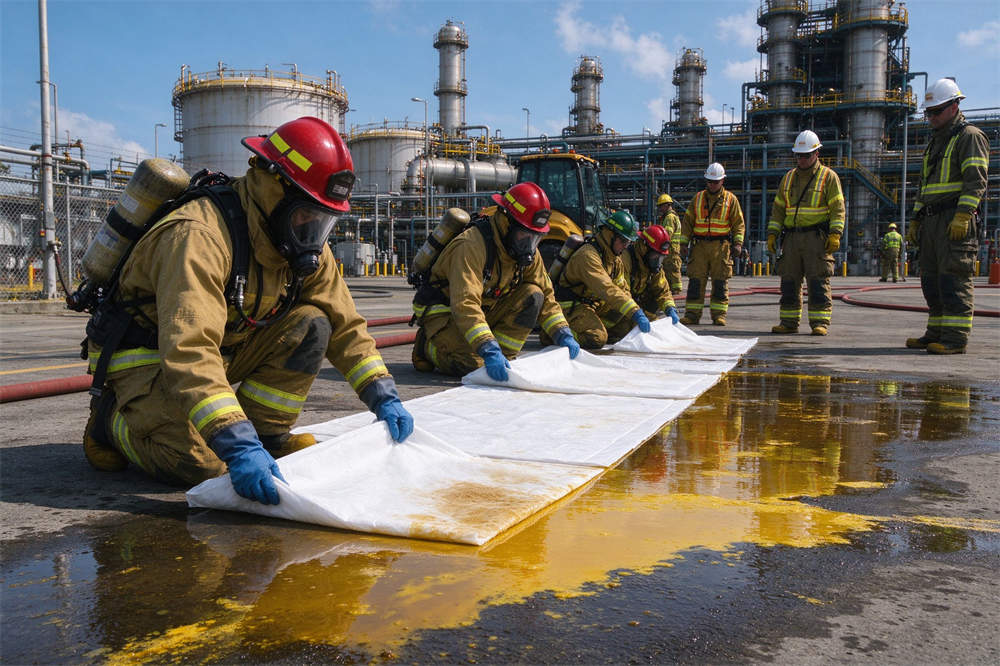
As a leading chemical emergency response equipment manufacturer, we supply a complete range of products:
Here's everything you need for a complete chemical spill response program:
Category
Essential Items
Eye & Face Protection
Eyewash station, splash goggles, face shield, eye wash solution
Body Protection
Nitrile gloves, chemical coveralls, chemical boots, apron
Respiratory Protection
Smoke hood / respirator, N95 masks
Spill Control
Absorbent pads, socks, berms, hazmat bags (solid only)
First Aid
Burn dressings, eye pads, trauma supplies, poison control card
Communication
Hand-crank radio, whistle, megaphone, emergency contact list
Lighting
LED headlamps, work lights, power bank
When you're shopping for chemical response equipment, here's what to look for:
We meet all these criteria. We're a factory, not a trading company. Every product we sell is made in our own factory, tested by our own QC team, and backed by our own support. We don't just sell you a kit and disappear—we're here for the long haul.
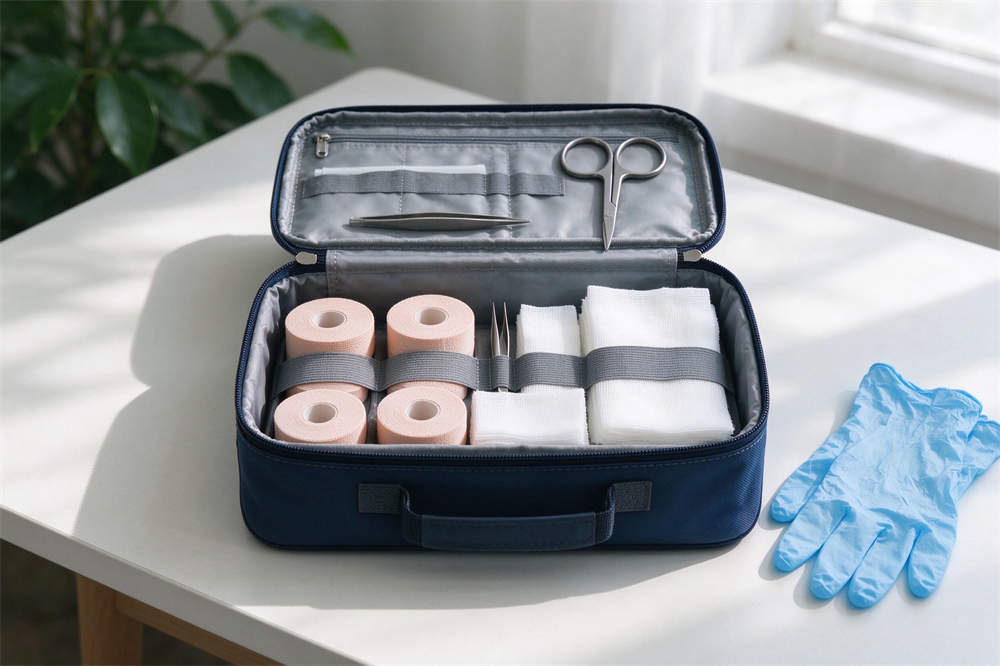
We offer three tiers of chemical response kits so you can pick what fits your facility and budget:
|
Tier |
What's Included |
Best For |
|
Basic (9-piece) |
Gloves, goggles, eyewash bottle, basic burn dressings |
Small offices, home, under sink |
|
Standard (21-88 piece) |
Everything in basic + more PPE, spill pads, splints, trauma supplies |
Shops, labs, small factories, farms |
|
Professional (113-122 piece) |
Everything in standard + comprehensive trauma, splints, eye wash, CPR mask, scissors |
Large factories, refineries, industrial facilities, first responders |
We supply both wall-mounted plumbed units and portable gravity-fed units. We supply the eyewash station equipment itself (stand, bowl, gravity tank). You fill it with your own clean water on site. Perfect for construction sites, remote labs, and mobile work units.
Full PPE line: nitrile and neoprene gloves in all sizes, splash goggles and face shields, EN397 safety helmets in multiple colors, chemical-resistant coveralls, and steel-toe chemical boots. We also supply our EN403 certified smoke hoods for toxic gas evacuation.
We supply solid first aid kit components: burn dressing pads, eye pads, tape, gloves, and trauma supplies. We do not supply liquids, medications, or powders. Available in 9-piece, 21-piece, and 122-piece sizes for any facility size.
Universal, acid/alkali, and flammable liquid spill kits in all sizes. We can custom-build a kit for your specific chemicals and facility size. OEM and private label available for distributors.
Chemical response equipment needs regular maintenance too:
Here's the hard truth: chemical spills don't send a warning email. They happen at 3 AM on a Saturday. They happen when the new intern accidentally knocks over a bottle. They happen when a tanker truck swerves on the highway. When they do, you have seconds to respond—not hours to run to the store and buy supplies.
That's why having the right chemical emergency response equipment in place, trained, and ready to go is non-negotiable. It's not about being paranoid—it's about being prepared. It's about knowing your employees have clean water for their eyes if something goes wrong. It's about knowing you can contain a spill before it reaches the storm drain and poisons the river.
As a leading manufacturer of chemical PPE and emergency safety equipment, we've supplied chemical spill kits to a wide range of clients:
Every product we sell is tested in real-world conditions. Every certification we claim is real and verifiable. We don't sell cheap gear that fails when you need it most.
We get it—every business wants to save money. But chemical safety equipment is not where you want to cut corners. Here's why cheap spill kits and PPE can be dangerous:
We don't sell the cheapest. We sell the most reliable. When your employee's eyesight is on the line, cheap isn't a bargain.
Every product we sell goes through strict quality control before it leaves our factory:
Don't wait until the spill happens. Every day without proper chemical spill preparedness is a day you're rolling the dice with your employees' safety. The worst time to think about it is after someone gets hurt. Get your equipment in place today. Train your team today. Your employees—and your community—are counting on you.
Chemical spills don't wait for you to be ready. Be ready before they come.
A: OSHA recommends weekly flushing to make sure the water is clean and the station works. We supply portable gravity-fed eyewash stations that are easy to test and refill.
A: At minimum: chemical-resistant gloves, splash goggles, and a lab coat. For larger spills: respirator, chemical coveralls, and boots. We supply full chemical PPE kits in bulk for industrial clients.
A: Yes! All our spill kits and eyewash stations meet OSHA standards. We provide full certification documentation with every order. We also offer OEM and private labeling for distributors.
A: General spill kits use universal absorbents for non-corrosive liquids. Acid/alkali kits include solid absorbents and berms to contain corrosive chemicals. Using the wrong kit can make the spill worse.
A: Absolutely! Tell us what chemicals you work with and how big your facility is, and we'll build a custom spill kit package. We offer OEM and private label for distributors and large industrial clients.
A: 15 full minutes. Most people don't flush long enough—they rinse for 30 seconds and think it's enough. The OSHA standard is 15 minutes of continuous flushing. Fill with your own clean water on site for 15 minutes of flushing.
A: All our products are CE certified, FDA registered, ISO9001 quality management system, RoHS compliant. Our safety helmets meet EN397, smoke hoods meet EN403, fire blankets meet EN1869. We provide full documentation with every order.
A: Rule of thumb: estimate the largest possible spill from the containers you have on site. If you store 55-gallon drums, have a kit that can handle at least that much. When in doubt, go bigger—it's cheaper than cleaning up a bigger spill than your kit can handle.
A: We mainly work with businesses, NGOs, relief organizations, and government agencies. We have minimum order quantities for wholesale pricing. Contact us with your needs and we'll find the right solution for you.
A: For in-stock items, 3-7 days by air express. For custom orders or large quantities, 15-30 days production plus shipping time. We ship worldwide from our factory in China.
A: We provide free training materials and videos with every order. For large clients, we can also provide on-site or virtual training sessions. We believe the best equipment in the world is useless if people don't know how to use it.
A: Flush immediately with water for 15 minutes. Remove contaminated clothing. Call poison control or emergency services. Don't try to neutralize the chemical on the skin. Even if they feel fine, they need to see a doctor—chemical burns can get worse hours later.
A: It depends on the chemical and how much spilled. If it's a small bottle of common lab chemical that you cleaned up immediately, probably not. But if it's a toxic chemical, it reached the sewer, or anyone was exposed—yes, you need to report it. When in doubt, call. It's better to over-report than to have an environmental disaster on your hands.
A: Take them off immediately. Don't shake them (that spreads chemical dust). Seal them in a plastic bag or hazmat bag for proper disposal. Don't wash them with your regular laundry—that contaminates your washing machine and other clothes.
A: Three main differences:
(1) Our absorbents are tested for specific chemical resistance, not just "generic" material.
(2) All our PPE has real, verifiable certifications, not fake ones.
(3) We provide support and restocking after the sale, not just a box that disappears after delivery. Cheap kits look the same on the outside, but fail when you need them most.
A: Immediately, even if you feel fine. Chemical exposure can have delayed effects—some symptoms don't show up for hours or days. Better to get checked out and be safe than to have complications later. Bring the SDS (Safety Data Sheet) with you to the doctor.
 |

|
Enlaces amistosos :
Derechos de autor © Custom Disaster - Relief Bedding: Tents, Sleeping Bags, Blankets Reservados todos los derechos
el equipo profesional al servicio !